• HOME
  • NEWS
  • EXPLORE
    • CAREER
      • Companies
      • Jobs
    • EVENTS
    • iGEM
      • News
      • Team
    • PHOTOS
    • VIDEO
    • WIKI
  • BLOG
  • COMMUNITY
    • FACEBOOK
    • INSTAGRAM
    • TWITTER
Sunday, May 10, 2026
BIOENGINEER.ORG
No Result
View All Result
  • Login
  • HOME
  • NEWS
  • EXPLORE
    • CAREER
      • Companies
      • Jobs
        • Lecturer
        • PhD Studentship
        • Postdoc
        • Research Assistant
    • EVENTS
    • iGEM
      • News
      • Team
    • PHOTOS
    • VIDEO
    • WIKI
  • BLOG
  • COMMUNITY
    • FACEBOOK
    • INSTAGRAM
    • TWITTER
  • HOME
  • NEWS
  • EXPLORE
    • CAREER
      • Companies
      • Jobs
        • Lecturer
        • PhD Studentship
        • Postdoc
        • Research Assistant
    • EVENTS
    • iGEM
      • News
      • Team
    • PHOTOS
    • VIDEO
    • WIKI
  • BLOG
  • COMMUNITY
    • FACEBOOK
    • INSTAGRAM
    • TWITTER
No Result
View All Result
Bioengineer.org
No Result
View All Result
Home NEWS Science News Biology

Biosensor ‘bandage’ collects and analyzes sweat

Bioengineer by Bioengineer
April 17, 2019
in Biology
Reading Time: 2 mins read
0
IMAGE
Share on FacebookShare on TwitterShare on LinkedinShare on RedditShare on Telegram

IMAGE

Credit: American Chemical Society

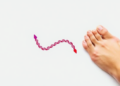
Like other biofluids, sweat contains a wealth of information about what’s going on inside the body. However, collecting the fluid for analysis, usually by dripping or absorbing it from the skin’s surface, can be time-consuming and messy. Now, researchers have developed a bandage-like biosensor that both collects and — in conjunction with a smart phone — analyzes sweat. The device, which could someday help diagnose diseases, is reported in ACS’ journal Analytical Chemistry.

Compared with other biofluids such as blood, sweat has the potential to be obtained less invasively for diagnostic testing. Researchers have developed tools to collect and analyze sweat, such as temporary tattoos or microfluidic devices, but they typically require wires, electronics or sophisticated structures. Tailin Xu, Li-Ping Xu, Xueji Zhang and colleagues wanted to make a wearable biosensor resembling a bandage that samples sweat and uses a simple color-changing assay to quantify various components.

To make their device, the researchers coated a flexible polyester film with a super-hydrophobic silica suspension. They then etched microwells into the silica layer to collect perspiration. At the bottom of the wells, they placed dyes that change color with pH or concentration of chloride, glucose or calcium. The team added an adhesive backing and attached the biosensor bandage onto a volunteer’s skin. When the person exercised, their perspiration collected in the microwells, and the spots changed colors. By imaging and analyzing the colors with a cell phone, the researchers determined that the sweat pH was 6.5-7.0, with a chloride concentration of about 100 mM and trace amounts of calcium and glucose. The researchers are now working on increasing the sensitivity of the device.

###

The authors acknowledge funding from the National Natural Science Foundation of China, Beijing Natural Science Foundation, Fundamental Research Funds for Central Universities, National Postdoctoral Innovative Talents Support Program of China, Program for Guangdong Introducing Innovative and Entrepreneurial Teams and the Shenzhen Fundamental Research Program.

The abstract that accompanies this study is available here.

The American Chemical Society, the world’s largest scientific society, is a not-for-profit organization chartered by the U.S. Congress. ACS is a global leader in providing access to chemistry-related information and research through its multiple databases, peer-reviewed journals and scientific conferences. ACS does not conduct research, but publishes and publicizes peer-reviewed scientific studies. Its main offices are in Washington, D.C., and Columbus, Ohio.

To automatically receive news releases from the American Chemical Society, contact [email protected].

Follow us on Twitter | Facebook

Media Contact
Katie Cottingham
[email protected]

Tags: BiochemistryBioinformaticsBiotechnologyChemistry/Physics/Materials SciencesDiagnosticsExercisePublic HealthSports/Recreation
Share12Tweet8Share2ShareShareShare2

Related Posts

Ancient Plant Populations Reveal Fresh Insights into Climate Resilience — Biology

Ancient Plant Populations Reveal Fresh Insights into Climate Resilience

May 8, 2026
Rare Brain Disorders in Children Linked to Mutations in Lesser-Known Protein Complex — Biology

Rare Brain Disorders in Children Linked to Mutations in Lesser-Known Protein Complex

May 8, 2026

From Odd Insect to Underwater Predator: The Remarkable Evolution of a Bloodthirsty Fruit Fly

May 8, 2026

SNU Professor Sangwoo Seo’s Team Develops Next-Generation CRISPR Biocontainment Technology to Control Microbial Survival Without DNA Cleavage

May 8, 2026
Please login to join discussion

POPULAR NEWS

  • Research Indicates Potential Connection Between Prenatal Medication Exposure and Elevated Autism Risk

    840 shares
    Share 336 Tweet 210
  • New Study Reveals Plants Can Detect the Sound of Rain

    727 shares
    Share 290 Tweet 181
  • Scientists Investigate Possible Connection Between COVID-19 and Increased Lung Cancer Risk

    68 shares
    Share 27 Tweet 17
  • Salmonella Haem Blocks Macrophages, Boosts Infection

    61 shares
    Share 24 Tweet 15

About

We bring you the latest biotechnology news from best research centers and universities around the world. Check our website.

Follow us

Recent News

Evaluating Digoxin Use in Patients with Symptomatic Rheumatic Heart Disease

Evaluating the Effectiveness and Safety of Digitalis Glycosides in Treating Heart Failure

Urdu Fall Risk Questionnaire Adapted for Elderly

Subscribe to Blog via Email

Success! An email was just sent to confirm your subscription. Please find the email now and click 'Confirm' to start subscribing.

Join 82 other subscribers
  • Contact Us

Bioengineer.org © Copyright 2023 All Rights Reserved.

Welcome Back!

Login to your account below

Forgotten Password?

Retrieve your password

Please enter your username or email address to reset your password.

Log In
No Result
View All Result
  • Homepages
    • Home Page 1
    • Home Page 2
  • News
  • National
  • Business
  • Health
  • Lifestyle
  • Science

Bioengineer.org © Copyright 2023 All Rights Reserved.