A cell-culturing technique developed by KAUST scientists helps to create biological conditions that more closely mirror physiological environments compared to standard protocols used in most laboratories today.
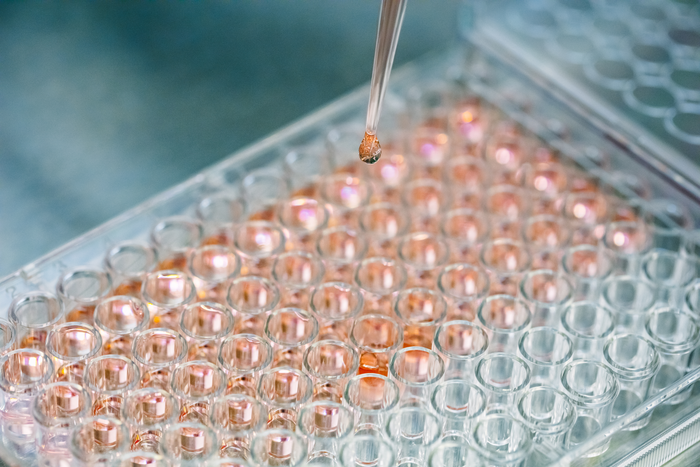
Credit: © 2022 KAUST; Anastasia Serin
A cell-culturing technique developed by KAUST scientists helps to create biological conditions that more closely mirror physiological environments compared to standard protocols used in most laboratories today.
The new bioreactor system delivers gases — rather than chemicals — to keep acidity levels and oxygen exchange kinetics within body-like ranges, an approach that allows for more careful control of environmental parameters.
It is also more responsive to the metabolic activity of cells and more representative of what happens inside living organisms. If widely adopted, the platform could lead to more accurate, interpretable and reproducible experiments in biomedical research.
The cell-culturing apparatus came about through a unique interdisciplinary collaboration between marine biologist Carlos Duarte and stem cell biologist Mo Li.
Duarte and Li joined forces in recent years to highlight widespread problems in the control, monitoring and reporting of environmental conditions in cell-culturing systems. Together with their lab group members, including research scientist Shannon Klein and Ph.D. students Samhan Alsolami and Silvia Arossa, in 2022 they showed that common techniques for maintaining human pluripotent stem cells consistently produce large swings in ambient gas levels, pH and other parameters, changes that can lead to unpredictable shifts in the kinetics of cell growth.
Following that finding, the researchers now describe how even small perturbations in pH can prompt human cells to dramatically reorient their gene expression profiles. “We revealed robust and coordinated changes in expression of genes related to inflammation and metabolism in response to acidic environments,” says Li.
This result, outlined in their latest report, “emphasizes the importance of maintaining physiological conditions to avoid artifacts in research derived from human cell cultures,” Duarte says.
Seeking to purge those artifacts from experiments and create a more stable culturing milieu, the team then retrofitted a standard bioreactor system with automated gas monitoring systems and valves for delivering pure inputs of oxygen, carbon dioxide and nitrogen.
This allowed the researchers to maintain precise and physiologically relevant control over pH and other culture parameters, without having to rely on artificial buffering agents that have more limited capacity to preserve environmental stability.
Notably, much of the inspiration for the experimental set-up came from Duarte’s previous investigations of marine ecosystems. Duarte had devised ways of fine-tuning pH and gas fluctuations in order to study the effects of ocean acidification on seagrass meadows in the Red Sea.
As he explains: “We then used our experience in the accurate control of pH, O2 and CO2 in experiments with marine organisms to design systems that could achieve tight controls of the environment in human cell culture studies.”
“It was a beautiful cross-fertilization between marine science and biomedical research,” Duarte says.
Journal
Life Medicine
DOI
10.1093/lifemedi/lnac056
Article Title
A Gas-only Bioreactor System Maintains Stable Culture Environments and Reveals that Moderate pH deviations Trigger Transcriptome-wide Responses in Human Cells Cultured in Physioxia and Physiological Buffers
Article Publication Date
22-Nov-2022