• HOME
  • NEWS
  • EXPLORE
    • CAREER
      • Companies
      • Jobs
    • EVENTS
    • iGEM
      • News
      • Team
    • PHOTOS
    • VIDEO
    • WIKI
  • BLOG
  • COMMUNITY
    • FACEBOOK
    • INSTAGRAM
    • TWITTER
Monday, June 29, 2026
BIOENGINEER.ORG
No Result
View All Result
  • Login
  • HOME
  • NEWS
  • EXPLORE
    • CAREER
      • Companies
      • Jobs
        • Lecturer
        • PhD Studentship
        • Postdoc
        • Research Assistant
    • EVENTS
    • iGEM
      • News
      • Team
    • PHOTOS
    • VIDEO
    • WIKI
  • BLOG
  • COMMUNITY
    • FACEBOOK
    • INSTAGRAM
    • TWITTER
  • HOME
  • NEWS
  • EXPLORE
    • CAREER
      • Companies
      • Jobs
        • Lecturer
        • PhD Studentship
        • Postdoc
        • Research Assistant
    • EVENTS
    • iGEM
      • News
      • Team
    • PHOTOS
    • VIDEO
    • WIKI
  • BLOG
  • COMMUNITY
    • FACEBOOK
    • INSTAGRAM
    • TWITTER
No Result
View All Result
Bioengineer.org
No Result
View All Result
Home NEWS Science News Chemistry

Bionic catalysts to produce clean energy

Bioengineer by Bioengineer
July 2, 2019
in Chemistry
Reading Time: 2 mins read
0
IMAGE
Share on FacebookShare on TwitterShare on LinkedinShare on RedditShare on Telegram

IMAGE

Credit: © 2019 KAUST

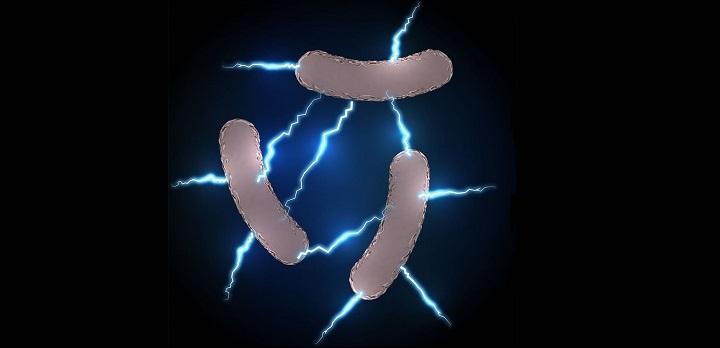
Mixing microbes with carbon nanomaterials could help the transition to renewable energy. KAUST research shows microbes and nanomaterials can be used together to form a biohybrid material that performs well as an electrocatalyst. The material could be used in the solar-powered production of carbon-free fuels and several other green-energy applications.

At the heart of many clean energy technologies is a process called the oxygen-evolution reaction (OER). In the case of solar-fuel production, for example, the OER enables the use of solar electricity to split water molecules into oxygen and hydrogen, producing clean hydrogen that can be used as a fuel. Currently, rare and expensive metals are used as OER electrocatalysts. But graphene-based biohybrid materials could make an inexpensive, eco-friendly alternative, Pascal Saikaly and his team have shown.

Graphene–a sheet of carbon that is just a single layer of atoms thick–and closely related reduced graphene oxide are highly conductive, mechanically robust and widely available. However, they only become active catalysts once they have been doped with other elements, such as sulfur, iron, nitrogen or copper.

“Usually graphene-based OER catalysts are developed by chemical methods, which require rigorous reaction conditions, such as high temperature and copious toxic chemicals,” explains Shafeer Kalathil, Saikaly’s former postdoc. A more environmentally friendly alternative is to use microbes to decorate the surface of the reduced graphene oxide. “We used the electric bacterium Geobacter sulfurreducens because it is nonpathogenic, rich in iron-containing proteins and abundant in nature,” explains Kalathil.

When the team mixed the bacterium and the graphene oxide under oxygen-free conditions, the bacterial cells adhere to the surface and produce iron-rich proteins to interact biochemically with the graphene oxide as part of their natural metabolism. As a result, the reduced graphene oxide ends up decorated with iron, copper and sulfur; thereby, becoming a highly efficient OER electrocatalyst.

“The elements contributed by the bacterium transformed the catalytically inert graphene into a highly electrocatalytic one,” says Kalathil. “The biohybrid material’s OER activity outperformed the benchmark expensive metal-based OER catalysts,” he adds. The bonus is the environmentally friendly method the team used to make it.

Saikaly and his team are now working on large-scale production and commercialization of this biohybrid catalyst and developing other types of biohybrid catalyst for other important electro-catalytic reactions, such as hydrogen-evolution reaction and carbon-dioxide reduction.

###

Media Contact
Carolyn Unck
[email protected]

Original Source

https://discovery.kaust.edu.sa/en/article/853/bionic-catalysts-to-produce-clean-energy

Related Journal Article

http://dx.doi.org/10.1021/acs.chemmater.9b00394

Tags: BiologyBiomedical/Environmental/Chemical EngineeringBiotechnologyEnergy/Fuel (non-petroleum)
Share12Tweet8Share2ShareShareShare2

Related Posts

AI and Physics Collaborate to Design Advanced Hydrogen Storage Materials

June 25, 2026

International Team Including Dresden Scientists Develops Novel Designer Proteins for Advanced Study of Living Tissue

June 25, 2026

New Study Uncovers Key Factors Driving Water Chemistry in Nanoscale Environments

June 25, 2026

Plasma Technology Extends Catalyst Lifespan in Hydrogen Production

June 24, 2026
Please login to join discussion

POPULAR NEWS

  • Saying Goodbye to PGY-6: Pediatric Fellowship Realities

    103 shares
    Share 41 Tweet 26
  • Multi-Hospital Study Reveals Long Covid Burden Is Twice as High as Current Estimates

    92 shares
    Share 36 Tweet 23
  • Detection of EDCs in Breast Milk and Infant Urine Up to Six Months Highlights Early Exposure Risks

    77 shares
    Share 31 Tweet 19
  • New Drug Candidate Developed at McMaster Shows Potential for Treating Brain Cancer

    58 shares
    Share 23 Tweet 15

About

We bring you the latest biotechnology news from best research centers and universities around the world. Check our website.

Follow us

Recent News

Tracking Lanthanide-Labeled Microplastics in Plants

POSTECH Researchers Slash Cost of Reconstituted Cell-Free Systems by 95%

AI and Physics Collaborate to Design Advanced Hydrogen Storage Materials

Subscribe to Blog via Email

Success! An email was just sent to confirm your subscription. Please find the email now and click 'Confirm' to start subscribing.

Join 82 other subscribers
  • Contact Us

Bioengineer.org © Copyright 2023 All Rights Reserved.

Welcome Back!

Login to your account below

Forgotten Password?

Retrieve your password

Please enter your username or email address to reset your password.

Log In
No Result
View All Result
  • Homepages
    • Home Page 1
    • Home Page 2
  • News
  • National
  • Business
  • Health
  • Lifestyle
  • Science

Bioengineer.org © Copyright 2023 All Rights Reserved.