• HOME
  • NEWS
  • EXPLORE
    • CAREER
      • Companies
      • Jobs
    • EVENTS
    • iGEM
      • News
      • Team
    • PHOTOS
    • VIDEO
    • WIKI
  • BLOG
  • COMMUNITY
    • FACEBOOK
    • INSTAGRAM
    • TWITTER
Saturday, October 3, 2026
BIOENGINEER.ORG
No Result
View All Result
  • Login
  • HOME
  • NEWS
  • EXPLORE
    • CAREER
      • Companies
      • Jobs
        • Lecturer
        • PhD Studentship
        • Postdoc
        • Research Assistant
    • EVENTS
    • iGEM
      • News
      • Team
    • PHOTOS
    • VIDEO
    • WIKI
  • BLOG
  • COMMUNITY
    • FACEBOOK
    • INSTAGRAM
    • TWITTER
  • HOME
  • NEWS
  • EXPLORE
    • CAREER
      • Companies
      • Jobs
        • Lecturer
        • PhD Studentship
        • Postdoc
        • Research Assistant
    • EVENTS
    • iGEM
      • News
      • Team
    • PHOTOS
    • VIDEO
    • WIKI
  • BLOG
  • COMMUNITY
    • FACEBOOK
    • INSTAGRAM
    • TWITTER
No Result
View All Result
Bioengineer.org
No Result
View All Result
Home NEWS Science News Chemistry

Biofriendly protocells pump up blood vessels

Bioengineer by Bioengineer
November 20, 2020
in Chemistry
Reading Time: 2 mins read
0
IMAGE
Share on FacebookShare on TwitterShare on LinkedinShare on RedditShare on Telegram

IMAGE

Credit: Nature Chemistry (2020).

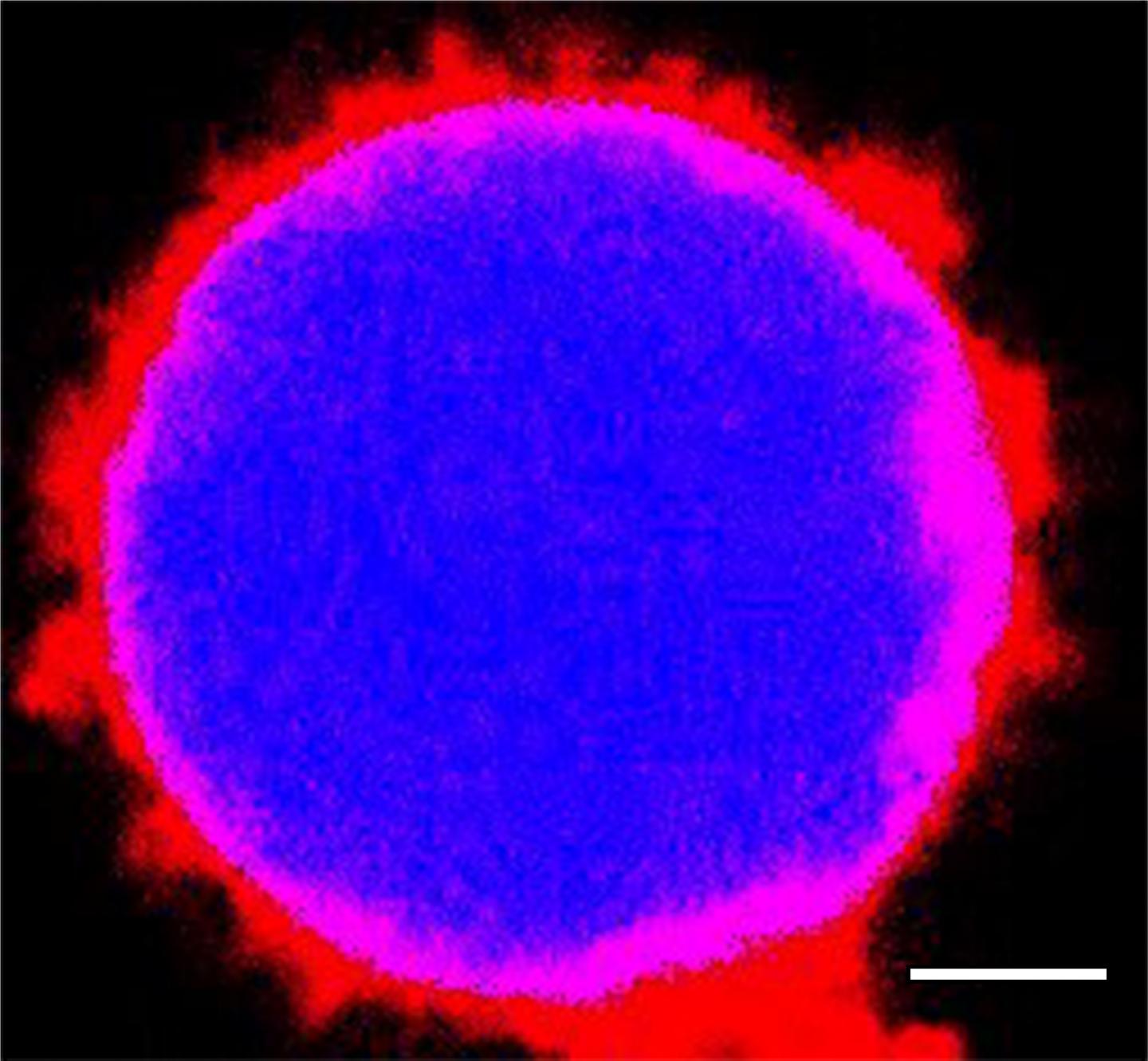
An international team comprising researchers from the University of Bristol, and Hunan and Central South Universities in China, have prepared biocompatible protocells that generate nitric oxide gas – a known reagent for blood vessel dilation – that when placed inside blood vessels expand the biological tissue.

In a new study published today in Nature Chemistry, Professor Stephen Mann and Dr Mei Li from Bristol’s School of Chemistry, together with Associate Professor Jianbo Liu and colleagues at Hunan University and Central South University in China, prepared synthetic protocells coated in red blood cell fragments for use as nitric oxide generating bio-bots within blood vessels.

Coating the protocells led to increased levels of biocompatibility and longer blood circulation times. Critically, the team trapped an enzyme inside the protocells which, in the presence of glucose, produced hydrogen peroxide. This was then used by haemoglobin in the protocell membrane to degrade the drug molecule hydroxyurea into nitric oxide gas.

When placed inside small pieces of blood vessels, or injected into a carotid artery, the protocells produced sufficient amounts of nitric oxide to initiate the biochemical pathways responsible for blood vessel vasodilation.

Although at a very early stage of development, the new approach could have significant benefits in biomedicine, cellular diagnostics and bioengineering.

Professor Stephen Mann, Co-Director of the Max Planck Bristol Centre for Minimal Biology at Bristol, said: “This work could open up a new horizon in protocell research because it highlights the opportunities for creating therapeutic, cell-like objects that can directly interface with living biological tissues.”

Associate Professor Jianbo Liu at Hunan University added: “We are all really excited about our proof-of-concept studies but there is a lot of work still to be done before protocells can be used effectively as bio-bots in therapeutic applications. But the potential looks enormous.”

###

‘Enzyme-mediated nitric oxide production in vasoactive erythrocyte membrane-enclosed coacervate protocells’ by Liu S, Zhang Y, Li M, Xiong L, Yang X, He X, Wang K, Liu J and Mann S. in Nature Chemistry.

Media Contact
Shona East
[email protected]

Related Journal Article

http://dx.doi.org/10.1038/s41557-020-00585-y

Tags: BiochemistryBiologyBiomechanics/BiophysicsBiomedical/Environmental/Chemical EngineeringBiotechnologyCell Biology
Share12Tweet8Share2ShareShareShare2

Related Posts

Support Materials Fine-Tune Nickel-Iron Catalysts for Cleaner Hydrogen from Methane

Support Materials Fine-Tune Nickel-Iron Catalysts for Cleaner Hydrogen from Methane

October 3, 2026
Supercritical CO2 Blowing Agent Turns Elastic Polymer Blends Into Bouncier, Better Insulating Foams

Supercritical CO2 Blowing Agent Turns Elastic Polymer Blends Into Bouncier, Better Insulating Foams

October 3, 2026

Clarivate Citation Laureate Honors Pioneer of Metal-Free OLED Breakthrough TADF

October 3, 2026

Magnetic Nickel Ferrite Nanocatalyst Slashes Synthesis Time for Valuable Drug-Like Molecules

October 3, 2026
Please login to join discussion

POPULAR NEWS

  • Prediabetes May Quietly Weaken Bone Quality in Men Even When Density Looks Normal

    29 shares
    Share 12 Tweet 7
  • Diamond Steps Up as the Ultimate Heat Shield for Next-Generation Chips

    29 shares
    Share 12 Tweet 7
  • Two-Stage Surgery With Biologic Mesh Offers New Hope for Contaminated Hernia Repair

    29 shares
    Share 12 Tweet 7
  • New AI Method Ranks Metabolites by Their Impact on Graph Neural Network Predictions

    29 shares
    Share 12 Tweet 7

About

We bring you the latest biotechnology news from best research centers and universities around the world. Check our website.

Follow us

Recent News

Prediabetes May Quietly Weaken Bone Quality in Men Even When Density Looks Normal

Diamond Steps Up as the Ultimate Heat Shield for Next-Generation Chips

Two-Stage Surgery With Biologic Mesh Offers New Hope for Contaminated Hernia Repair

Subscribe to Blog via Email

Success! An email was just sent to confirm your subscription. Please find the email now and click 'Confirm' to start subscribing.

Join 85 other subscribers
  • Contact Us

Bioengineer.org © Copyright 2023 All Rights Reserved.

Welcome Back!

Login to your account below

Forgotten Password?

Retrieve your password

Please enter your username or email address to reset your password.

Log In
No Result
View All Result
  • Homepages
    • Home Page 1
    • Home Page 2
  • News
  • National
  • Business
  • Health
  • Lifestyle
  • Science

Bioengineer.org © Copyright 2023 All Rights Reserved.