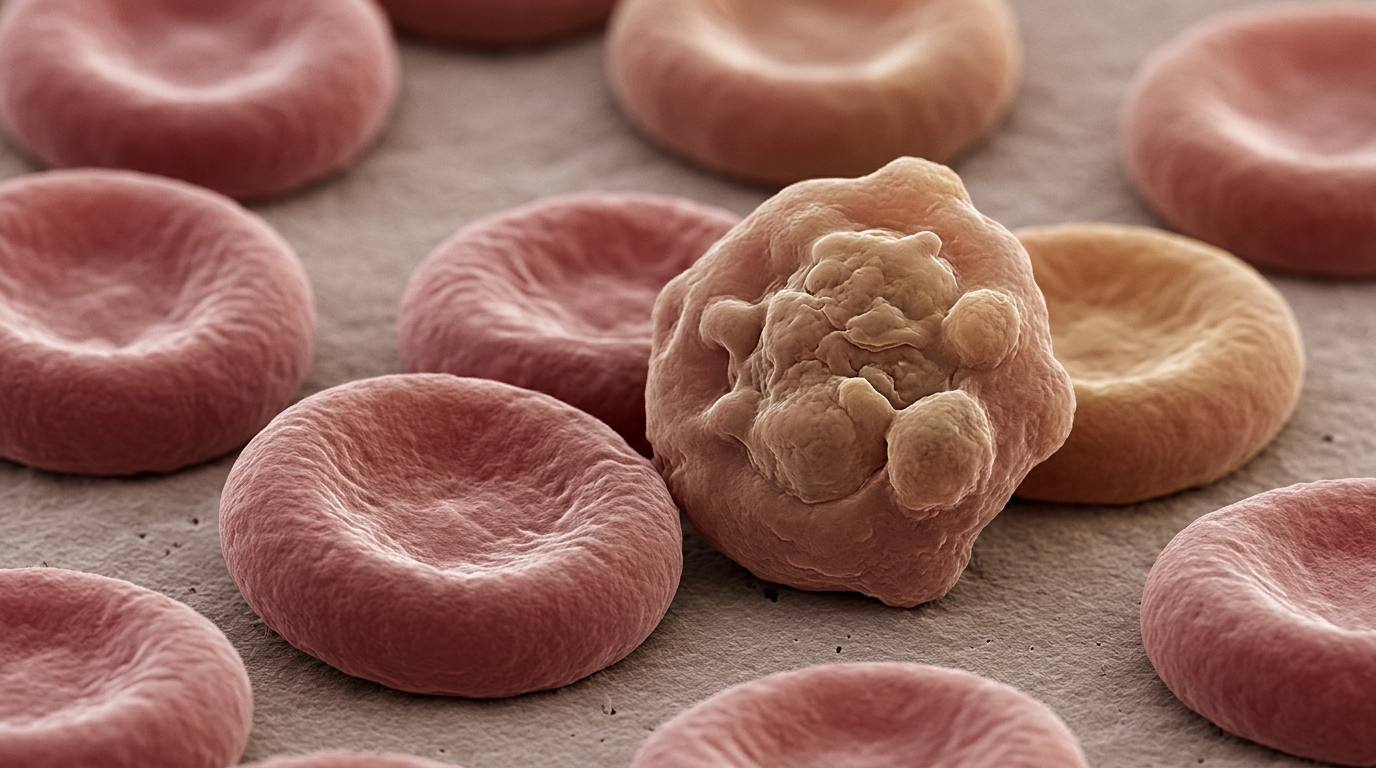
A biochemical investigation has confirmed that the Plasmodium falciparum HotDog domain-containing protein, designated as PfHDDCP, functions as an active acyl-CoA thioesterase in laboratory experiments. Thioesterases serve a central physiological role in sustaining acyl-CoA homeostasis and directing lipid metabolic flux within cells. These metabolic operations are recognized as essential components for the intraerythrocytic developmental stages of the human malaria parasite Plasmodium falciparum. Although computational modeling had previously predicted that this specific parasite protein would possess acyl-CoA thioesterase activity, direct experimental validation had remained absent from the published scientific literature until this study.
The investigated protein PfHDDCP corresponds to gene identifier PF3D7_1135400 and was earlier cataloged under the annotations PF11_0364 and XP_001348035.1. To resolve whether the protein possesses catalytic functionality, the researchers developed an in vitro expression and purification protocol. The PfHDDCP coding sequence was cloned into the pRSET-A expression vector and introduced into Escherichia coli BL21(DE3) bacterial host cells. Following recombinant protein expression, the target polypeptide was isolated and purified under denaturing chemical conditions and subsequently refolded into its active biochemical conformation for detailed enzymatic characterization.
Subsequent enzymatic testing revealed that the purified recombinant PfHDDCP demonstrated clear, robust thioesterase catalytic activity toward the model substrate acetyl-CoA when evaluated through a colorimetric assay based on 5,5′-dithiobis-(2-nitrobenzoic acid), commonly known as DTNB. Control evaluations confirmed that the preparation displayed no detectable protease activity, verifying that the observed substrate cleavage was specifically attributable to thioester bond hydrolysis rather than non-specific proteolysis. These empirical measurements established the first direct biochemical evidence that the HotDog domain architecture in PfHDDCP forms a catalytically competent thioesterase active site.
Quantitative kinetic characterization of the purified enzyme established precise baseline catalytic parameters for acetyl-CoA processing. The kinetic evaluations yielded an apparent Michaelis constant, or Km value, of 11.68 micromolar, alongside a maximal reaction velocity, or Vmax, calculated at 16.28 × 10⁻⁵ micromoles per minute. At elevated concentrations of the acetyl-CoA substrate, the reaction velocity exhibited pronounced substrate inhibition. This kinetic profile indicates that while the enzyme readily engages acetyl-CoA at micromolar levels, substrate excess limits its catalytic turnover rate under the specified in vitro assay conditions.
The research team also systematically mapped the catalytic stability and environmental dependencies of PfHDDCP across a spectrum of physiological and elevated conditions. The enzyme achieved maximal catalytic performance at pH 8.0 and an operating temperature of 37 degrees Celsius. Notably, PfHDDCP retained substantial catalytic activity when subjected to elevated temperatures between 40 and 42 degrees Celsius, demonstrating functional thermal tolerance.
Assays probing the sensitivity of PfHDDCP to divalent metal ions identified distinct cofactor behaviors in vitro. Supplementation with iron ions in the ferrous state (Fe²⁺) or calcium ions (Ca²⁺) produced no significant alteration in overall thioesterase catalytic activity. In contrast, the addition of magnesium ions (Mg²⁺) markedly reduced enzyme activity when introduced at the higher concentrations evaluated in the assay series. These ion-dependent measurements clarify the biochemical environment governing PfHDDCP function and distinguish non-inhibitory divalent cations from those capable of suppressing catalytic turnover.
The study further addressed potential interactions between PfHDDCP and physiological cofactors through structural modeling and physical testing. Computational molecular docking simulations initially predicted a favorable binding affinity between the protein structure and heme. However, subsequent experimental assessments employing UV-visible spectroscopy and native polyacrylamide gel electrophoresis (native PAGE) failed to detect any stable association between PfHDDCP and heme in solution. This contrast between computational predictions and physical assays highlights the necessity of validating predicted ligand interactions through direct laboratory observation.
Finally, the researchers evaluated the influence of established antimalarial agents on the thioesterase performance of PfHDDCP. In molecular docking simulations, artemisinin derivatives exhibited favorable binding interactions with the enzyme model, and corresponding in vitro enzymatic assays confirmed that artemisinin derivatives directly inhibited its thioesterase activity toward acetyl-CoA. By contrast, chloroquine generated a substantially weaker inhibitory effect under equivalent assay conditions. These collective findings establish PfHDDCP as a functional acyl-CoA thioesterase linked to parasite lipid processing and identify the enzyme as a candidate for further exploration of antimalarial drug-enzyme interactions.
Subject of Research: Biochemical characterization and enzymatic inhibition of Plasmodium falciparum PfHDDCP thioesterase
Article Title: Functional characterization of PfHDDCP reveals a HotDog-domain acyl‑CoA thioesterase as a potential antimalarial drug target
Article References: Gupta, P., Kaushik, N. K., Goyal, P., Dhir, S., Pai, S. S., & Sharma, A. (2026). Functional characterization of PfHDDCP reveals a HotDog-domain acyl‑CoA thioesterase as a potential antimalarial drug target. Molecular Biology Reports, 53(1), Article 1870. https://doi.org/10.1007/s11033-026-12863-y
Image Credits: AI Generated
DOI: 10.1007/s11033-026-12863-y
Keywords: PfHDDCP, Plasmodium falciparum, acyl-CoA thioesterase, HotDog domain, acetyl-CoA, enzyme kinetics, artemisinin derivatives, chloroquine, DTNB assay, lipid metabolism, Escherichia coli BL21(DE3), pRSET-A vector, heme binding, substrate inhibition, intraerythrocytic development, magnesium inhibition
News Source: Drew Townsend. (November 12, 2026). Biochemical Analysis Validates PfHDDCP as Functional Acyl-CoA Thioesterase in Malaria Parasite. Scienmag.