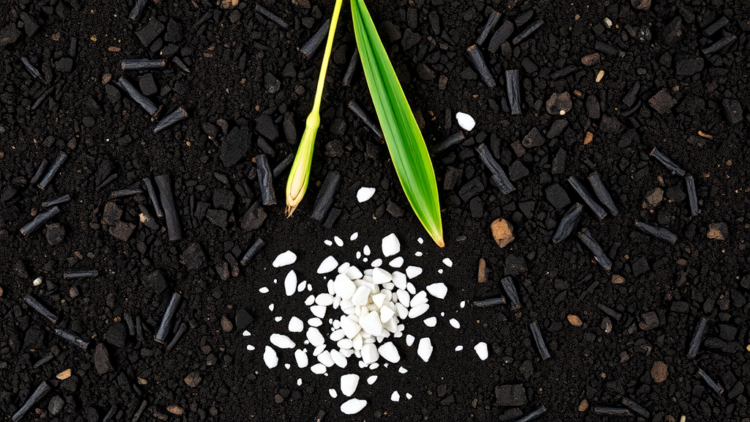
Cadmium contamination in rice paddies is one of the quiet crises of modern agriculture. The heavy metal, released into soils by mining, industrial discharge and phosphate fertilizers, is readily taken up by rice roots and transported into the grain that feeds billions of people. Now, a team of researchers working across several Chinese institutions has demonstrated a deceptively simple remedy: a fertilizer blend that combines biochar, a charcoal-like material made from organic waste, with zinc. Their findings, published in BMC Plant Biology, show that this biochar-enhanced zinc fertilizer, abbreviated BcZnE, can dramatically cut cadmium accumulation in rice while boosting growth, photosynthesis and grain yield.
The study tackled a long-standing problem in soil chemistry. Zinc and cadmium are chemical relatives, both divalent metals, and plants often absorb cadmium through the same transport pathways intended for zinc. By flooding those pathways with zinc and locking cadmium into the soil matrix with biochar, the researchers reasoned, the plant’s exposure to the toxin could be reduced without resorting to expensive soil remediation. That reasoning proved correct. Under cadmium stress, rice plants treated with BcZnE accumulated significantly less cadmium in their roots, shoots and grains than untreated controls, while showing markedly higher zinc uptake in all plant parts.
The physiological consequences were visible throughout the plants. Cadmium stress typically stunts growth, bleaches leaves and suppresses photosynthesis by damaging the machinery that captures light and fixes carbon. In the experiment, cadmium reduced biomass, chlorophyll content and photosynthetic rate while triggering oxidative damage, the cellular wear caused by reactive oxygen species that attack membranes, proteins and DNA. BcZnE treatment reversed much of this damage, improving growth traits and restoring photosynthetic performance in ways the team could trace down to specific molecules.
Central to the protection was the plant’s antioxidant arsenal. Exposure to cadmium pushes plant cells to overproduce malondialdehyde, a marker of membrane damage, and hydrogen peroxide, a destructive reactive oxygen species. The researchers found that BcZnE lowered both compounds substantially. At the same time, treated plants accumulated more proline, an amino acid that acts as a cellular osmoprotectant and stabilizer, and showed elevated activity of the three workhorse antioxidant enzymes: superoxide dismutase, peroxidase and catalase. Together these defenses form a chemical shield that neutralizes free radicals before they can shred cellular components.
What sets the study apart, however, is its molecular detective work. The team turned their attention to carbonic anhydrases, a family of enzymes that interconvert carbon dioxide and bicarbonate and thereby regulate the supply of CO2 to the photosynthetic machinery. Carbonic anhydrase activity rose in BcZnE-treated plants, improving photosynthetic performance precisely when cadmium would normally cripple it. Because photosynthesis is the engine of growth and yield, keeping this enzyme active under stress has direct consequences for how much grain a plant ultimately produces.
Going deeper, the researchers performed a genome-wide survey of the rice genome and identified ten carbonic anhydrase genes, the OsCA family, distributed across five chromosomes and organized into three evolutionary groups: alpha-type, beta-type and gamma-type. Structural analysis showed that these genes share conserved architectural and functional features essential to enzyme activity, indicating that evolution has preserved their core chemistry. This comprehensive catalog now gives rice geneticists a map of every carbonic anhydrase gene available for future functional studies.
Gene expression analysis then revealed which members of the family respond to the treatment. Under cadmium stress, BcZnE upregulated the beta-type OsCA genes, suggesting that these particular genes participate in improved CO2 assimilation and stress tolerance. The finding links a practical field intervention, biochar plus zinc, to a specific molecular response, providing a rare end-to-end story that runs from soil amendment to enzyme activity to gene regulation to yield. It also hints that breeding or engineering rice with stronger beta-type carbonic anhydrase expression could produce cultivars that tolerate contaminated soils better.
The combined improvements in nutrient uptake, antioxidant defense and photosynthetic efficiency translated into what growers care about most: a significant increase in grain yield under cadmium stress. That matters because cadmium-contaminated rice is not a marginal problem. Regions of South and East Asia, where rice is the staple crop, contain soils polluted by industrial activity and irrigation with contaminated water. Previous strategies to keep cadmium out of the food chain, such as liming acidic soils or flooding paddies to change soil chemistry, can be expensive, inconsistent or difficult to scale for smallholder farmers.
Biochar itself has attracted growing interest as a dual-purpose amendment: it is produced from crop residues and other waste biomass, sequesters carbon in soil, and binds heavy metals through its porous structure and charged surfaces. Pairing it with zinc, an essential micronutrient that is deficient in many rice-growing soils, addresses two problems at once, protecting plants from cadmium while improving human nutrition through zinc-enriched grain. The study suggests the fertilizer is more than the sum of its parts, with biochar moderating soil cadmium availability while zinc competitively blocks the transport proteins that carry cadmium into root cells.
The authors caution that their work is an early step. The upregulation of OsCA beta-type genes under BcZnE treatment is a correlation that now needs confirmation through functional studies, for example by knocking out individual genes or overexpressing them in transgenic lines. Still, by identifying a cheap, scalable amendment, charting the full carbonic anhydrase gene family of rice, and pinpointing the genes that respond to treatment, the study provides a strong foundation for research aimed at making rice safer and more productive on contaminated land. For the millions of farmers whose fields sit on cadmium-laced soils, the prospect of a simple fertilizer blend that guards the harvest could not come soon enough.
Subject of Research: The alleviation of cadmium stress in rice by biochar-enhanced zinc fertilizer through regulation of carbonic anhydrase genes
Article Title: Biochar-enhanced zinc alleviates cadmium stress in rice by regulating carbonic anhydrase genes: Insights from genome-wide analysis
Article References: Ahmad, S., Nadeem, M. Y., Khan, M. A., khan, W., Jin, C., & Khan, Z. (2026). Biochar-enhanced zinc alleviates cadmium stress in rice by regulating carbonic anhydrase genes: Insights from genome-wide analysis. BMC Plant Biology. https://doi.org/10.1186/s12870-026-09669-2
Image Credits: AI Generated
DOI: 10.1186/s12870-026-09669-2
Keywords: rice, cadmium stress, biochar, zinc fertilizer, carbonic anhydrase, OsCA genes, antioxidant enzymes, photosynthesis, heavy metal contamination, food safety, genome-wide analysis, grain yield
Cite Scienmag News
APA MLA Chicago
Alan Morgan. (September 22, 2026). Biochar and Zinc Team Up to Shield Rice From Toxic Cadmium. Scienmag. https://scienmag.com/biochar-and-zinc-team-up-to-shield-rice-from-toxic-cadmium/
Alan Morgan. “Biochar and Zinc Team Up to Shield Rice From Toxic Cadmium.” Scienmag, 22 September 2026, https://scienmag.com/biochar-and-zinc-team-up-to-shield-rice-from-toxic-cadmium/. Accessed 22 September 2026.
Alan Morgan. “Biochar and Zinc Team Up to Shield Rice From Toxic Cadmium.” Scienmag. September 22, 2026. https://scienmag.com/biochar-and-zinc-team-up-to-shield-rice-from-toxic-cadmium/
Copy citation Download RIS
Tags: antioxidant enzymesBiocharBiochar and zinc fertilizer for cadmium reduction in ricebiochar-enhanced zinc fertilizer effectivenesscadmium stresscarbonic anhydrasefood safetygenome-wide analysisgrain yieldheavy metal contaminationheavy metal contamination in rice paddiesheavy metal uptake mechanisms in rice plantsimpact of biochar on plant growth and photosynthesisinnovative solutions for food safety inmitigating soil heavy metal toxicity in agricultureorganic waste-derived biochar for crop safetyOsCA genesphotosynthesisreducing cadmium accumulation in rice grainsricesoil remediation for heavy metal contaminationsustainable strategies for soil pollutionzinc and cadmium transport pathways in plantszinc fertilizer