A three-dimensional binder-free hybrid electrode combining electrodeposited vanadium pentoxide with a reduced graphene oxide scaffold has demonstrated enhanced charge transport and ion diffusion for supercapacitor applications. In a study published in the journal Ionics, researchers investigated how tailored electrode architectures overcome kinetic limitations in energy storage materials. The engineered hybrid system achieved a high specific capacitance of 676 farads per gram at a current density of 1 ampere per gram while maintaining durable operation under cycling in an aqueous lithium perchlorate electrolyte solution.
The researchers emphasized that the morphology and microstructure of an electrode exert a significant effect on its overall electrochemical storage performance. To achieve optimal storage capabilities, designing a superior architecture with an open porous structure and enhanced electrical conductivity is critical. Such physical configurations directly facilitate ion diffusion and charge transport throughout the active matrix, thereby improving both specific capacitance and the reaction kinetics governing electrochemical charge and discharge processes.
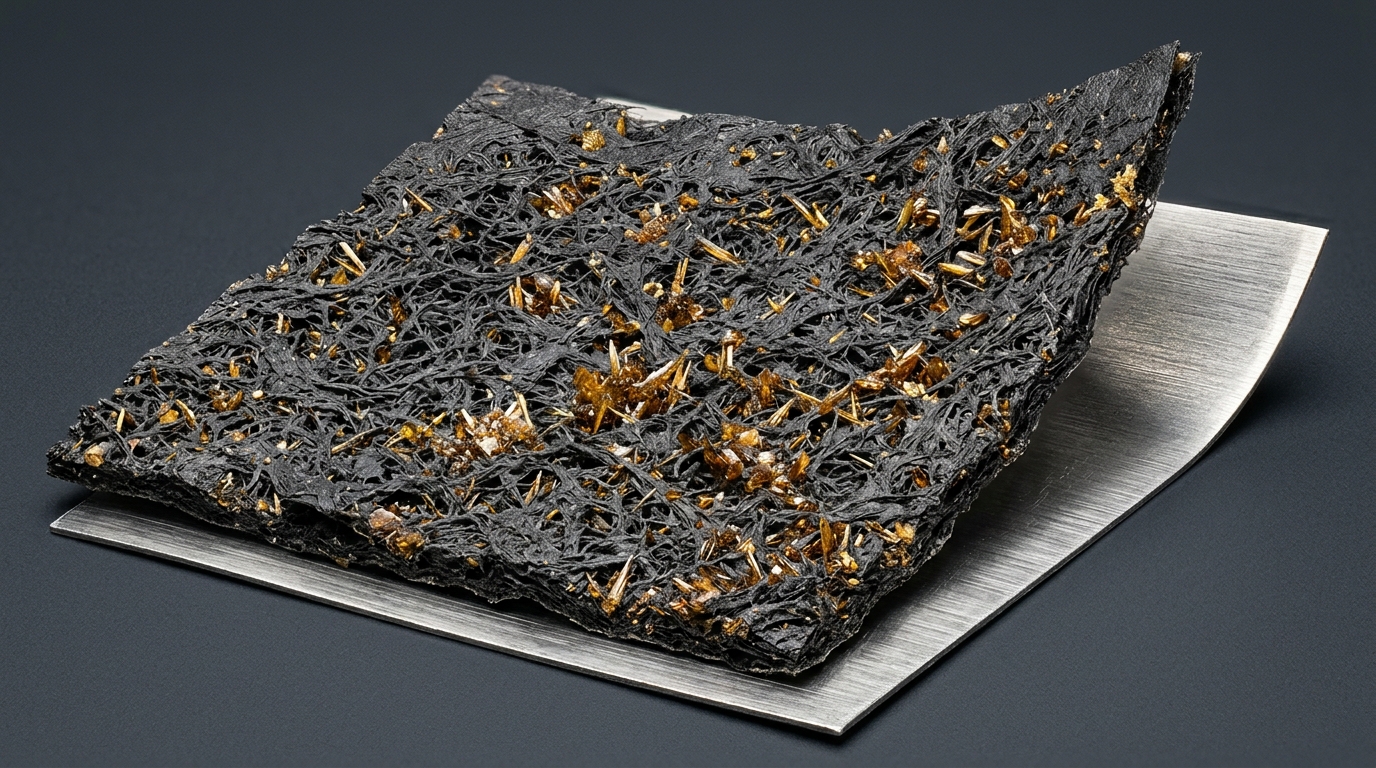
To realize these architectural advantages, the study implemented a two-step fabrication procedure directly on a nickel foam current collector. The initial stage involved electrophoretic deposition of reduced graphene oxide nanosheets onto the nickel foam substrate, creating a three-dimensional conductive scaffold without requiring chemical binders. In the subsequent stage, vanadium pentoxide was electrodeposited directly onto the carbon framework, producing the final three-dimensional binder-free hybrid electrode.
The research team systematically investigated the structural, morphological, and pseudocapacitive properties of both pure and hybrid vanadium pentoxide-based electrodes to evaluate the impact of this composite design. Their morphological assessments confirmed that the three-dimensional architecture and open porous network facilitate thorough electrolyte infiltration. This open layout provides unobstructed pathways for rapid ion diffusion and accommodates the subsequent intercalation and de-intercalation of lithium ions within the active vanadium pentoxide material.
The integrated reduced graphene oxide scaffold serves a vital functional role due to its large surface area and high electrical conductivity. By establishing continuous electrical pathways, the graphene framework facilitates rapid charge transfer directly to the active vanadium pentoxide. This efficient charge transfer substantially accelerates the kinetics of pseudocapacitive reactions occurring across the electrode during electrochemical operation.
Electrochemical measurements revealed that the charge storage mechanism of the vanadium pentoxide electrodes in an aqueous lithium perchlorate solution involves both electric double-layer capacitive and pseudocapacitive contributions. Operating through these combined capacitive mechanisms, the hybrid electrode delivered its specific capacitance of 676 farads per gram at a current density of 1 ampere per gram.
Rate performance testing confirmed that the hybrid electrode retained 54.7 percent of its capacitance when subjected to a ten-fold increase in current density. Furthermore, long-term durability assessments demonstrated outstanding cycling stability, with 92.8 percent capacitance retention maintained after 2,000 continuous charge-discharge cycles. The authors concluded that combining a three-dimensional binder-free reduced graphene oxide scaffold with electrodeposited vanadium pentoxide provides an effective electrode architecture for improving charge transport and ion accessibility in high-performance supercapacitors.
Subject of Research: Electrochemical performance of a 3D binder-free V₂O₅@rGO hybrid supercapacitor electrode
Article Title: Orderly stacked layer-by-layer mesoporous V₂O₅@rGO hybrid electrode: anodic electrodeposition and supercapacitor application
Article References: Kazazi, M., Kazemi, S., & Kaleji, B. K. (2026). Orderly stacked layer-by-layer mesoporous V₂O₅@rGO hybrid electrode: anodic electrodeposition and supercapacitor application. Ionics. https://doi.org/10.1007/s11581-026-07646-1
Image Credits: AI Generated
DOI: 10.1007/s11581-026-07646-1
Keywords: vanadium pentoxide, reduced graphene oxide, supercapacitors, electrophoretic deposition, electrodeposition, nickel foam, hybrid electrodes, pseudocapacitance, electric double-layer capacitance, lithium perchlorate, specific capacitance, rate performance, cycling stability, ion diffusion, binder-free electrodes, mesoporous materials
News Source: Neil Sanderson. (November 17, 2026). Binder-Free Vanadium Pentoxide and Graphene Hybrid Electrode Improves Supercapacitor Performance. Scienmag.