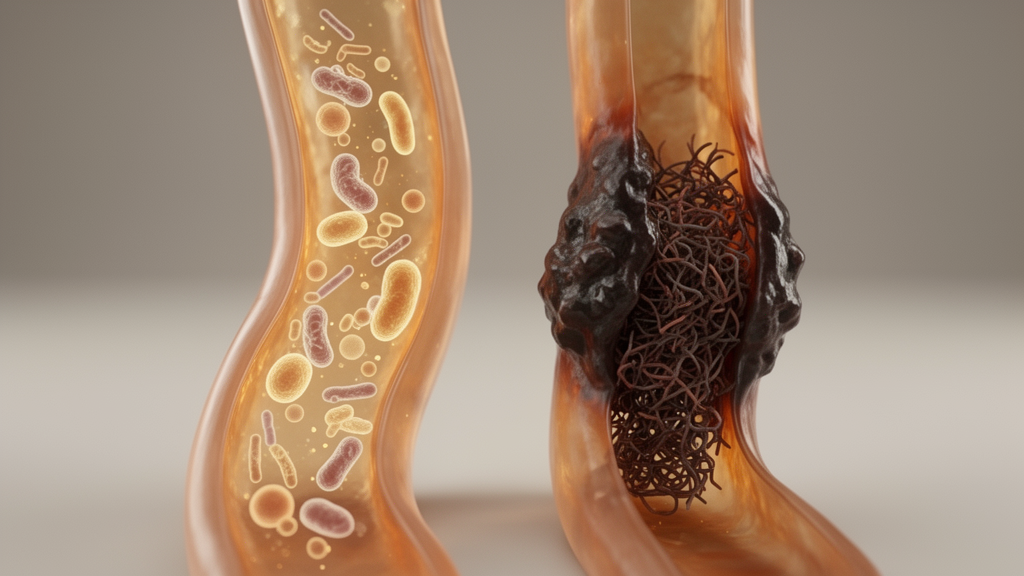
Researchers have mapped the microbial communities living in bile from patients with blocked bile ducts, comparing people whose obstruction was caused by benign disease with those whose blockage was caused by cancer. The study, published in the journal Gut Pathogens, used whole-genome shotgun sequencing on bile samples collected during endoscopic retrograde cholangiopancreatography.
The study included 48 oncological patients, evenly split between the two conditions: 24 with benign biliary obstruction and 24 with malignant biliary obstruction.
One of the study’s central findings was what the two groups did not differ in. When the team calculated standard measures of microbial diversity, including the Simpson, Shannon and richness indices, no significant differences emerged between benign and malignant obstruction. In other words, the sheer variety of species in the bile was broadly similar whether the blockage was cancerous or not.
The composition told a more nuanced story. Thirty-four microbial genera were shared between the two patient groups, but each group also carried genera that were absent from the other. That pattern suggests that while a core biliary community is common to obstructed bile ducts regardless of cause, particular microbes may associate with benign versus malignant disease.
To look beyond simple lists of organisms, the researchers applied principal component analysis, which grouped the samples into four microbial clusters in both the benign and malignant groups. This clustering indicates that biliary communities fall into a small number of recurring configurations rather than varying continuously from patient to patient.
The most striking difference appeared when the researchers examined the topology of the microbial networks, that is, how the detected genera relate to one another. In the malignant group, by contrast, the network showed a more highly connected community, with a denser web of relationships among its members.
The authors suggest that identifying the topological characteristics of these microbial communities might offer a new insight into host-microbiota interactions in biliary disease.
The motivation behind the work lies in the role the microbiota plays in bile acid metabolism and in inflammation. Persistent inflammation in the hepatobiliary system is thought to contribute to tumorigenesis, and shifts in the composition and structure of the biliary microbial community may help drive the onset and progression of severe clinical conditions. Characterising these communities, the authors argue, may improve understanding of their role in hepatobiliary disease.
The study is an observational comparison in a single group of oncological patients, and the published version is an early, peer-reviewed accepted manuscript that remains subject to further edits.
Subject of Research: Biliary microbiome differences between benign and malignant bile duct obstruction
Article Title: The biliary microbiome in obstructive disease: a shotgun metagenomic comparison of benign and malignant conditions
Article References: Gatti, G., Binda, C., Dirani, G., Zannoli, S., Colosimo, C., Ingletto, L., Montanari, M. S., Marzucco, A., Arfilli, V., Schiavone, P., Gibiino, G., Perini, B., Coluccio, C., Grumiro, L., Dionisi, L., Guerra, M., Brandolini, M., De Pascali, A. M., Scagliarini, A., … Cricca, M. (2026). The biliary microbiome in obstructive disease: a shotgun metagenomic comparison of benign and malignant conditions. Gut Pathogens. https://doi.org/10.1186/s13099-026-00893-7
Image Credits: AI Generated
DOI: 10.1186/s13099-026-00893-7
Keywords: biliary microbiome, bile duct obstruction, shotgun metagenomics, microbial diversity, microbial networks, cholangiopancreatography, hepatobiliary disease, bile acid metabolism, Enterobacteriaceae, cancer, biliary, microbiome
News Source: Morgan Morrow. (October 29, 2026). Bile duct microbiome differs in structure between benign and malignant obstruction. Scienmag.