• HOME
  • NEWS
  • EXPLORE
    • CAREER
      • Companies
      • Jobs
    • EVENTS
    • iGEM
      • News
      • Team
    • PHOTOS
    • VIDEO
    • WIKI
  • BLOG
  • COMMUNITY
    • FACEBOOK
    • INSTAGRAM
    • TWITTER
Wednesday, December 31, 2025
BIOENGINEER.ORG
No Result
View All Result
  • Login
  • HOME
  • NEWS
  • EXPLORE
    • CAREER
      • Companies
      • Jobs
        • Lecturer
        • PhD Studentship
        • Postdoc
        • Research Assistant
    • EVENTS
    • iGEM
      • News
      • Team
    • PHOTOS
    • VIDEO
    • WIKI
  • BLOG
  • COMMUNITY
    • FACEBOOK
    • INSTAGRAM
    • TWITTER
  • HOME
  • NEWS
  • EXPLORE
    • CAREER
      • Companies
      • Jobs
        • Lecturer
        • PhD Studentship
        • Postdoc
        • Research Assistant
    • EVENTS
    • iGEM
      • News
      • Team
    • PHOTOS
    • VIDEO
    • WIKI
  • BLOG
  • COMMUNITY
    • FACEBOOK
    • INSTAGRAM
    • TWITTER
No Result
View All Result
Bioengineer.org
No Result
View All Result
Home NEWS Science News Immunology

Beware of false negatives in diagnostic testing of COVID-19

Bioengineer by Bioengineer
May 26, 2020
in Immunology
Reading Time: 2 mins read
0
IMAGE
Share on FacebookShare on TwitterShare on LinkedinShare on RedditShare on Telegram

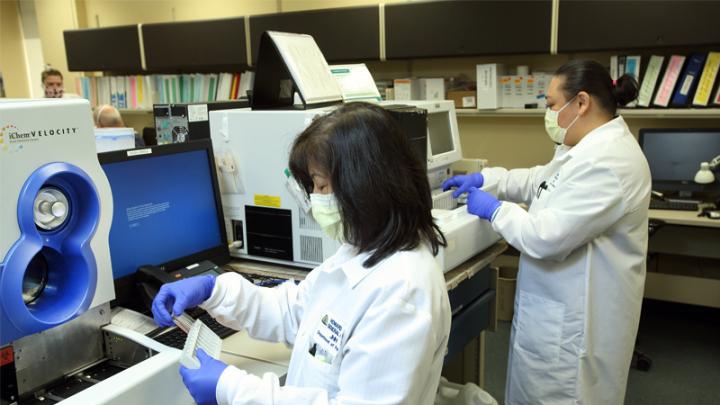
IMAGE

Credit: Keith Weller/Johns Hopkins Medicine

One of the most commonly used diagnostic tools, particularly during this pandemic, is the reverse transcriptase polymerase chain reaction test (RT-PCR), which uses a person’s respiratory sample to detect viral particles and determine if the person may have been exposed to a virus. Laboratory professionals across the U.S. and the globe have used RT-PCR to find out if a person has been infected with SARS-CoV-2, the virus that causes COVID-19. These tests have played a critical role in our nation’s response to the pandemic. But, while they are important, researchers at Johns Hopkins have found that the chance of a false negative result — when a virus is not detected in a person who actually is, or recently has been, infected — is greater than 1 in 5 and, at times, far higher. The researchers caution that the predictive value of these tests may not always yield accurate results, and timing of the test seems to matter greatly in the accuracy.

In the report on the findings published May 13 in the journal Annals of Internal Medicine, the researchers found that the probability of a false negative result decreases from 100% on Day 1 of being infected to 67% on Day 4. The false negative rate decreased to 20% on Day 8 (three days after a person begins experiencing symptoms). They also found that on the day a person started experiencing actual symptoms of illness, the average false negative rate was 38%. In addition, the false negative rate began to increase again from 21% on Day 9 to 66% on Day 21.

The study, which analyzed seven previously published studies on RT-PCR performance, adds to evidence that caution should be used in the interpretation of negative test results, particularly for individuals likely to have been exposed or who have symptoms consistent with COVID-19.

###

Lauren Kucirka, M.D., Ph.D., gynecology and obstetrics resident physician, and Justin Lessler, Ph.D., associate professor of epidemiology at the Johns Hopkins Bloomberg School of Public Health, are available for comment on false negatives in diagnostic testing for SARS-CoV-2.

Media Contact
Waun’Shae Blount
[email protected]

Original Source

https://www.hopkinsmedicine.org/news/newsroom/news-releases/covid-19-story-tip-beware-of-false-negatives-in-diagnostic-testing-of-covid-19

Tags: Infectious/Emerging DiseasesMedicine/Health
Share12Tweet8Share2ShareShareShare2

Related Posts

IMAGE

UMass Amherst grad student awarded fellowship for food allergy research

July 23, 2021
IMAGE

Less-sensitive COVID-19 tests may still achieve optimal results if enough people tested

July 22, 2021

Public trust in CDC, FDA, and Fauci holds steady, survey shows

July 20, 2021

USC study shows male-female differences in immune cell function

July 19, 2021
Please login to join discussion

POPULAR NEWS

  • blank

    PTSD, Depression, Anxiety in Childhood Cancer Survivors, Parents

    92 shares
    Share 37 Tweet 23
  • NSF funds machine-learning research at UNO and UNL to study energy requirements of walking in older adults

    71 shares
    Share 28 Tweet 18
  • Exploring Audiology Accessibility in Johannesburg, South Africa

    52 shares
    Share 21 Tweet 13
  • Nurses’ Views on Online Learning: Effects on Performance

    71 shares
    Share 28 Tweet 18

About

We bring you the latest biotechnology news from best research centers and universities around the world. Check our website.

Follow us

Recent News

Erzhi Tiangui Boosts Blastocyst Quality via Nrf2 Pathway

Ultrasound Boosts Peripheral Nerve Regeneration: Insights Revealed

Embracing AI: Family Caregivers Support Tech for Elders

Subscribe to Blog via Email

Enter your email address to subscribe to this blog and receive notifications of new posts by email.

Join 71 other subscribers
  • Contact Us

Bioengineer.org © Copyright 2023 All Rights Reserved.

Welcome Back!

Login to your account below

Forgotten Password?

Retrieve your password

Please enter your username or email address to reset your password.

Log In
No Result
View All Result
  • Homepages
    • Home Page 1
    • Home Page 2
  • News
  • National
  • Business
  • Health
  • Lifestyle
  • Science

Bioengineer.org © Copyright 2023 All Rights Reserved.