Credit: Roy Kaltschmidt/Berkeley Lab
The Department of Energy's Lawrence Berkeley National Laboratory (Berkeley Lab) is set to receive nearly $4.6 million over four years as part of an ongoing federally funded project to create a comprehensive catalog for fundamental genomics research.
The National Human Genome Research Institute (NHGRI), part of the National Institutes of Health, today announced approximately $31.5 million in grants this fiscal year, pending funds, as part of its latest expansion of the Encyclopedia of DNA Elements (ENCODE) project, or ENCODE 4.
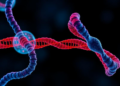
ENCODE was launched in 2003 to identify and characterize the functional elements in the human genome sequence. Since then, the consortium has created a wealth of open-access data, tools, and analyses for use by researchers to interpret genome sequences and the consequences of genomic variation. More than 98 percent of the human genome is non-coding, meaning it does not code for specific proteins. Understanding the role of these non-coding regions is considered one of the most pressing challenges in genomics today.
Berkeley Lab researchers played significant roles in earlier stages of the ENCODE project, helping to characterize transcriptional enhancers, which facilitate gene expression, by mapping enhancer-associated biochemical signatures in the genome and testing DNA sequences for enhancer activity.
But enhancers are only one of many non-coding molecular functions that have been inferred from ENCODE data. Scientists will explore other proposed categories of non-coding sequences, including DNA elements such as "super-enhancers" and topological domain boundary elements, and their functional impact on organismal biology and health.
The new Berkeley Lab grant, awarded at more than $1.1 million per year, will be used to establish the Center for In Vivo Characterization of ENCODE Elements (CIViC). It will be one of five characterization centers tasked with investigating how genomic elements function in vivo. CIViC will be led by principal investigators Len Pennacchio and Axel Visel, senior scientists at Berkeley Lab's Environmental Genomics and Systems Biology Division. Research scientist Diane Dickel will be the center's project manager.
"We have made a great deal of progress in creating detailed genomic maps, but maps are not all that useful if you don't understand what the various biochemical marks mean," said Visel. "What we are doing is helping to create the legend that allows people to understand the map. It is important to know where the transcription factor binding sites are, but we still need to know whether those sites actually activate gene expression or have some other previously undiscovered function."
To that end, Berkeley Lab researchers will use CRISPR/Cas9 gene-editing technology, which Berkeley Lab scientist Jennifer Doudna helped pioneer, to systematically test the function of representative sequences in mice.
A major collaborator of this center will be Zhiping Weng, professor at the University of Massachusetts Medical School, who will use computational methods to help determine the best genomic sequences for the Berkeley Lab group to experimentally characterize.
###
In addition to the characterization centers, ENCODE 4 will fund mapping centers and centers for data and computational analysis. To read more, see the NHGRI press release online.
Lawrence Berkeley National Laboratory addresses the world's most urgent scientific challenges by advancing sustainable energy, protecting human health, creating new materials, and revealing the origin and fate of the universe. Founded in 1931, Berkeley Lab's scientific expertise has been recognized with 13 Nobel Prizes. The University of California manages Berkeley Lab for the U.S. Department of Energy's Office of Science. For more, visit http://www.lbl.gov.
DOE's Office of Science is the single largest supporter of basic research in the physical sciences in the United States, and is working to address some of the most pressing challenges of our time. For more information, please visit science.energy.gov.
Media Contact
Sarah Yang
[email protected]
510-486-4575
@BerkeleyLab
Home Video