• HOME
  • NEWS
  • EXPLORE
    • CAREER
      • Companies
      • Jobs
    • EVENTS
    • iGEM
      • News
      • Team
    • PHOTOS
    • VIDEO
    • WIKI
  • BLOG
  • COMMUNITY
    • FACEBOOK
    • INSTAGRAM
    • TWITTER
Thursday, July 2, 2026
BIOENGINEER.ORG
No Result
View All Result
  • Login
  • HOME
  • NEWS
  • EXPLORE
    • CAREER
      • Companies
      • Jobs
        • Lecturer
        • PhD Studentship
        • Postdoc
        • Research Assistant
    • EVENTS
    • iGEM
      • News
      • Team
    • PHOTOS
    • VIDEO
    • WIKI
  • BLOG
  • COMMUNITY
    • FACEBOOK
    • INSTAGRAM
    • TWITTER
  • HOME
  • NEWS
  • EXPLORE
    • CAREER
      • Companies
      • Jobs
        • Lecturer
        • PhD Studentship
        • Postdoc
        • Research Assistant
    • EVENTS
    • iGEM
      • News
      • Team
    • PHOTOS
    • VIDEO
    • WIKI
  • BLOG
  • COMMUNITY
    • FACEBOOK
    • INSTAGRAM
    • TWITTER
No Result
View All Result
Bioengineer.org
No Result
View All Result
Home NEWS Science News Biology

Belgian stem cell biologists create new human cell type for research

Bioengineer by Bioengineer
September 1, 2022
in Biology
Reading Time: 2 mins read
0
Professor Vincent Pasque and his KU Leuven team
Share on FacebookShare on TwitterShare on LinkedinShare on RedditShare on Telegram

Professor Vincent Pasque and his team at KU Leuven have managed to generate a new type of human cell in the lab using stem cells. The new cells closely resemble their natural counterparts in early human embryos. As a result, researchers can now better study what happens just after an embryo implants in the womb. The findings were published in Cell Stem Cell. 
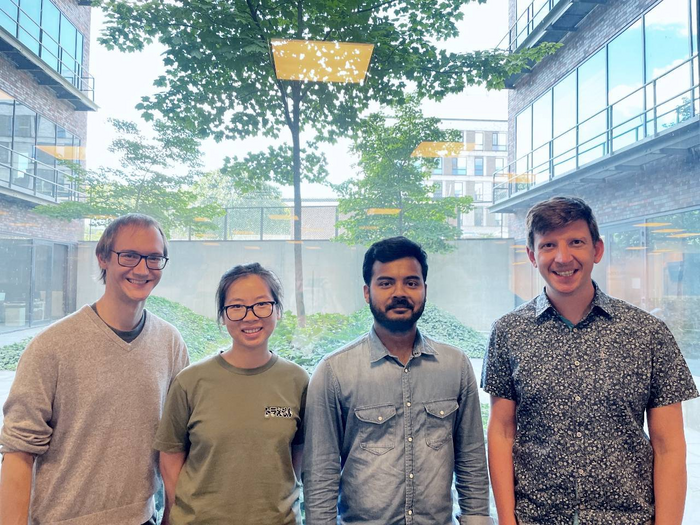
Professor Vincent Pasque and his KU Leuven team

Credit: KU Leuven

Professor Vincent Pasque and his team at KU Leuven have managed to generate a new type of human cell in the lab using stem cells. The new cells closely resemble their natural counterparts in early human embryos. As a result, researchers can now better study what happens just after an embryo implants in the womb. The findings were published in Cell Stem Cell. 

When all goes well, a human embryo implants in the womb about seven days after fertilisation. At that point, the embryo becomes inaccessible for research due to technical and ethical limitations. That is why scientists have already developed stem cell models for various types of embryonic and extraembryonic cells to study human development in a dish.

Vincent Pasque’s team at KU Leuven has developed the first model for a specific type of human embryo cells, extraembryonic mesoderm cells. Professor Pasque: “These cells generate the first blood in an embryo, help to attach the embryo to the future placenta, and play a role in forming the primitive umbilical cord. In humans, this type of cell appears at an earlier developmental stage than in mouse embryos, and there might be other important differences between species. That makes our model especially important: research in mice may not give us answers that also apply to humans.” 

The researchers made their model cells from human stem cells that can still develop into all cell types of an embryo. The new cells closely resemble their natural counterparts in human embryos and are therefore a good model for that specific cell type. 

“You don’t make a new human cell type every day,” Pasque continues. “We are very excited because now we can study processes that normally remain inaccessible during development. In fact, the model has already enabled us to find out where extraembryonic mesoderm cells come from. In the longer term, our model will hopefully also shed more light on medical challenges such as fertility problems, miscarriages, and developmental disorders.”


Journal

Cell Stem Cell

DOI

10.1016/j.stem.2022.08.001

Method of Research

Experimental study

Article Title

Modeling human extraembryonic mesoderm cells using naive pluripotent stem cells

Article Publication Date

1-Sep-2022

Share12Tweet8Share2ShareShareShare2

Related Posts

Evolution-Inspired Biosensors Revolutionize Lipid Tracking in Real Time — Biology

Evolution-Inspired Biosensors Revolutionize Lipid Tracking in Real Time

July 2, 2026
New Study Reveals How to Reduce Risk of Dangerous Wildlife Encounters This Summer — Biology

New Study Reveals How to Reduce Risk of Dangerous Wildlife Encounters This Summer

July 2, 2026

Hepatic IFRD1 Alleviates Metabolic Dysfunction-Linked Steatohepatitis Through the GLUD1/α-KG Pathway

July 2, 2026

Intricate Food Webs Support Ecosystem Health and Stability

July 2, 2026

POPULAR NEWS

  • Detection of EDCs in Breast Milk and Infant Urine Up to Six Months Highlights Early Exposure Risks

    77 shares
    Share 31 Tweet 19
  • Saying Goodbye to PGY-6: Pediatric Fellowship Realities

    103 shares
    Share 41 Tweet 26
  • New Drug Candidate Developed at McMaster Shows Potential for Treating Brain Cancer

    58 shares
    Share 23 Tweet 15
  • KTU Researchers Explore Ultrasound’s Role in Enhancing Blood Flow Beyond Diagnostics

    53 shares
    Share 21 Tweet 13

About

BIOENGINEER.ORG

We bring you the latest biotechnology news from best research centers and universities around the world. Check our website.

Follow us

Recent News

Steatosis Drives Liver Metastasis Diversity in CRC

Unlocking the Mysteries of Alzheimer’s Disease

Pensoft Introduces New Peer-Reviewed Journal of Regeneration to Advance Restorative Biology Across Species

Subscribe to Blog via Email

Enter your email address to subscribe to this blog and receive notifications of new posts by email.

Join 83 other subscribers
  • Contact Us

Bioengineer.org © Copyright 2023 All Rights Reserved.

Welcome Back!

Login to your account below

Forgotten Password?

Retrieve your password

Please enter your username or email address to reset your password.

Log In
No Result
View All Result
  • Homepages
    • Home Page 1
    • Home Page 2
  • News
  • National
  • Business
  • Health
  • Lifestyle
  • Science

Bioengineer.org © Copyright 2023 All Rights Reserved.