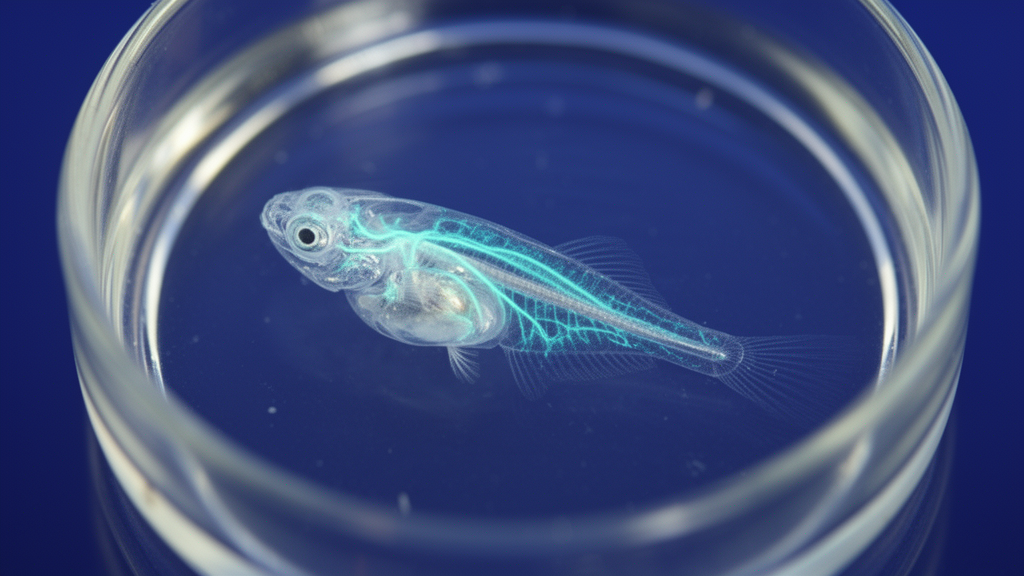
Biologists investigating the genetic foundations of behavioural adaptation have uncovered an unexpected developmental response in aquatic models, finding that zebrafish lacking the gene coding for brain-derived neurotrophic factor display significantly greater behavioural and cognitive plasticity than their wild-type counterparts. The phenomenon of phenotypic plasticity, which enables a single genotype to produce varying anatomical, physiological, or behavioural traits depending on external environmental cues, has long been linked to neurotrophin signaling across diverse vertebrate species. In mammalian paradigms, environmental enrichment reliably boosts neurotrophic expression and stimulates learning, leading researchers to hypothesize that neurotrophins serve as indispensable drivers of neurobehavioral malleability. However, an experimental assessment tracking larval zebrafish raised in stark contrastive environments revealed that eliminating functional neurotrophic signaling did not impair developmental flexibility. Instead, larvae bearing a complete knockout of the neurotrophin exhibited pronounced behavioral shifts and enhanced habituation learning when reared in sensory-rich surroundings, challenging prevailing assumptions regarding the molecular constraints that govern cognitive adaptation.
To investigate how neurotrophin signaling directs behavioural remodelling, an investigative team at the University of Ferrara established an experimental breeding pipeline utilizing a stable knockout zebrafish strain generated through targeted CRISPR-Cas9 genome editing. Because the structural organisation and primary amino acid sequence of zebrafish neurotrophin share ninety-one percent sequence identity with human brain-derived neurotrophic factor, the teleost provides a physiologically conserved platform for studying neural plasticity despite an ancestral whole-genome duplication. The targeted deletion comprised a forty-base-pair lesion in the coding sequence of the bdnf locus, effectively disabling all functional isoforms of the protein while leaving adult fish morphologically and reproductively intact. Sibling-derived wild-type controls and homozygous knockout breeders were maintained under strictly regulated laboratory parameters, including fourteen-hour photoperiods, stable water temperatures of twenty-seven degrees Celsius, and controlled electrical conductivity. This controlled breeding paradigm permitted synchronous clutch harvesting across multiple breeding tanks, yielding cohorts of larvae born simultaneously to minimize extraneous laboratory confounds during downstream neurobehavioral testing.
A total cohort of three hundred and twenty larvae was allocated evenly across genotypes and assigned to one of two environmental rearing conditions for a ten-day treatment period lasting until fourteen days post-fertilization. Half of the homozygous knockout larvae and half of the wild-type controls were placed into barren maintenance tanks consisting of bare glass vessels filled with standardized fish water. The remaining subjects were introduced into enriched housing units containing nine multi-coloured and diversely shaped Lego construction bricks. To sustain environmental complexity and prevent sensory acclimation, researchers systematically altered the physical spatial arrangement of the bricks at eight and thirteen days post-fertilization, concurrently swapping two objects for novel configurations of identical colour. Control tanks underwent simultaneous pseudo-manipulations using clean transfer pipettes to balance physical disturbance across treatment cohorts.
Following the ten-day environmental manipulation, researchers transferred two hundred and eight surviving larvae into individual twenty-four-well culture plates to evaluate individual behavioural responses within automated observation chambers. Testing arrays were counterbalanced across conditions and integrated into a computerized DanioVision tracking platform, recording continuous swimming trajectories over a sixty-minute observation window divided into one-minute time bins. Locomotor tracking demonstrated that wild-type larvae were generally more active than knockout specimens across the entire observation period, and larvae raised in enriched environments exhibited higher overall displacement than those from barren tanks. A linear mixed-effects model revealed a significant triple interaction among genetic line, environmental treatment, and observation time. When lines were evaluated independently, the knockout group demonstrated a pronounced elevation in locomotion driven by environmental enrichment, whereas wild-type controls showed no statistically significant shift in activity between barren and enriched conditions.
Immediately following the sixty-minute open-field assessment, the experimental cohort was subjected to an automated cognitive examination designed to quantify short-term non-associative learning through acoustic-vibrational startle habituation. An automated solenoid tapping device integrated beneath the testing platform delivered thirty consecutive mechanical pulses calibrated at maximum system intensity, separated by uniform one-second resting intervals. Each mechanical impulse elicited an initial reflexive escape reaction, which researchers quantified as the absolute distance travelled during the single second following stimulation. As the stimulus train progressed, normal neurological processing induced habituation learning, characterized by a steady attenuation of the reflexive escape response across consecutive taps. To evaluate learning kinetics independent of baseline mobility differences, investigators calculated a normalized habituation learning index for every subject, standardizing subsequent locomotor reactions relative to each larva’s initial startle response.
Statistical evaluation of the cognitive dataset revealed that baseline startle magnitude during the first mechanical pulse did not differ significantly between genetic strains or environmental treatments, ensuring that downstream learning metrics were not biased by initial sensory differences. Across repeated trials, however, habituation indices declined systematically, demonstrating robust learning progression across all experimental groups. More critically, the mixed-effects statistical model identified a significant interaction between genotype and environmental treatment, alongside a significant three-way interaction involving stimulation pulse number. Breakdown analyses across lines demonstrated that environmental enrichment elicited a marginally significant improvement in habituation learning within the neurotrophin-deficient knockout larvae, whereas wild-type controls showed no statistically distinguishable change in overall habituation capacity between enriched and barren rearing environments, reinforcing the observation of exaggerated cognitive responsiveness in the absence of the neurotrophin.
To explore molecular correlates underlying these divergent behavioural responses, researchers sacrificed two hundred and six tested larvae using buffered anaesthetic immersion and micro-dissected cranial tissue for targeted transcriptional profiling. Total ribonucleic acid was extracted from pooled cranial samples comprising eight to nine heads per replicate, with six independent pools examined per experimental condition. Using quantitative real-time polymerase chain reaction, the team measured relative expression levels across seven neural plasticity genes, one neurogenesis marker, and an elongation factor reference gene. Primers targeted transcripts encoding glutamate receptor auxiliary subunit neto1L, synaptic regulator shisa7b, basic helix-loop-helix transcription factors neuroD1 and neuroD2, developmental signaling receptors notch1a and notch3, neurotrophin receptor ntrk2b, and proneural regulator neuroD4, calculating normalized fold changes using the comparative cycle threshold technique relative to barren wild-type controls.
Transcriptional profiling revealed that environmental enrichment significantly altered gene expression across two key regulatory loci regardless of genetic background, downregulating mean cranial expression of shisa7b and notch3 relative to barren housing. Within-group contrasts identified gene-specific interactions between genotype and rearing history. For shisa7b, downregulation following enrichment reached statistical significance within the knockout line, but remained non-significant in wild-type fish. Conversely, notch3 downregulation in response to enrichment was statistically confirmed within wild-type controls, while displaying only a non-significant trend in knockout fish. The most striking divergence appeared in neuroD1 expression, which exhibited statistically significant upregulation following enrichment exclusively in wild-type larvae, whereas knockout larvae maintained completely unaltered neuroD1 transcript levels across barren and enriched treatments, mirroring patterns previously documented in salmonids exposed to structural environmental complexity.
The pronounced plasticity observed in fish lacking functional neurotrophin signaling diverges sharply from traditional neurobiological frameworks developed in mammalian literature, where brain-derived neurotrophic factor is widely framed as an essential promoter of synaptic remodelling and adaptive flexibility. Instead of abolishing behavioural adjustment, the total absence of the neurotrophin produced exaggerated behavioural and cognitive shifts following enrichment. The investigators posited two primary theoretical explanations to account for this counterintuitive phenotype. One interpretation suggests that brain-derived neurotrophic factor may act physiologically as a homeostatic governor or negative feedback regulator that dampens the amplitude of neuroplastic modifications once external stimuli trigger adaptation. Under this hypothesis, removing the regulatory brake allows environmental stimuli to drive unchecked plastic reorganization, producing the amplified behavioural responsiveness recorded in knockout larvae.
Alternatively, the authors noted that lifelong absence of neurotrophic signaling during early embryogenesis could induce widespread organisational abnormalities across developing neural circuits. Under this developmental framework, heightened behavioral flexibility might not represent a direct physiological readout of adult plasticity mechanisms, but rather an indirect compensation or structural artifact stemming from defective neural wiring. The targeted gene expression data lend tentative support to mechanistic divergence, particularly regarding neuroD1 signaling. Because wild-type zebrafish recruited neuroD1 transcription during environmental enrichment while knockout fish completely failed to upregulate the factor, brain-derived neurotrophic factor may normally channel plastic adjustments through regulated transcriptional cascades that were effectively bypassed or substituted by alternative pathways in the mutant line.
The study authors highlighted several methodological considerations and interpretive boundaries when contextualizing their discoveries within the broader landscape of vertebrate neuroscience. Control wild-type larvae exhibited higher baseline movement than knockouts, contrasting with previous observations in adult zebrafish where mutants displayed elevated locomotion, a discrepancy likely stemming from ontogenetic differences in light preference or arena dimensions relative to body size. Furthermore, the absence of statistically detectable behavioral plasticity in wild-type controls during this specific experiment may reflect statistical power constraints or behavioral ceiling effects rather than a true biological lack of responsiveness.
By demonstrating that environmental enrichment can trigger potent behavioural and cognitive remodelling even in the complete absence of brain-derived neurotrophic factor, this larval zebrafish model provides an intriguing framework for re-evaluating how neurotrophins regulate developmental flexibility, suggesting that the molecular networks directing vertebrate brain plasticity possess unexpected redundancy and regulatory complexity.
Subject of Research: Role of brain-derived neurotrophic factor in zebrafish behavioural and cognitive plasticity
Article Title: Knockout in zebrafish suggests a role of BDNF in behavioural and cognitive plasticity
Article References: Rovegno, E., Gatto, E., Frigato, E., Bertolucci, C., & Lucon-Xiccato, T. (2026). Knockout in zebrafish suggests a role of BDNF in behavioural and cognitive plasticity. Behavioral and Brain Functions, 22(1), Article 30. https://doi.org/10.1186/s12993-026-00335-z
Image Credits: AI Generated
DOI: 10.1186/s12993-026-00335-z
Keywords: brain-derived neurotrophic factor, BDNF knockout, zebrafish larvae, phenotypic plasticity, environmental enrichment, habituation learning, locomotor activity, CRISPR-Cas9, neuroD1, shisa7b, notch3, gene expression, DanioVision tracking, startle response, neural plasticity, behavioural neuroscience, teleost models
News Source: Juliet Wilcox. (November 11, 2026). BDNF Gene Knockout Intensifies Behavioural and Cognitive Plasticity in Zebrafish Larvae. Scienmag.