• HOME
  • NEWS
  • EXPLORE
    • CAREER
      • Companies
      • Jobs
    • EVENTS
    • iGEM
      • News
      • Team
    • PHOTOS
    • VIDEO
    • WIKI
  • BLOG
  • COMMUNITY
    • FACEBOOK
    • INSTAGRAM
    • TWITTER
Thursday, November 26, 2026
BIOENGINEER.ORG
No Result
View All Result
  • Login
  • HOME
  • NEWS
  • EXPLORE
    • CAREER
      • Companies
      • Jobs
        • Lecturer
        • PhD Studentship
        • Postdoc
        • Research Assistant
    • EVENTS
    • iGEM
      • News
      • Team
    • PHOTOS
    • VIDEO
    • WIKI
  • BLOG
  • COMMUNITY
    • FACEBOOK
    • INSTAGRAM
    • TWITTER
No Result
View All Result
Bioengineer.org
No Result
View All Result
Home NEWS Science News Health

BCL11A Isoforms Exhibit Distinct Subcellular Patterns and Restorative Capacities in Neurons

by
November 26, 2026
in Health
Reading Time: 2 mins read
0
BCL11A Isoforms Exhibit Distinct Subcellular Patterns and Restorative Capacities in Neurons

BCL11A Isoforms Exhibit Distinct Subcellular Patterns and Restorative Capacities in Neurons

Share on FacebookShare on TwitterShare on LinkedinShare on RedditShare on Telegram

Comprehensive spatiotemporal investigation of the transcription factor BCL11A in the developing neocortex has demonstrated that its biological activity and subcellular distribution depend heavily on specific protein isoforms. Reporting in Frontiers in Molecular Neuroscience, an original research study conducted by Riccardo Brode, Christoph Wiegreffe, and Stefan Britsch at the University of Ulm established that four major splice variants of this regulatory factor perform non-equivalent roles during central nervous system maturation and neocortical organization.

The C2H2-type zinc finger transcription factor BCL11A is recognized as playing a crucial role in the structural development of the central nervous system. Through alternative splicing mechanisms, the single genetic locus generates four primary protein isoforms designated as BCL11A-XL, BCL11A-L, BCL11A-S, and BCL11A-XS. Although the collective significance of BCL11A during neural formation is well established, the distinct isoform-dependent functions of these individual splice variants have remained largely undetermined in developmental neurobiology.

Scientific motivation to examine these individual variants separately has been strengthened by emerging clinical observations regarding human neurodevelopmental disorders. Recent clinical data suggest that the diverse phenotypic spectrum observed in patients suffering from BCL11A-related intellectual disability, known as Dias-Logan syndrome or BCL11A-IDD, may be isoform-dependent.

To overcome the technical difficulty of distinguishing closely related splice variants, the research team developed targeted molecular tools, including isoform-specific BCL11A antibodies. These newly created antibodies enabled the authors to execute a comprehensive, spatiotemporal analysis of BCL11A expression across the neocortex. By deploying these tools, the researchers systematically tracked protein presence across developmental timing and resolved isoform-specific expression differences at both the whole-tissue level and the fine subcellular level.

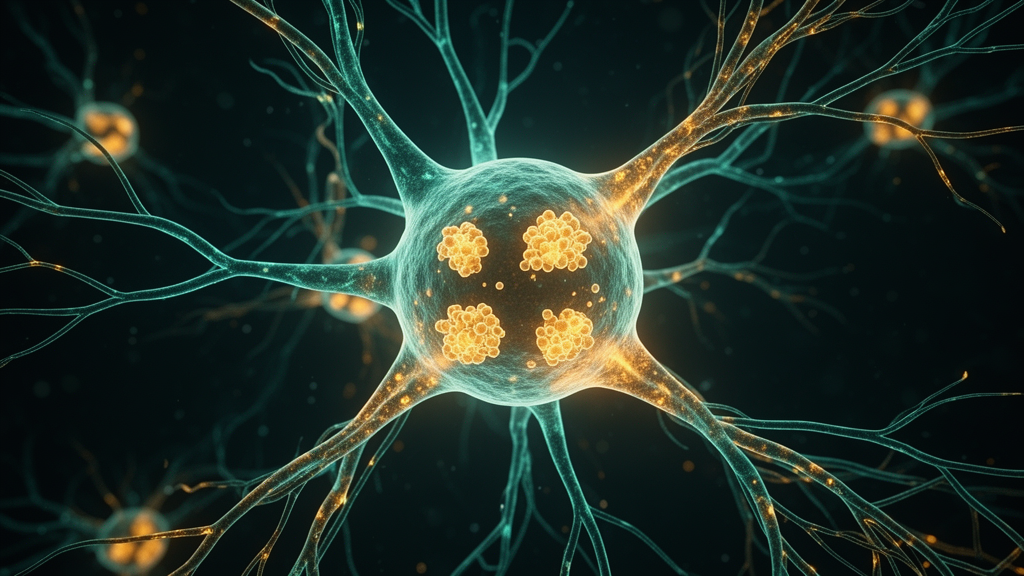
The histological and subcellular examinations revealed striking spatial distinctions among the four variants in neocortical tissue. Most notably, the BCL11A-S isoform was found to be prominently enriched within the axonal compartment of developing neurons.

To directly evaluate whether these distinct expression profiles translate into different biological activities, the investigators performed isoform-specific rescue experiments using Bcl11a homozygous null-mutant neurons. The functional assays indicated that the individual isoforms differ in their capacity to restore normal wild-type characteristics in the mutant cells. Taken together, the study provides the first experimental demonstration of isoform-specific differential expression for BCL11A in the nervous system, establishing that its developmental biological activity is fundamentally isoform-dependent.

Subject of Research: Isoform-specific expression and biological activity of BCL11A in nervous system development

Article Title: Characterization of BCL11A isoforms during neuronal development

Article References: Brode, R., Wiegreffe, C., & Britsch, S. (2026). Characterization of BCL11A isoforms during neuronal development. Frontiers in Molecular Neuroscience, 19, 1944082. https://doi.org/10.3389/fnmol.2026.1944082

Image Credits: AI Generated

DOI: 10.3389/fnmol.2026.1944082

Keywords: BCL11A, BCL11A-XL, BCL11A-L, BCL11A-S, BCL11A-XS, Dias-Logan syndrome, BCL11A-IDD, zinc finger transcription factor, alternative splicing, neocortex development, axonal compartment, subcellular localization, null-mutant neurons, neuronal polarization, projection neurons, corpus callosum, spatiotemporal analysis

News Source: Ophelia Keating. (November 26, 2026). BCL11A Isoforms Exhibit Distinct Subcellular Patterns and Restorative Capacities in Neurons. Scienmag.


Tags: alternative splicingaxonal compartmentBCL11ABCL11A-IDDBCL11A-LBCL11A-SBCL11A-XLBCL11A-XScorpus callosumDias-Logan syndromeneocortex developmentneuronal polarizationnull-mutant neuronsProjection Neuronsspatiotemporal analysissubcellular localizationzinc finger transcription factor
Share12Tweet7Share2ShareShareShare1

Related Posts

Black Race and Rural Residence Linked to Cardiovascular Risks After Kidney Transplantation

Black Race and Rural Residence Linked to Cardiovascular Risks After Kidney Transplantation

November 26, 2026
Surgeons Identify Rare Triple Vascular and Gastrointestinal Anomaly in Adult Patient

Surgeons Identify Rare Triple Vascular and Gastrointestinal Anomaly in Adult Patient

November 26, 2026

Study Links School Violence to Turnover Intentions Among Romanian Teachers

November 26, 2026

Review Evaluates Implantable Neuromodulation and Emerging Closed-Loop Systems for Voiding Dysfunction

November 26, 2026

POPULAR NEWS

  • Intraoral Scanner Captures Subgingival Tooth Structure Beyond Vertical Preparation Margins

    Intraoral Scanner Captures Subgingival Tooth Structure Beyond Vertical Preparation Margins

    29 shares
    Share 12 Tweet 7
  • Review Finds Artificial Intelligence Stress And Obesity Models Lack External Clinical Validation

    29 shares
    Share 12 Tweet 7
  • Freeze-Drying Preserves Coffee Fruit Microbiome DNA Far Better Than Refrigeration

    29 shares
    Share 12 Tweet 7
  • Buyang Huanwu Decoction Linked to Lower Oxidative Markers in Stroke Meta-Analysis

    29 shares
    Share 12 Tweet 7

About

We bring you the latest biotechnology news from best research centers and universities around the world. Check our website.

Follow us

Recent News

Review Identifies Key Barriers in Simulating Turbulent Supercritical Fluid Flows

Black Race and Rural Residence Linked to Cardiovascular Risks After Kidney Transplantation

Fruit Polysaccharide From Akebia trifoliata Suppresses Macrophage Inflammation in Laboratory Study

Subscribe to Blog via Email

Enter your email address to subscribe to this blog and receive notifications of new posts by email.

Join 89 other subscribers
  • Contact Us

Bioengineer.org © Copyright 2023 All Rights Reserved.

Welcome Back!

Login to your account below

Forgotten Password?

Retrieve your password

Please enter your username or email address to reset your password.

Log In
No Result
View All Result
  • Homepages
    • Home Page 1
    • Home Page 2
  • News
  • National
  • Business
  • Health
  • Lifestyle
  • Science

Bioengineer.org © Copyright 2023 All Rights Reserved.