• HOME
  • NEWS
  • EXPLORE
    • CAREER
      • Companies
      • Jobs
    • EVENTS
    • iGEM
      • News
      • Team
    • PHOTOS
    • VIDEO
    • WIKI
  • BLOG
  • COMMUNITY
    • FACEBOOK
    • INSTAGRAM
    • TWITTER
Thursday, November 26, 2026
BIOENGINEER.ORG
No Result
View All Result
  • Login
  • HOME
  • NEWS
  • EXPLORE
    • CAREER
      • Companies
      • Jobs
        • Lecturer
        • PhD Studentship
        • Postdoc
        • Research Assistant
    • EVENTS
    • iGEM
      • News
      • Team
    • PHOTOS
    • VIDEO
    • WIKI
  • BLOG
  • COMMUNITY
    • FACEBOOK
    • INSTAGRAM
    • TWITTER
No Result
View All Result
Bioengineer.org
No Result
View All Result
Home NEWS Science News Health

Review Evaluates Implantable Neuromodulation and Emerging Closed-Loop Systems for Voiding Dysfunction

by
November 26, 2026
in Health, Technology
Reading Time: 2 mins read
0
Review Evaluates Implantable Neuromodulation and Emerging Closed-Loop Systems for Voiding Dysfunction

Review Evaluates Implantable Neuromodulation and Emerging Closed-Loop Systems for Voiding Dysfunction

Share on FacebookShare on TwitterShare on LinkedinShare on RedditShare on Telegram

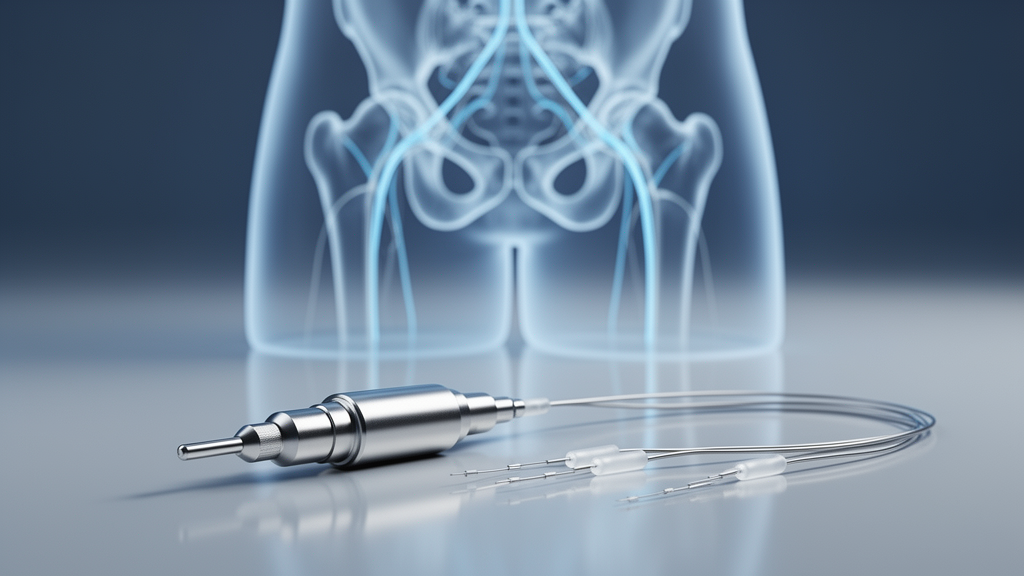
A narrative review published in Biomedical Engineering Letters evaluates the development of implantable neuroprosthetic and neuromodulatory approaches designed to address severe voiding dysfunction.

Voiding dysfunction linked to neurogenic bladder, overactive bladder, and post-spinal cord injury disorders produces substantial patient morbidity across clinical populations. The investigators focused on clarifying the neurophysiological foundation of bladder control alongside the complex pathophysiology governing filling and emptying disorders.

To assess the current state of technology, the authors synthesized published evidence across lower urinary tract neurophysiology and major neurologic etiologies. The review encompassed diverse hardware configurations, including implantable pelvic-nerve stimulators, sacral anterior root stimulators, sacral neuromodulation platforms, tibial nerve stimulation devices, and experimental closed-loop systems.

According to the findings, sacral neuromodulation and tibial nerve stimulation currently represent the most clinically mature modalities for managing lower urinary tract dysfunction. While these two approaches differ substantially in their surgical invasiveness, spatial selectivity, and programmability, both modalities rely strictly on open-loop operation. Even advanced platforms, such as the fully implanted eCoin tibial stimulator, deliver therapeutic stimulation without dynamically modulating parameters based on real-time physiologic feedback.

In contrast to conventional open-loop paradigms, closed-loop bladder neuroprosthetics adjust electrical stimulation dynamically according to measured bladder or neural signals. Rather than following fixed schedules, these responsive platforms utilize sensor feedback to tailor stimulation on demand.

Evidence supporting closed-loop systems currently derives primarily from animal models and small pilot investigations in human subjects. Within these experimental studies, sensing-driven stimulation has demonstrated higher voiding efficiency, reduced overall stimulation time, and successful suppression of detected unwanted bladder contractions relative to fixed-schedule protocols. However, the authors emphasize that robust, controlled clinical evidence validating these functional improvements in patient cohorts is currently lacking.

Looking ahead, the authors indicate that future multi-sensor, data-driven controllers and biomimetic bladder-sphincter systems may enable artificial bladder devices to more faithfully reproduce native micturition physiology.

Subject of Research: Implantable neuroprosthetic and neuromodulatory approaches for voiding dysfunction

Article Title: Neuroprosthetic and ​neuromodulation approaches for voiding dysfunction: from implantable bladder–pelvic interfaces to closed‑loop systems

Article References: Ryu, H., Yoo, J., Park, Y. E., & Park, J. Y. (2026). Neuroprosthetic and ​neuromodulation approaches for voiding dysfunction: from implantable bladder–pelvic interfaces to closed‑loop systems. Biomedical Engineering Letters. https://doi.org/10.1007/s13534-026-00633-5

Image Credits: AI Generated

DOI: 10.1007/s13534-026-00633-5

Keywords: neuroprosthetics, neuromodulation, voiding dysfunction, neurogenic bladder, overactive bladder, spinal cord injury, sacral neuromodulation, tibial nerve stimulation, eCoin, closed-loop systems, pelvic nerve stimulation, sacral anterior root stimulators, bladder control, sensing modalities, adaptive stimulation, voiding efficiency, bladder-sphincter systems

News Source: Gregory Coleman. (November 26, 2026). Review Evaluates Implantable Neuromodulation and Emerging Closed-Loop Systems for Voiding Dysfunction. Scienmag.


Tags: adaptive stimulationbladder controlbladder-sphincter systemsclosed-loop systemseCoinneurogenic bladderNeuromodulationneuroprostheticsoveractive bladderpelvic nerve stimulationsacral anterior root stimulatorssacral neuromodulationsensing modalitiesSpinal Cord Injurytibial nerve stimulationvoiding dysfunctionvoiding efficiency
Share12Tweet7Share2ShareShareShare1

Related Posts

Researchers Map Complete Scattering Amplitudes for Ghost-Free Bimetric Theory

Researchers Map Complete Scattering Amplitudes for Ghost-Free Bimetric Theory

November 26, 2026
Herbal Medicines Reduce Atorvastatin Systemic Exposure in Healthy Volunteer Trial

Herbal Medicines Reduce Atorvastatin Systemic Exposure in Healthy Volunteer Trial

November 26, 2026

Eight-year study confirms velaglucerase alfa safety in Japanese Gaucher patients

November 26, 2026

Self-Supervised Vision Transformer Pretrained on Zebrafish Images Accurately Predicts Developmental Phenotypes

November 26, 2026

POPULAR NEWS

  • Intraoral Scanner Captures Subgingival Tooth Structure Beyond Vertical Preparation Margins

    Intraoral Scanner Captures Subgingival Tooth Structure Beyond Vertical Preparation Margins

    29 shares
    Share 12 Tweet 7
  • Review Finds Artificial Intelligence Stress And Obesity Models Lack External Clinical Validation

    29 shares
    Share 12 Tweet 7
  • Freeze-Drying Preserves Coffee Fruit Microbiome DNA Far Better Than Refrigeration

    29 shares
    Share 12 Tweet 7
  • Buyang Huanwu Decoction Linked to Lower Oxidative Markers in Stroke Meta-Analysis

    29 shares
    Share 12 Tweet 7

About

We bring you the latest biotechnology news from best research centers and universities around the world. Check our website.

Follow us

Recent News

Researchers Map Complete Scattering Amplitudes for Ghost-Free Bimetric Theory

Herbal Medicines Reduce Atorvastatin Systemic Exposure in Healthy Volunteer Trial

Eight-year study confirms velaglucerase alfa safety in Japanese Gaucher patients

Subscribe to Blog via Email

Enter your email address to subscribe to this blog and receive notifications of new posts by email.

Join 89 other subscribers
  • Contact Us

Bioengineer.org © Copyright 2023 All Rights Reserved.

Welcome Back!

Login to your account below

Forgotten Password?

Retrieve your password

Please enter your username or email address to reset your password.

Log In
No Result
View All Result
  • Homepages
    • Home Page 1
    • Home Page 2
  • News
  • National
  • Business
  • Health
  • Lifestyle
  • Science

Bioengineer.org © Copyright 2023 All Rights Reserved.