A flying meteorological station:
Credit: Tel Aviv University
A flying meteorological station:
Bats have determined that the air over the urban areas is significantly warmer than the air in parks
- Using a new research approach called “biologically-assisted sampling,” zoologists and geographers from Tel Aviv University had bats map Urban Heat Islands in the area of Gush Dan.
- The researchers: “We must utilize any mobile platform that can assist us. Just as bats helped us map Urban Heat Islands, pigeons can be used to map urban air pollution, while rats can help monitor pollution in sewage systems.”
In a creative collaborative effort between zoologists and geographers from Tel Aviv University, a new study utilizing bats to map Urban Heat Islands in Gush Dan reveals that during the winter months, the air over the Ayalon Highway can be up to five degrees Celsius warmer than the air in Yarkon Park.
The interdisciplinary study was led by Prof. Yossi Yovel and Dr. Aya Goldshtein of the Bat Lab for Neuro-Ecology, the School of Zoology, the Sagol School of Neuroscience and the Steinhardt Museum of Natural History, in collaboration with Prof. Alexandra Chudnovsky, Prof. Oded Potchter, and the late architect Dr. Limor Shashua-Bar of The Porter School of Environmental Studies. The research findings were published in the journal Applied Geography.
Prof. Chudnovsky explains: “Urban Heat Islands are a well-known urban phenomenon. These are dense urban areas that are several degrees warmer than their surroundings. However, for objective and environmental reasons, it can be difficult to measure them. Placing stationary measuring stations on every street is nearly impossible, and deploying individuals with mobile sensors requires significant financial resources. Furthermore, measuring stations only capture ground-level temperatures, and don’t provide a 3D temperature analysis. One potential solution is using drones, but permits to fly drones in urban areas and flight time limitations (after 20 minutes they need to land and recharge) pose challenges.”
In the current study, the research team decided to leverage the unique capabilities of bats, known for their exceptional navigation skills and familiarity with urban environments. “Bats are more adept pilots than drones,” says Prof. Yovel. “They can fly 100 kilometers in one night, and they are active exactly when the heat island phenomenon is at its peak – at nighttime.”
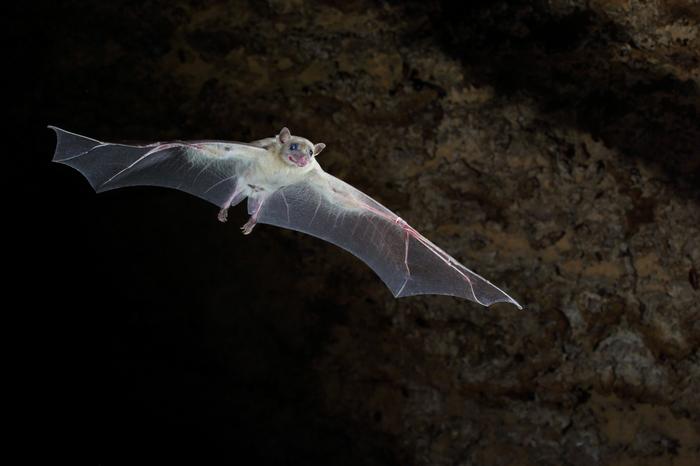
For the experiment, the researchers attached tiny heat sensors to Egyptian fruit bats from an urban bat colony and released them in downtown Tel Aviv. The clever bats easily found their way back home, and on the way, they mapped air temperatures over different areas including the city center, the Ayalon Highway, Yarkon Park, and Herzliya. The experiment was conducted during the winter, between 8:00 PM and 2:00 AM, and revealed temperature differences of two to five degrees Celsius between dense urban areas and city parks. The researchers compared the data transmitted by the bats to readings from four meteorological stations in Tel Aviv. Simultaneously, the researchers conducted a large-scale field experiment using mobile meteorological stations to verify the data. They also equipped individuals with similar devices and sent them to different parts of the city to collect comparable measurements.
Prof. Chudnovsky: “On the one hand, these are very light temperature sensors, weighing just 0.2 grams, so they are not as accurate as a heavy meteorological station. But their advantage lies in their providing a comprehensive climatic picture in a short timeframe. An analysis of the measurements revealed significantly higher temperatures in the Ayalon area compared to Yarkon Park, where temperatures dropped. As the bats crossed Yarkon Park towards Herzliya, temperatures rose again. Thanks to the bats, we were able to create the first three-dimensional map of Urban Heat Islands in Gush Dan.”
The Tel Aviv University researchers refer to their innovative approach as “Biologically-Assisted Sampling,” and have no plans to limit its application to bats alone. “We must utilize any mobile platform that can assist us,” says Prof. Chudnovsky. “Just as the bats helped us map Urban Heat Islands, pigeons can be used to effortlessly map urban air pollution, saving us a great deal of money and years of painstaking research.”
“There’s a lot of talk about smart cities and the ‘internet of things,’” adds Prof. Yovel, “but there are many animals already roaming the city, and we can attach tiny sensors to them without affecting their behavior. For example, when monitoring pollution in sewage systems, rather than using expensive and complex machinery, we can rely on the rats that are already present there.”
Link to the article:
https://www.sciencedirect.com/science/article/pii/S0143622823000838
DOI
10.1016/j.apgeog.2023.102952