A research team led by Kaede Yoshino, Shun-ichi Mitomo, and Yutaka Inoue has demonstrated that solvent-free mechanochemical grinding using a three-dimensional ball mill produces stable inclusion complexes between the hydrophobic botanical compound honokiol and cyclodextrins, markedly improving early aqueous dissolution while leaving its therapeutic antioxidant and antifungal characteristics intact. Honokiol, a bioactive biphenyl neolignan extracted from Magnolia officinalis bark, exhibits diverse pharmacological properties including anti-inflammatory, antitumor, antioxidant, antifungal, gastroprotective, and cardioprotective actions, in addition to partially inhibiting furin-like protease activity and suppressing SARS-CoV-2 infection. However, its therapeutic utility has long been hindered by poor aqueous solubility, measured at only 50.6 micrograms per milliliter after 24 hours of stirring in prior formulations and determined in this work to possess an intrinsic aqueous solubility of 0.14 millimolar at 25 degrees Celsius. To overcome these formulation barriers without using organic solvents, the investigators employed three-dimensional ball milling to encapsulate honokiol into the toroidal cavities of beta-cyclodextrin and gamma-cyclodextrin, delivering a detailed solid-state and molecular assessment of how cavity dimensions direct physical stability, dissolution kinetics, and biofunctional performance.
To evaluate host-guest interactions in solution, the researchers generated phase-solubility diagrams by equilibrating excess honokiol in aqueous solutions containing varying concentrations of beta-cyclodextrin up to 15 millimolar and gamma-cyclodextrin up to 30 millimolar for 48 hours at 25 degrees Celsius. The resulting profiles showed that honokiol solubility initially increased alongside cyclodextrin concentration before declining, presenting a Bs-type profile in the beta-cyclodextrin system with a solubility peak at 5 millimolar and a BI-type profile in the gamma-cyclodextrin system with a maximum at 1.25 millimolar. These curve morphologies indicated the predominant formation of stoichiometric 1:1 host-guest inclusion complexes. Calculations using the Higuchi-Connors method demonstrated marked differences in affinity: honokiol and beta-cyclodextrin yielded an apparent stability constant of 3,582 per molar and a complexation efficiency of 0.530, whereas the gamma-cyclodextrin complex exhibited a much lower stability constant of 190 per molar and a complexation efficiency of 0.0282. The substantially greater stability observed with beta-cyclodextrin reflects close geometric compatibility between the hydrophobic aromatic rings of honokiol and the 6.0 to 6.5 angstrom inner diameter of the host cavity, whereas the wider 7.5 to 8.5 angstrom cavity of gamma-cyclodextrin permitted greater water entry and weaker van der Waals interactions.
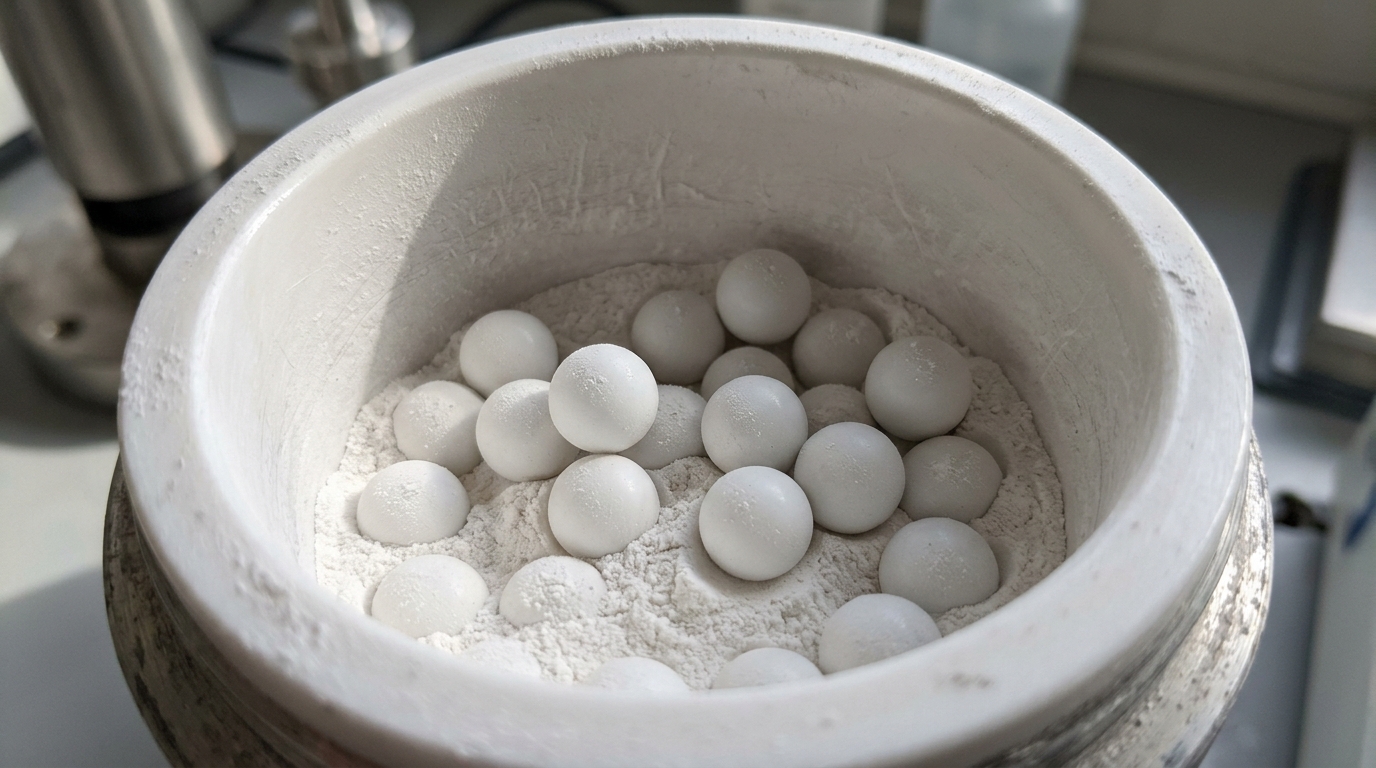
Solid complexes were prepared by grinding 500 milligrams of 1:1 molar physical mixtures in a three-dimensional ball mill for 30 minutes using zirconia balls under solvent-free conditions. Unlike conventional ball mills that generate localized thermal stress, the dual-axis motion of the three-dimensional mill minimized temperature spikes, preventing thermal degradation of the heat-sensitive neolignan. Powder X-ray diffraction patterns confirmed that intact and ground uncomplexed honokiol retained characteristic crystalline peaks at diffraction angles of 6.6, 9.1, and 13.9 degrees two-theta. While physical mixtures preserved sharp diffraction peaks from both honokiol and the respective cyclodextrins, the ball-milled ground mixtures exhibited broad, diffuse halo patterns devoid of sharp crystalline reflections. This complete loss of long-range lattice order confirmed thorough amorphization of the components. When these amorphous ground mixtures were stored under accelerated humidity conditions of 40 degrees Celsius and 82 percent relative humidity for seven days, the beta-cyclodextrin complex recrystallized into a channel-type polymorph displaying new diffraction peaks at 7.0, 9.0, 11.6, 14.4, 17.3, and 18.7 degrees two-theta, while the gamma-cyclodextrin mixture transitioned into a hexagonal lattice with characteristic peaks at 5.7 and 15.6 degrees two-theta, providing definitive evidence of structural inclusion inside distinct host architectures.
Thermal analysis corroborated the complete disruption of the crystalline drug framework within the milled matrices. Differential scanning calorimetry revealed that pure crystalline honokiol exhibited distinct melting endotherms at 80 and 87 degrees Celsius, followed by thermal decomposition around 210 degrees Celsius, whereas physical mixtures with beta-cyclodextrin and gamma-cyclodextrin retained honokiol melting transitions between 77 and 86 degrees Celsius alongside cyclodextrin dehydration and decomposition peaks above 314 degrees Celsius. In contrast, the ground mixtures completely lacked any endothermic melting transitions corresponding to honokiol, exhibiting only cyclodextrin-related dehydration events at 79 degrees Celsius for beta-cyclodextrin and 62 degrees Celsius for gamma-cyclodextrin, followed by high-temperature matrix decomposition above 325 degrees Celsius. This complete disappearance of melting endotherms is a hallmark of molecular encapsulation within host cavities. Thermogravimetric measurements further demonstrated improved thermal stabilization, as the onset temperature of honokiol thermal decomposition shifted upward from approximately 76 degrees Celsius in the unformulated drug to 180 degrees Celsius in the beta-cyclodextrin ground mixture and 172 degrees Celsius in the gamma-cyclodextrin ground mixture, indicating that spatial confinement within the rigid cyclic oligosaccharides strongly restricted thermal molecular vibrations and hindered volatilization.
Near-infrared spectroscopy and scanning electron microscopy provided complementary insights into the solid-state interactions and morphological changes induced by the mechanochemical process. Second-derivative near-infrared spectra showed broadening and frequency shifts of the honokiol C-H overtone band, originally located at 4,484 reciprocal centimeters, and the O-H overtone band at 4,694 reciprocal centimeters, which shifted to 4,651 reciprocal centimeters in the gamma-cyclodextrin ground mixture. Concurrently, the free water absorption bands of beta-cyclodextrin shifted from 5,208 to 5,194 reciprocal centimeters, and its O-H overtone shifted from 6,920 to 6,896 reciprocal centimeters in the ground mixture, reflecting the physical displacement of high-energy cavity water molecules by the entering guest molecule alongside local hydrogen-bond rearrangements.
In vitro dissolution testing carried out in 900 milliliters of distilled water at 37 degrees Celsius using the Japanese Pharmacopoeia paddle method demonstrated dramatic acceleration of drug release from the ground mixtures. Unformulated intact honokiol dissolved exceedingly slowly, reaching an aqueous concentration of only 1.20 micrograms per milliliter at the 5-minute sampling point, while the physical mixtures of beta-cyclodextrin and gamma-cyclodextrin reached 4.54 and 6.57 micrograms per milliliter, respectively. In stark contrast, the mechanochemically prepared ground mixtures achieved immediate, pronounced dissolution: the gamma-cyclodextrin ground mixture released 30.70 micrograms per milliliter within 5 minutes, while the beta-cyclodextrin ground mixture attained 51.27 micrograms per milliliter over the same duration. The early-stage release from the beta-cyclodextrin complex was approximately 1.7 times higher than that from the gamma-cyclodextrin complex and more than 42 times greater than that of intact crystalline honokiol. The researchers noted that this rapid dissolution resulted from a synergy between extensive amorphization, particle size reduction, and host-guest thermodynamic stability, which eliminated the crystal lattice energy barrier and promoted instantaneous molecular dispersion in aqueous environments.
To elucidate the atomic-level spatial configurations governing these stability and dissolution disparities, the team performed two-dimensional nuclear magnetic resonance spectroscopy in deuterium oxide. Proton-proton NOESY spectra revealed intermolecular cross-peaks between the aliphatic alkyl chain protons of honokiol at 4.89 parts per million and both the beta-cyclodextrin H-3 cavity protons located near the wider secondary rim at 3.76 parts per million and the H-6 protons near the narrower primary rim at 3.64 parts per million. Additional cross-peaks connected the honokiol aromatic protons at 6.73 to 7.10 parts per million with the beta-cyclodextrin H-6 protons, establishing that honokiol preferentially enters the narrower rim of beta-cyclodextrin. Conversely, the gamma-cyclodextrin ground mixture showed correlations between honokiol aromatic protons and both the inner cavity H-3 and H-6 protons of the host, suggesting an alternate orientation wherein the aromatic moiety penetrates from the wider rim. Diffusion-ordered spectroscopy confirmed complexation in solution, as self-diffusion coefficients dropped from 6.91 times 10 to the minus 10 square centimeters per second for free honokiol down to 3.89 times 10 to the minus 10 square centimeters per second in the beta-cyclodextrin complex and 3.80 times 10 to the minus 10 square centimeters per second in the gamma-cyclodextrin complex, matching the slower diffusion rates of the larger macrocycles.
Density functional theory simulations executed in Spartan ’24 using the omega-B97X functional with a 6-31G* basis set confirmed the thermodynamic preference for these contrasting geometry modes. For the beta-cyclodextrin complex, computational modeling determined that entry from the narrower primary rim, designated as orientation B, yielded a highly favorable binding energy of minus 103,319.4374 kilojoules per mole, compared to minus 178.46086 kilojoules per mole for wider-rim entry orientation A, driven by multiple stabilizing hydrogen bonds. In contrast, the gamma-cyclodextrin system favored wider-rim entry orientation A with a calculated binding energy of minus 259.1762325 kilojoules per mole over orientation B at minus 221.2758272 kilojoules per mole. These theoretical binding energies directly mirrored the experimental NOESY correlation maps and the higher stability constant observed in the phase-solubility assays, validating that the tighter structural fit inside beta-cyclodextrin provides robust intermolecular anchoring that sustains complex integrity in solution.
Crucially, biological functional assays revealed that mechanochemical encapsulation did not compromise the therapeutic bioactivity of honokiol. In DPPH radical-scavenging assays, the half-maximal inhibitory concentration of unformulated honokiol was measured at 7.08 plus or minus 0.78 micrograms per milliliter, which showed no statistically significant difference compared to the beta-cyclodextrin ground mixture at 7.50 plus or minus 0.41 micrograms per milliliter or the gamma-cyclodextrin ground mixture at 7.25 plus or minus 1.69 micrograms per milliliter, although ascorbic acid remained more potent at 1.87 plus or minus 0.23 micrograms per milliliter. Antifungal testing against Candida albicans SC5314 biofilm formation yielded similarly robust preservation of activity: intact honokiol inhibited biofilm development by 86.3 percent at 128 micrograms per milliliter and 84.4 percent at 256 micrograms per milliliter, comparable to the reference antifungal amphotericin B at 128 micrograms per milliliter. The beta-cyclodextrin ground mixture achieved biofilm inhibition rates of 81.7 percent and 85.0 percent at 128 and 256 micrograms per milliliter, while the gamma-cyclodextrin complex exhibited 81.5 percent and 86.9 percent inhibition at the respective concentrations. Pure cyclodextrins exhibited no antifungal activity. Docking models confirmed that while the hydrophobic biphenyl core of honokiol remains shielded within the cyclodextrin cavity, its phenolic hydroxyl groups project outward into the solvent, remaining fully accessible to interact with fungal cell signaling pathways and scavenge free radicals.
While these findings confirm that solvent-free three-dimensional ball milling offers an efficient, environmentally benign route to enhance the solubility and thermal stability of honokiol without chemical degradation, the authors identified several key limitations and avenues for subsequent research. Nevertheless, the systematic combination of mechanochemical processing, solid-state spectroscopy, solution thermodynamics, and computational modeling demonstrates that tailored cyclodextrin inclusion provides a practical, scalable platform for formulating hydrophobic natural medicines.
Subject of Research: Mechanochemical preparation and characterization of honokiol-cyclodextrin inclusion complexes
Article Title: Green mechanochemical inclusion of honokiol in cyclodextrins for enhanced solubility and preserved bioactivity
Article References: Yoshino, K., Mitomo, S.-I., Kodama, N., Yoshida, H., Yokogawa, T., Kitamura, M., Kamauchi, H., Saito, H., & Inoue, Y. (2026). Green mechanochemical inclusion of honokiol in cyclodextrins for enhanced solubility and preserved bioactivity. AAPS Open, 12(1), Article 35. https://doi.org/10.1186/s41120-026-00171-5
Image Credits: AI Generated
DOI: 10.1186/s41120-026-00171-5
Keywords: honokiol, beta-cyclodextrin, gamma-cyclodextrin, mechanochemistry, ball milling, inclusion complex, solubility enhancement, dissolution rate, antioxidant activity, antifungal activity, Candida albicans, powder X-ray diffraction, differential scanning calorimetry, thermogravimetric analysis, near-infrared spectroscopy, NOESY NMR, DOSY NMR, molecular modeling
News Source: Ophelia Keating. (November 14, 2026). Ball Milling Cyclodextrin Complexes Enhances Honokiol Solubility While Preserving Bioactivity. Scienmag.