A synthetic biology construct designed to display a heavy-metal-binding protein on the bacterial outer membrane significantly increased cadmium adsorption in a standard laboratory host but failed completely when introduced into a widely used probiotic bacterium, researchers reported in an original research article published in Frontiers in Microbiology. The investigation, conducted by an interdisciplinary team from Southern Medical University, the Shenzhen Prevention and Treatment Center for Occupational Diseases, and collaborating institutions in China, tested whether engineered surface display could turn living bacteria into functional cadmium biosorbents. While environmental bioremediation through surface-engineered microbes has shown promise in laboratory strains, exploring their performance in probiotic chassis is a necessary hurdle for any future gut-based interception strategies. The findings show that bacterial chassis selection exerts a decisive influence on the functional performance of synthetic surface-display modules under identical exposure conditions.
Cadmium is a non-biodegradable heavy metal that persists in environmental matrices and accumulates throughout the food chain, creating serious ecological and systemic human health risks. Traditional physicochemical remediation interventions, including chemical precipitation, ion exchange, and electroremediation, often demand significant energy inputs, incur substantial financial costs, and generate secondary toxic sludge that requires further disposal. Consequently, biological biosorption—a rapid, metabolism-independent mechanism where metal ions associate directly with cellular or extracellular surface binding sites—has emerged as an appealing, sustainable approach. Biosorption is conceptually and functionally distinct from metal resistance, as bacterial resistance often relies on active efflux pumps, reduced cellular uptake, or intracellular chemical detoxification, which do not necessarily lead to high net metal retention or physical removal by bacterial biomass.
In synthetic biology, researchers have previously displayed heavy-metal metalloregulators, such as the cadmium-binding MerR-family regulator CadR, onto bacterial cell surfaces to enhance binding capacity in aqueous environments. In earlier inducible studies using an Escherichia coli BL21(DE3) background, an isopropyl-beta-D-thiogalactopyranoside (IPTG)-driven version of this fusion protein was successfully recovered in both total-protein and crude membrane fractions, validating the membrane-targeting potential of the InaPb anchoring domain. However, adapting such surface systems for potential therapeutic or intestinal applications requires stable expression without reliance on inducible T7 systems or chemical inducers.
To overcome the absence of T7 RNA polymerase machinery in non-inducible hosts, the authors constructed a panel of constitutive bicistronic plasmids: p302-10-G, p479-10-G, and p637-10-G. In each construct, the coding sequence for the InaPb-CadR10 fusion protein was placed under the control of one of three synthetic constitutive promoters—P302, P479, or P637—which possess progressively increasing predicted transcriptional strengths. Downstream of the adsorption module, an independent ribosome-binding site drove the translation of an enhanced green fluorescent protein (eGFP) reporter. This bicistronic arrangement enabled the researchers to track reporter expression via fluorescence spectroscopy and microscopy while leaving the primary fusion protein unaltered. Sanger sequencing confirmed that all three plasmids contained the intended promoter-insert junctions and maintained an uninterrupted open reading frame without extraneous mutations.
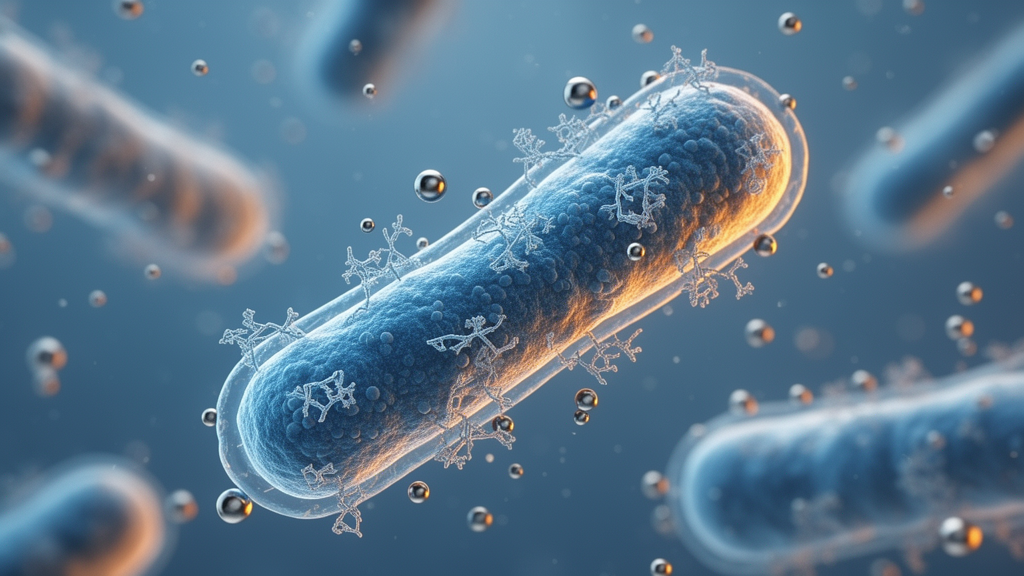
The team introduced these recombinant plasmids into two distinct host backgrounds: the common laboratory strain Escherichia coli TOP10 and the clinical probiotic strain Escherichia coli Nissle 1917, commonly known as EcN. Laboratory strains like TOP10 readily express foreign recombinant proteins and display surface modules but are ill-equipped for persistent intestinal colonization or host microecological restoration. In contrast, EcN exhibits well-documented intestinal colonization competence and probiotic safety, yet it features a dense, intricate surface architecture characterized by serotype O6 lipopolysaccharide with extended O-antigen side chains, a K5 capsular polysaccharide coat, and abundant cell appendages including fimbriae and flagella. This profound structural divergence provided a clear physiological testbed to determine whether a functional surface-display system operates consistently across different bacterial hosts.
Initial validation in the TOP10 background confirmed that the synthetic promoter series functioned as anticipated. Quantitative fluorescence spectrometry and fluorescence microscopy demonstrated a progressive, promoter-dependent rise in bulk eGFP emission, with p637-10-G exhibiting the strongest fluorescent signal. When these engineered TOP10 strains were exposed to a fixed screening concentration of 10 micromolar cadmium chloride in 0.9 percent saline for 12 hours at 25 degrees Celsius, graphite furnace atomic absorption spectrometry (GFAAS) revealed a statistically significant increase in optical-density-normalized cadmium adsorption capacity for TOP10 carrying p637-10-G compared to the empty-host control. Strains harboring the weaker P302 and P479 promoters yielded only marginal adsorption changes that failed to surpass the baseline biosorption background of the host, identifying p637-10-G as the optimal genetic configuration in TOP10.
Complementary structural and elemental evaluations of the post-adsorption TOP10 cultures supported the spectrometry findings. Under scanning electron microscopy, TOP10 cells carrying p637-10-G exhibited a distinctly granular, roughened outer surface morphology after cadmium incubation, whereas empty-host control cells retained their characteristic smooth, intact outer membranes. Coupled energy-dispersive X-ray spectroscopy (SEM-EDS) elemental mapping and point spectral analyses detected a software-assigned cadmium-associated signal in the analyzed p637-10-G specimen, whereas no such elemental peak appeared in the empty-host specimen. The automated software estimated the localized cadmium fraction at 0.11 weight percent; however, the associated analytical uncertainty, or sigma, was 0.13 weight percent. Because the analytical uncertainty exceeded the measured signal, the authors explicitly treated the EDS detection as qualitative, localized evidence of cadmium presence rather than a quantitative measure of total sorption.
The central divergence of the study emerged when the identical plasmid series was transformed into the probiotic host EcN. While the promoter-dependent fluorescence gradient was preserved in EcN—with EcN harboring p637-10-G exhibiting the highest green fluorescence among the probiotic group—the absolute fluorescence levels remained considerably lower than those recorded in TOP10. More critically, subsequent GFAAS quantification showed that the cadmium adsorption capacity and overall removal rate of EcN carrying p637-10-G did not differ significantly from those of the unmodified empty EcN host. Despite expressing the synthetic bicistronic cassette and generating detectable reporter signal, the engineered probiotic chassis gained no functional advantage in binding or removing dissolved cadmium ions from the supernatant under the tested experimental parameters.
The authors discussed several non-mutually exclusive biological mechanisms that could explain this functional failure in the probiotic chassis. One primary hypothesis centers on extracellular matrix shielding: the elaborate outer glycocalyx of EcN, composed of thick K5 capsule layers and bulky O6-antigen polysaccharide chains, may physically block dissolved heavy-metal ions from accessing the underlying InaPb-anchored CadR10 binding pockets embedded in the outer membrane. In contrast, TOP10 is a standard K-12 derivative characterized by rough lipopolysaccharide devoid of O-antigen chains, leaving the bacterial surface far more accessible to aqueous solutes. However, the researchers emphasized that matrix shielding remains an unproven hypothesis that requires systematic testing using defined mutant strains deficient in capsule or O-antigen biosynthesis.
Alternative intracellular and physiological mechanisms could also account for the observed divergence between the two chassis. Differences in plasmid copy number or segregational stability between strains may restrict the transcriptional template available for protein production in EcN, a possibility corroborated by the generally reduced eGFP fluorescence observed in the probiotic host. Furthermore, variations in outer-membrane lipid composition or periplasmic protein quality-control machinery might impede the proper translocation, folding, or outer-membrane insertion of the InaPb fusion. Probiotic EcN also possesses robust endogenous metal homeostasis machinery, such as active P-type ATPase efflux pumps and intracellular metallothionein-like scavengers, which might counteract or alter net cellular metal accumulation compared to laboratory strains.
The authors noted specific experimental boundaries, emphasizing that the in vitro assays utilized a single fixed exposure condition of 10 micromolar cadmium chloride over 12 hours rather than assessing multi-concentration adsorption kinetics or host cell survival thresholds. Direct quantification of the InaPb-CadR10 fusion protein in outer-membrane fractions was not performed, leaving reporter fluorescence as an indirect proxy for expression. Consequently, the team concluded that extensive future research—including crude membrane fractionation, chromosomal integration strategies, and targeted evaluations of biosorbent safety, potential desorption, and horizontal gene transfer risks—will be indispensable before engineered probiotics can be realistically advanced for in vivo gastrointestinal metal interception.
Subject of Research: Evaluation of surface-engineered cadmium biosorption across laboratory and probiotic bacterial chassis
Article Title: Divergent cadmium adsorption by surface-engineered CadR10 in laboratory and probiotic Escherichia coli chassis
Article References: Luo, W., Guo, Y., Hu, S., Zhang, W., Ling, J., Hu, Z., Chen, Y., & Hui, C.-Y. (2026). Divergent cadmium adsorption by surface-engineered CadR10 in laboratory and probiotic Escherichia coli chassis. Frontiers in Microbiology, 17, 2009975. https://doi.org/10.3389/fmicb.2026.2009975
Image Credits: AI Generated
DOI: 10.3389/fmicb.2026.2009975
Keywords: cadmium biosorption, bacterial surface display, Escherichia coli Nissle 1917, Escherichia coli TOP10, CadR metalloregulator, synthetic biology, probiotic chassis, heavy metal bioremediation, InaPb anchor, bicistronic plasmids, atomic absorption spectrometry, scanning electron microscopy, energy-dispersive X-ray spectroscopy, constitutive promoters, extracellular matrix shielding, intestinal bioremediation
News Source: Denise Maddox. (November 20, 2026). Bacterial Surface Engineering for Cadmium Adsorption Falters When Transferred to Probiotics. Scienmag.