
In a remarkable advancement within the realm of plant biology, researchers have uncovered groundbreaking insights into the healing properties of bacterial cellulose and its significant role in promoting plant tissue regeneration. This innovative study unlocks a new understanding of intercellular communication and hormonal regulation in plants and imparts knowledge that may one day lead to transformative applications in agriculture and horticulture landscapes. Conducted by a team of prestigious researchers at the Center for Plant Biotechnology and Genomics (CBGP) and the Centre for Research in Agricultural Genomics (CRAG), this compelling research was recently published in the prominent journal Science Advances.
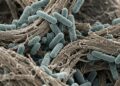
The primary focus of this investigational work revolves around bacterial cellulose (BC), a high-purity biofilm composed of cellulose fibers synthesized by specific bacteria. While BC has previously made waves in human biomedical applications due to its commendable biocompatibility, its capabilities in facilitating plant wound healing remained largely obscure until now. As the study highlights, the researchers made substantial strides in determining how BC patches trigger physiological responses leading to effective plant tissue regeneration following injury.
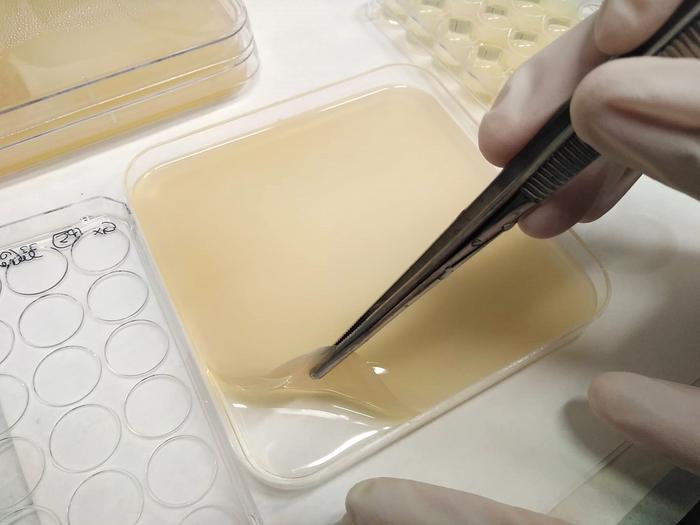
In a series of carefully controlled experiments, researchers utilized model plants such as Nicotiana benthamiana and Arabidopsis thaliana to elucidate the molecular mechanisms governing this regenerative process. Wounded leaves were subjected to BC patches, and the outcome was nothing short of remarkable. Within just two days, researchers observed the clustering of new cells surrounding the wounded areas, achieving complete wound closure after a week. Notably, BC displayed regenerative capabilities that outperformed other similar substrates, including plant cellulose. This highlights the unique features of BC, which extend beyond mere moisture retention and physical coverage.
Diving deeper into the molecular underpinnings of this process, the scientists discovered the presence of cytokinins within the BC patches. Cytokinins are critical plant hormones associated with diverse developmental processes, particularly in cell division and plant growth. The crucial interplay between the application of BC and cytokinin signaling underscores BC’s transformative power. By experimenting with plants exhibiting defective cytokinin signaling pathways, researchers were able to confirm that these hormones are integral to the regeneration process triggered by BC.
Another surprising finding emerged from the detection of oxidative stress within the plant tissues. The application of BC patches led to an increased accumulation of reactive oxygen species (ROS) at the sites of injury, linking the biochemical stress response to tissue regeneration. Bioinformatics analyses further pinpointed specific gene expressions that correspond to defense mechanisms against pathogens, indicating that the healing response is inherently tied to the plant’s ability to mount a defense against potential threats.
For the first time, this research highlights a concurrent activation of both cytokinin and defense responses during tissue regeneration. Previously studied in isolation, these mechanisms are now revealed to play complementary roles in enhancing wound repair. The identification of key transcription factors, such as WRKY8, linked to ROS accumulation adds an invaluable layer of understanding to the plant’s regenerative toolkit.
The research team, spearheaded by experts in the fields of plant biology and biotechnology, emphasizes the implications of these findings for agricultural practices. The potential applications arising from the use of BC patches could revolutionize approaches to grafting, pruning, and maintaining ornamental plants. The implementation of BC to accelerate healing processes may significantly reduce infection risks, ultimately leading to healthier plant stocks and improved agricultural yields.
Research endeavors began in 2016, with collaborations pooling expertise from CRAG and the Institute of Materials Science of Barcelona (ICMAB-CSIC). The venture has attracted industry partnerships, illuminating paths towards practical applications of laboratory findings. However, the collaboration does not conclude here; the researchers indicate that extensive field studies are pressing to confirm the practical efficacy of BC patches, particularly in commercial horticultural settings.
The researchers underline the necessity for technology transfer resources that can bridge the gap between rigorous scientific research and its implementation in the agricultural sector. Such initiatives may yield profound economic benefits and bolster the sustainability of agricultural practices moving forward.
As the authors reflect on the collaborative spirit that brought this research to fruition, they acknowledge that joint efforts with other research entities and industry stakeholders embody the essence of modern scientific inquiry. This work paves the way for further explorations into the underlying mechanisms of plant regeneration and the translation of research into viable agricultural applications.
This landmark study not only enhances our comprehension of plant biology but paves the way for innovations potentially poised to reshape practices in agriculture and horticulture. Enhanced plant healing through BC treatments could lead to reduced reliance on harmful pesticides and promote sustainable crop production strategies.
The findings not only speak to advancements in agricultural science but also underscore the promising horizon of biotechnological advancements that bridge the worlds of human health and environmental sustainability, drawing connections between disparate fields. The research may well catalyze future inquiries into how we can harness natural materials and cellular mechanisms to foster resilient agricultural practices.
The awe-inspiring potential for bacterial cellulose to redefine how we understand plant healing and regeneration certainly holds promise not just within research laboratories and academic circles but may soon take its rightful place at the forefront of agricultural innovation.
—
Subject of Research: Plant tissue regeneration mechanisms involving bacterial cellulose
Article Title: Exogenous bacterial cellulose induces plant tissue regeneration through the regulation of cytokinin and defense networks
News Publication Date: February 12, 2025
Web References: Not applicable
References: Not applicable
Image Credits: Credit: CRAG
Keywords: Bacterial cellulose, plant regeneration, cytokinin signaling, plant healing, agricultural biotechnology.
Tags: Arabidopsis thaliana research findingsbacterial cellulose applications in plant regenerationbacterial cellulose biofilm propertiescellulose-based materials in agriculturehormonal regulation in plant biologyinnovative agricultural biotechnologyintercellular communication in plantsNicotiana benthamiana model plant studiesplant tissue healing mechanismsplant wound healing advancementsregenerative agriculture techniquestransformative horticultural applications