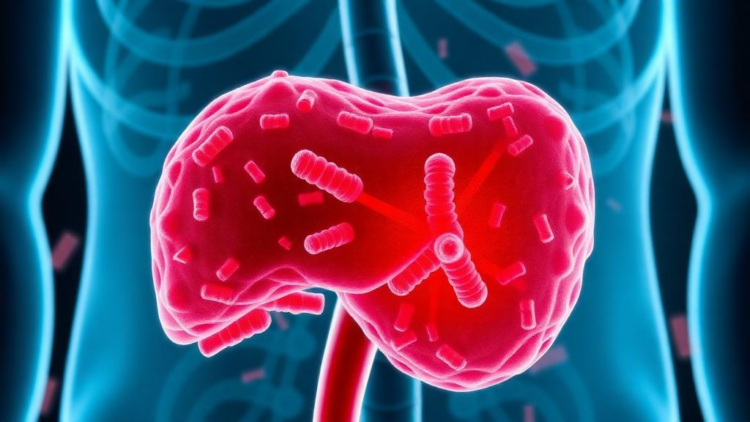
Deep inside liver tumors, communities of bacteria appear to be quietly shaping whether the most aggressive forms of hepatocellular carcinoma surrender to modern combination treatment or stubbornly resist it. A new study published in Holistic Integrative Oncology reports that patients with initially unresectable hepatocellular carcinoma who responded poorly to conversion therapy carried distinctly different bacterial populations within their tumors compared with those whose tumors responded well. The finding, drawn from 16S rRNA sequencing of tumor tissue and confirmed with spatial imaging, adds to a rapidly growing body of evidence that the microbes living inside cancers are not passive bystanders but active participants in treatment outcomes.
Hepatocellular carcinoma, the most common form of primary liver cancer, accounts for nearly 90 percent of liver cancer cases worldwide. Because the disease rarely produces symptoms in its early stages, most patients are diagnosed when the tumor is too advanced for surgical resection, the treatment that offers the greatest survival benefit. Conversion therapy has emerged as a strategy to change that prognosis. By combining locoregional treatments such as transarterial chemoembolization (TACE) or hepatic arterial infusion chemotherapy (HAIC) with tyrosine kinase inhibitors (TKIs) and immune checkpoint inhibitors (ICIs), clinicians aim to shrink tumors enough to make radical surgery possible. The approach has transformed the treatment landscape, but responses vary dramatically between patients, and predicting who will benefit remains one of the field’s most pressing challenges.
The retrospective study, conducted at the First Affiliated Hospital of Shandong First Medical University, screened 834 patients with primary hepatocellular carcinoma and identified 63 who met the criteria for analysis. Most were male, the majority carried hepatitis B, and more than three quarters had cirrhosis. All received at least two treatment modalities drawn from the conversion therapy arsenal: TACE or HAIC to cut off the tumor’s blood supply and deliver chemotherapy directly, TKIs such as sorafenib or lenvatinib to target tumor signaling pathways, and ICIs such as camrelizumab or sintilimab to unleash anti-tumor immune responses. The results were clinically encouraging. Two patients achieved a complete response and 26 a partial response, yielding an objective response rate of 44.4 percent and a disease control rate of 90.1 percent. Twenty-four patients, or 38.1 percent, were successfully converted to a resectable state, and every one of them underwent radical R0 resection with clear surgical margins.
But the study’s most provocative findings came from the laboratory rather than the clinic. The researchers collected formalin-fixed paraffin-embedded tumor tissue from 15 patients who underwent resection after triple conversion therapy and stratified them by pathological response. Major pathological responders, defined as having more than 50 percent tumor necrosis, formed one group; minor responders, with 50 percent or less necrosis, formed the other. Genomic DNA was extracted and the V3-V4 region of the 16S rRNA gene was amplified and sequenced on an Illumina platform, with amplicon sequence variants clustered using the DADA2 algorithm and taxonomy assigned against the SILVA database. The interval between the last treatment dose and surgery was statistically indistinguishable between the two groups, ruling out differences in treatment withdrawal time as a confounding factor.
The sequencing data revealed a striking divergence. Tumors from minor responders harbored significantly higher microbial alpha diversity, measured across the Chao1, Observed-species, Shannon, and Simpson indices, and their overall community composition differed on principal coordinate analysis of weighted UniFrac distances. At the phylum level, minor responders were enriched in Acidobacteriota, Chloroflexi, Planctomycetota, Gemmatimonadota, and Verrucomicrobiota, while major responders were dominated by Proteobacteria and Bacteroidetes. At the genus level, Halomonas and Arthrobacter stood out in minor responders, whereas Escherichia-Shigella and Limosilactobacillus were markedly more abundant in major responders. Linear Discriminant Analysis Effect Size confirmed these taxa as robust biomarkers, with LDA scores exceeding 3.0.
Functional prediction using PICRUSt2 added a metabolic dimension to the story. Microbiota in minor responders showed enhanced pathways related to methane metabolism, terpenoid backbone biosynthesis, and cofactor and vitamin metabolism, while major responders displayed elevated fatty acid biosynthesis and general functional activity. These metabolic signatures suggest that intratumoral bacteria may influence how tumors process nutrients and metabolites during therapy, potentially modulating the microenvironment in ways that either support or undermine treatment. Escherichia-Shigella, for example, is known to produce short-chain fatty acids with immune-regulatory and anti-tumor properties, while Limosilactobacillus can influence dendritic cell differentiation and thereby shape immune responses.
The most visually compelling evidence came from RNAscope in situ hybridization combined with immunofluorescence staining, which allowed the researchers to see where Halomonas bacteria and CD8-positive T cells actually resided within tumor sections. In major responders, Halomonas signals were sparse while CD8-positive T cells infiltrated the tumor abundantly. In minor responders, the pattern reversed: dense Halomonas colonization coexisted with conspicuously few T cells. The merged fluorescence images revealed a mutually exclusive spatial relationship, with bacteria-rich regions largely devoid of immune cell infiltration. The authors propose that extensive Halomonas colonization may promote immune exclusion, blunting the effectiveness of immune checkpoint inhibitors. One plausible mechanism involves L-arginine, a metabolite essential for T cell activation and proliferation that has been reported to correlate negatively with Halomonas abundance; bacterial consumption of this amino acid could starve T cells of a resource they need to function.
The findings fit into a broader rethinking of tumor biology. Long considered sterile, tumors are now known to harbor microbiota across many cancer types, and these resident microbes can influence everything from tumorigenesis to therapeutic response. Intratumoral Bifidobacterium, for instance, has been shown to stimulate STING signaling in dendritic cells and amplify CD47-based immunotherapy in preclinical models. Prior studies have also linked intratumoral microbial signatures in hepatocellular carcinoma to patient prognosis after surgery. What sets the new work apart is its focus on conversion therapy, an area where intratumoral microbiota had been almost entirely unexplored, and its demonstration that microbial profiles track with pathological response rather than merely with tumor presence.
Notably, the study found no significant differences in microbiota composition between tumor tissue and adjacent non-tumor tissue in patients who underwent direct surgery, nor between direct surgery patients and those who received conversion therapy. The authors attribute this to the small sample size of those comparisons and caution that it limits interpretation. The study also carries other constraints: the cohort was small and relatively homogeneous, the conversion therapy protocols varied between patients, and the retrospective design precludes causal inference. The researchers are now conducting a prospective trial of cardunolizumab and lenvatinib combined with TACE in patients with initially unresectable hepatocellular carcinoma, which may provide the validation needed to move microbial biomarkers toward clinical use.
Even with those caveats, the implications are considerable. If intratumoral microbiota profiles can be measured before or early in treatment, they could help clinicians identify which patients are likely to achieve major pathological response and tailor conversion therapy accordingly. They might also point toward interventions, such as modulating specific bacterial populations or their metabolic products, that could sensitize resistant tumors to immunotherapy. For a disease that remains among the deadliest malignancies worldwide, the idea that answers may lie partly within the tumors themselves, in the microscopic ecosystems that colonize them, represents an intriguing new frontier. The study is the first to demonstrate the involvement of intratumoral microbiota in the response of unresectable hepatocellular carcinoma to conversion therapy, and it provides preliminary but tangible evidence that these microbial communities could serve as prognostic biomarkers for predicting treatment outcomes.
Subject of Research: Intratumoral microbiota composition and its association with pathological response to conversion therapy in unresectable hepatocellular carcinoma
Article Title: Therapeutic response-driven discrepancies in intratumoral microbiota composition of hepatocellular carcinoma following conversion therapy
Article References: Ma, L., Xu, J., Wang, F., Xu, Z., Liu, F., Li, T., Liu, X., Yin, B., Xiao, J., Tian, H., Li, Z., Liu, C., & Liang, J. (2026). Therapeutic response-driven discrepancies in intratumoral microbiota composition of hepatocellular carcinoma following conversion therapy. Holistic Integrative Oncology, 5(1), Article 55. https://doi.org/10.1007/s44178-026-00275-8
Image Credits: AI Generated
DOI: 10.1007/s44178-026-00275-8
Keywords: hepatocellular carcinoma, intratumoral microbiota, conversion therapy, immune checkpoint inhibitors, tyrosine kinase inhibitors, TACE, HAIC, 16S rRNA sequencing, Halomonas, CD8 T cells, pathological response, tumor microenvironment
Cite Scienmag News
APA
MLA
Chicago
Nathaniel Bowman. (September 30, 2026). Bacteria Inside Liver Tumors May Predict Who Responds to Cancer Conversion Therapy. Scienmag. https://scienmag.com/bacteria-inside-liver-tumors-may-predict-who-responds-to-cancer-conversion-therapy/
Nathaniel Bowman. “Bacteria Inside Liver Tumors May Predict Who Responds to Cancer Conversion Therapy.” Scienmag, 30 September 2026, https://scienmag.com/bacteria-inside-liver-tumors-may-predict-who-responds-to-cancer-conversion-therapy/. Accessed 30 September 2026.
Nathaniel Bowman. “Bacteria Inside Liver Tumors May Predict Who Responds to Cancer Conversion Therapy.” Scienmag. September 30, 2026. https://scienmag.com/bacteria-inside-liver-tumors-may-predict-who-responds-to-cancer-conversion-therapy/
Copy citation
Download RIS
Tags: 16S rRNA sequencing16S rRNA sequencing in liver tumorsbacteria predicting liver cancer treatment responsebacterial populations and treatment resistance in liver cancerCD8+ T cellsconversion therapygut and tumor bacteria in hepatocellular carcinomaHAICHalomonashepatocellular carcinomaHepatocellular carcinoma treatment strategiesimmune checkpoint inhibitorsimpact of intra-tumoral bacteria on immunotherapy efficacyintratumoral microbiotaliver tumor microbiomemicrobes as active participants in cancermicrobial influence on cancer therapymicrobiome analysis in unresectable liver cancerpathological responserole of tumor microbiome in conversion therapy outcomesspatial imaging of tumor bacteriaTACEtumor microenvironmentTyrosine kinase inhibitors