


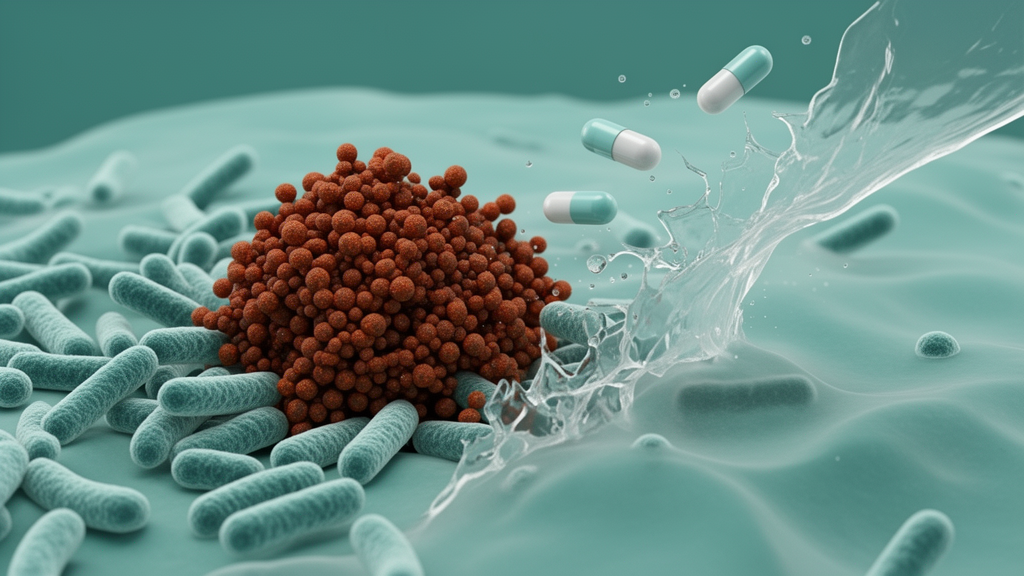
Researchers have biosynthesized spinel iron oxide nanoparticles using the cell-free supernatant of the bacterium Alcaligenes sp. strain NV06, reporting antibacterial, anti-biofilm, and anti-virulence activity against a panel of pathogenic bacteria, including multidrug-resistant strains. The study, published in BMC Biotechnology, describes what the authors state is the first report of Fe₃O₄ nanoparticle biosynthesis using the cell-free supernatant of this strain.
The nanoparticles were produced extracellularly from soluble Fe(III) and Fe(II) precursors. UV–visible spectroscopy showed a distinct absorption band at 228–235 nanometers, confirming nanoparticle formation. Field-emission scanning electron microscopy revealed predominantly quasi-spherical particles with some compact agglomerates, and the mean diameter of the dried nanoparticles was 36.00 ± 8.48 nanometers.
Fourier-transform infrared spectroscopy identified biomolecule-associated functional groups on the nanoparticle surface, which the authors suggest may have contributed to surface capping and steric stabilization. However, a low zeta-potential value of −3.2 millivolts indicated limited electrostatic stabilization, a point relevant to how the particles behave in solution.
Against test bacteria, the spinel nanoparticles showed antibacterial activity with minimum inhibitory concentration values ranging from 6.25 to 100 micrograms per milliliter and minimum bactericidal concentration values from 12.5 to 400 micrograms per milliliter. At half the minimum inhibitory concentration, the particles compromised bacterial membrane integrity, as measured by a crystal violet uptake assay.
Biofilm formation was markedly inhibited, with Gram-positive bacteria showing greater susceptibility than Gram-negative strains.
The nanoparticles also acted synergistically with selected antibiotics. Combining the particles with penicillin enhanced activity against Staphylococcus aureus and Bacillus cereus, while combination with cefixime improved effects against Escherichia coli and Pseudomonas aeruginosa. In each case the fractional inhibitory concentration index was below 0.75, the threshold the authors used to define synergy.
The study also probed a specific resistance mechanism. In Staphylococcus aureus SA-1199B, a strain that overexpresses the norA efflux pump, the nanoparticles increased intracellular accumulation of ethidium bromide, a dye normally pumped out of cells. This suggests the particles inhibit efflux pump activity, a mechanism that contributes to multidrug resistance. At half the minimum inhibitory concentration, the nanoparticles also significantly reduced the swarming motility of E. coli and P. aeruginosa, a form of surface movement involved in spreading and colonizing new surfaces.
The work is an in vitro laboratory study, and its findings are limited to the bacterial strains and conditions tested. The authors note that further in vivo studies are required to assess the therapeutic applicability of the biosynthesized nanoparticles. No clinical trial was associated with the report.
Nevertheless, the combination of direct antibacterial activity, anti-biofilm effects, reduced swarming motility, efflux pump interference, and synergy with existing antibiotics positions these biologically synthesized spinel Fe₃O₄ nanoparticles as candidate adjunctive agents against multidrug-resistant bacteria, pending the safety and efficacy evidence that animal and clinical studies would need to establish.
Subject of Research: Extracellular biosynthesis of spinel Fe₃O₄ nanoparticles using Alcaligenes sp. NV06 and their in vitro antibacterial and anti-virulence activities.
Article Title: Biogenic spinel Fe₃O₄ nanoparticles from Alcaligenes sp. NV06 inhibit bacterial growth, biofilms, and swarming motility
Article References: Ali, R. J., Ashengroph, M., & Sharifi, A. (2026). Biogenic spinel Fe₃O₄ nanoparticles from Alcaligenes sp. NV06 inhibit bacterial growth, biofilms, and swarming motility. BMC Biotechnology. https://doi.org/10.1186/s12896-026-01226-x
Image Credits: AI Generated
DOI: 10.1186/s12896-026-01226-x
Keywords: iron oxide nanoparticles, Alcaligenes sp. NV06, biosynthesis, antibacterial, biofilm, multidrug resistance, efflux pump, synergy, swarming motility, BMC Biotechnology, Biogenic, spinel
News Source: Gregory Coleman. (October 29, 2026). Bacteria-Grown Iron Oxide Nanoparticles Curb Biofilms and Boost Antibiotics. Scienmag.



