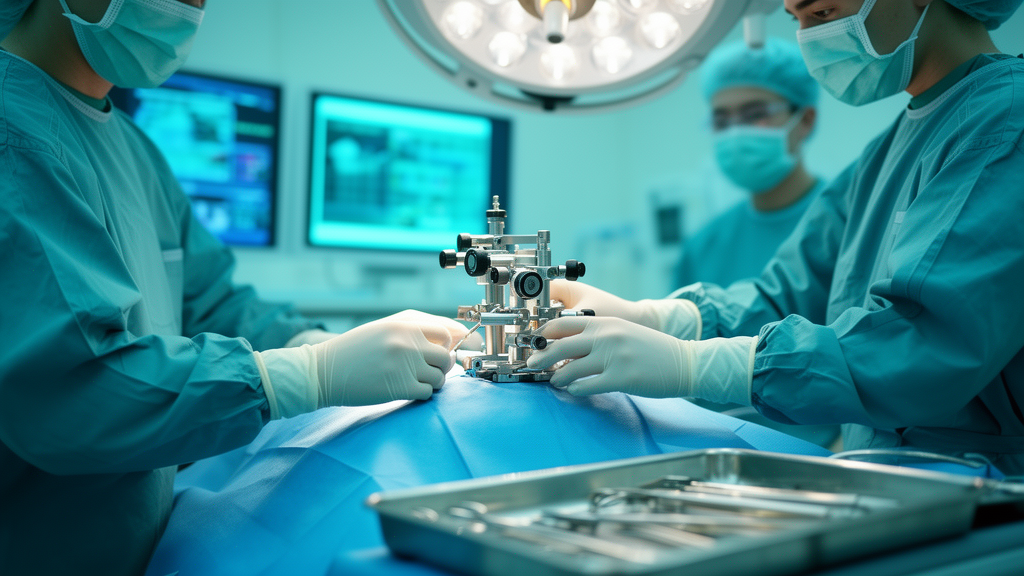
Awake deep brain stimulation surgery can provide critical information beyond what neuroimaging alone can capture, helping clinicians personalize electrode placement for patients with essential tremor, according to a Mayo Clinic study published in the journal Operative Neurosurgery. Deep brain stimulation surgery involves implanting thin wires equipped with electrodes, known as leads, into targeted areas of the brain. Once implanted, these electrodes deliver controlled electrical impulses that alter brain activity and can treat neurological movement disorders, including essential tremor, Parkinson’s disease, and dystonia. Although advanced imaging assists surgical teams in planning where to position the leads, standard anatomical targets do not always represent the most effective lead location for every patient.
During awake deep brain stimulation procedures, neurosurgeons and neurologists are able to measure brain activity, test electrical stimulation, and receive direct, real-time feedback from the patient. Study co-author Matthew R. Baker, Ph.D., a neurosurgery scientist at Mayo Clinic, noted that this interactive process gives clinicians the ability to evaluate patient responses during the procedure and immediately adjust lead placement if neurophysiological recordings or stimulation testing reveal suboptimal positioning. In contrast, deep brain stimulation performed while a patient is asleep relies primarily on anatomical imaging to guide lead placement, without the benefit of active intraoperative patient responses.
In this retrospective study, Mayo Clinic researchers evaluated 137 deep brain stimulation leads implanted in patients who remained awake throughout surgery for essential tremor. The investigators examined how frequently information collected during the operation led to changes in the final lead position and assessed whether those adjustments could have been accomplished using imaging modalities alone. For each implanted lead, the researchers determined whether the final implant followed the pre-planned surgical path, required an adjustment in depth, or had to be moved to an entirely parallel path based on intraoperative recordings of brain activity and stimulation testing. The research team also compared tremor suppression and the occurrence of side effects before and after leads were repositioned.
The investigation found that approximately 15 percent of the 137 deep brain stimulation leads were meaningfully repositioned during awake surgery. Among those surgical modifications, 88 percent could not have been achieved through imaging-based corrections alone. Study co-author Bryan Klassen, M.D., a neurologist at Mayo Clinic, explained that following a standard target based on imaging leads to optimal therapy in many patients, but the ideal lead location for an individual may lie in a slightly different position. Dr. Klassen stated that the awake procedure frequently resulted in lead adjustments that would not have been made if clinicians had relied solely on imaging during asleep procedures, providing evidence that awake surgery facilitates a more individualized and optimized lead placement strategy.
The study demonstrated that repositioning leads during awake surgery produced distinctly favorable clinical responses, including enhanced tremor control, a reduction in side effects, and wider therapeutic windows. The therapeutic window represents the margin between the stimulation level required to control tremor symptoms and the threshold at which unwanted side effects emerge. According to Dr. Klassen, establishing a wide therapeutic window provides clinicians with greater flexibility during future programming sessions and substantially improves long-term treatment management for patients living with essential tremor.
These findings indicate that awake intraoperative testing continues to provide clinically useful information even as neuroimaging and surgical guidance technologies become more sophisticated. The authors emphasized that clinicians cannot reliably predict prior to surgery which patients will ultimately require the supplementary information gathered through awake physiological testing. Study co-author Kai Miller, M.D., Ph.D., a neurosurgeon at Mayo Clinic, highlighted that when surgical teams make adjustments, those changes are often based on functional information that imaging alone cannot provide, thereby establishing an important avenue for personalizing care to each individual patient.
The Mayo Clinic research team is actively exploring ways to make awake deep brain stimulation procedures more efficient while preserving essential patient-specific information. Dr. Miller noted that the next step involves shortening the duration of the surgical procedure while retaining the detailed data that guides clinical decision-making. Future research includes developing technologies that evaluate multiple measures of brain activity simultaneously, alongside novel patient tasks, new stimulation approaches, and improved targeting strategies. This investigative work supports Mayo Clinic’s Bioelectronics Neuromodulation Innovation to Cure initiative, known as BIONIC, which focuses on developing personalized neuromodulation therapies to treat, prevent, and potentially reverse neurological disorders.
Subject of Research: Awake brain mapping for deep brain stimulation lead placement in essential tremor
Article Title: Mayo Clinic study shows awake brain mapping can help optimize deep brain stimulation
Article References: Mayo Clinic study shows awake brain mapping can help optimize deep brain stimulation. Original publication (Bibliographic details unavailable.)
Image Credits: AI Generated
DOI: Not provided
Keywords: deep brain stimulation, essential tremor, awake surgery, neurophysiology, Mayo Clinic, Operative Neurosurgery, neuromodulation, brain mapping, Mayo, Clinic, shows, awake
News Source: Ophelia Keating. (November 10, 2026). Awake Brain Mapping Optimizes Electrode Placement for Essential Tremor Surgery. Scienmag.