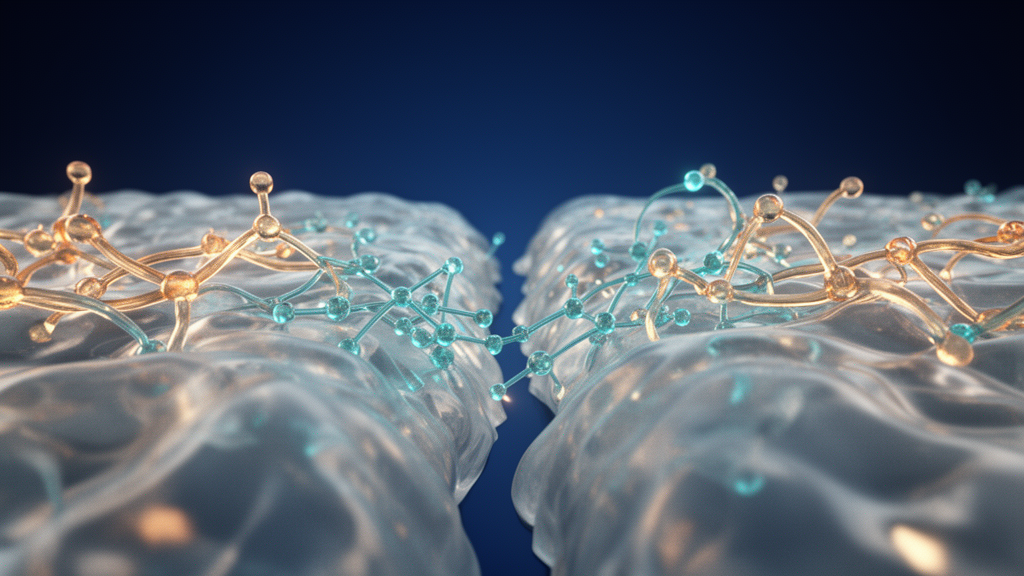
Self-healing smart polymers represent an advanced class of functional materials capable of autonomously recovering structural integrity and operational properties after sustaining damage, operating through an intricate coupling of dynamic chemical bonding and physical transport processes. While early historical breakthroughs in the field established autonomic recovery via microcapsule-based composites and later intrinsic supramolecular networks driven by reversible hydrogen bonding, practical healing efficiency cannot be interpreted exclusively through chemical design. A comprehensive review published in Discover Materials by M. M. Elsawy, Mai M. El Sawy, and S. F. Hamza introduces a multiscale physicochemical framework that integrates reversible bond dynamics, molecular diffusion across damaged interfaces, and viscoelastic network relaxation into a unified predictive architecture. By moving beyond isolated empirical observations and qualitative mechanism classifications, this synthesized perspective establishes direct quantitative correlations connecting molecular architecture to macroscopic functional restoration, bridging applied physics, materials engineering, and dynamic organic chemistry.
The foundational chemical mechanisms governing intrinsic recovery rely on both dynamic covalent chemistries and non-covalent supramolecular assemblies embedded within the polymer network. Dynamic covalent systems, exemplified by Diels–Alder adducts, imine linkages, and disulfide exchange reactions, reconstruct robust covalent networks that yield high mechanical recovery efficiencies, though they often demand external thermal or photochemical stimulation to overcome exchange activation barriers. In contrast, supramolecular systems leverage non-covalent forces such as hydrogen bonding, π–π stacking, ionic interactions, and metal–ligand coordination to achieve autonomous, rapid healing under mild ambient conditions with lower activation energies. However, these supramolecular assemblies frequently exhibit lower mechanical strength compared to covalent networks, leading researchers toward hybrid systems that integrate covalent backbones with labile supramolecular crosslinks to balance structural robustness against spontaneous interfacial reconnection.
Regardless of the underlying dynamic bond chemistry, interfacial recovery remains fundamentally unachievable without adequate polymer chain mobility driving physical transport across damaged boundaries. Following crack generation, mobile macromolecular segments must physically interdiffuse across the contact interface to re-establish network continuity, a transport phenomenon historically grounded in molecular interdiffusion theory. In the review framework, this one-dimensional interfacial transport is described through classical Fickian diffusion relations where the diffusion flux depends directly on the concentration gradient of mobile chain segments and the diffusion coefficient. This transport formulation assumes a homogeneous material composition, isotropic diffusion, constant transport coefficients, and concentration-driven mass transfer in the absence of convection, providing a practical first-order baseline for intrinsic polymer networks where classical segmental motion predominates over anomalous or Case-II transport behavior.
Because polymer segmental mobility and chemical bond exchange are thermally activated processes, temperature exerts a pronounced influence on both transport rates and reaction kinetics. The diffusion coefficient follows an Arrhenius relationship defined by a pre-exponential factor, the universal gas constant, absolute temperature, and the specific activation energy required for segmental diffusion, assuming invariant activation energies across the operational temperature range and the absence of thermal degradation. Simultaneously, the temporal evolution of macroscopic healing efficiency is modeled using first-order kinetic formulations in which the rate of recovery is directly proportional to remaining unrecovered damage. Within these kinetic relationships, the effective healing rate constant reflects the coupled contributions of chemical bond reformation rates and physical chain diffusion, demonstrating that sluggish property restoration can originate from either restricted segmental transport or insufficient exchange kinetics.
At the macromolecular scale, healing capability is critically governed by structure-property relationships involving network crosslink density, fractional free volume, phase morphology, and glass transition temperature. Highly crosslinked networks deliver superior stiffness, ultimate tensile strength, and dimensional stability, yet excessive crosslink density suppresses segmental flexibility and restricts interfacial chain interdiffusion. Conversely, under-crosslinked matrices foster rapid molecular rearrangement and fissure closure at the expense of load-bearing competence, necessitating an intermediate network density. Segmental mobility is also strongly dictated by the glass transition temperature relative to the operational environment, where materials possessing glass transition values near or below ambient temperatures exhibit spontaneous room-temperature recovery, whereas higher glass transition systems require thermal activation. Furthermore, molecular diffusivity displays an exponential dependence on fractional free volume, meaning minor volumetric expansions substantially accelerate chain interpenetration across damaged surfaces.
Structural morphology in multiphase polymers and heterogeneous composites introduces additional transport complexities that govern macroscopic property recovery. Phase-separated domains, rigid crystalline lamellae, and inorganic filler interfaces can either facilitate or obstruct interfacial healing depending on their volumetric distribution, domain dimensions, and interfacial compatibility with the surrounding matrix. Soft amorphous phases provide the chain flexibility and low activation barriers necessary for molecular diffusion and dynamic bond exchange, whereas rigid crystalline structures enhance elastic modulus and baseline strength while mechanically pinning polymer chains and impeding structural rearrangement. Consequently, achieving high performance requires optimizing a central design triad that concurrently balances reversible rebonding chemistry, chain mobility rates, and structural network architecture to sustain repeated repair without sacrificing engineering stiffness.
To connect microscopic transport with macroscopic structural recovery, viscoelastic relaxation introduces a definitive temporal constraint on the healing process. Following fracture, macromolecular chains must relax, dissipate localized stress, and structurally reorganize within the available recovery period. This time-dependent response is captured qualitatively through a Deborah-type dimensionless criterion relating the characteristic viscoelastic relaxation time of the polymer to the total healing duration. When the Deborah number is less than unity, the polymeric matrix possesses sufficient molecular freedom to relax and rearrange within the recovery timeframe, promoting complete interfacial reconstruction. Conversely, when the Deborah number significantly exceeds unity, the network behaves as an excessively rigid elastic solid over the observation window, preventing chain interpenetration and precluding effective property restoration under linear viscoelastic assumptions.
The quantitative validation of this physicochemical framework relies on systematic physics-based experimental characterization techniques that monitor chemical rebonding, interfacial morphology, thermal transitions, and mechanical integrity. Dynamic covalent exchange and supramolecular associations are tracked using Fourier-transform infrared spectroscopy and spatially resolved Raman mapping to assess localized chemical heterogeneity across repaired boundaries. Thermal transitions, activation parameters, and matrix stability are determined using differential scanning calorimetry and thermogravimetric analysis, which identify glass transition thresholds and safe thermal cycling boundaries. Meanwhile, physical crack closure, wetting, and nanoscale surface morphology are evaluated using optical microscopy, confocal microscopy, scanning electron microscopy, and atomic force microscopy, confirming whether visual crack disappearance corresponds to true structural consolidation rather than superficial surface contact.
The definitive benchmark of polymer repair is quantified through mechanical and rheological testing, where healing efficiency is measured as the ratio of recovered mechanical performance to the original undamaged baseline property. Standardized tensile testing, fracture toughness measurements, compression recovery, and cyclic mechanical loading verify whether re-established molecular networks restore engineering strength, elongation, or modulus. Complementing static tests, dynamic mechanical analysis provides temperature-dependent storage moduli, loss moduli, and damping factors that directly illuminate viscoelastic relaxation shifts and network restructuring following damage. Importantly, healing efficiency does not represent a static intrinsic material constant, but rather a dynamic performance parameter that varies as a multivariable function of healing duration, operational temperature, diffusion coefficients, dynamic bond densities, crosslink density, and activation energy.
Despite impressive laboratory healing efficiencies that frequently exceed ninety percent in specialized intrinsic systems, several technical bottlenecks impede large-scale commercialization and engineering deployment. A central limitation is cyclic durability, as many polymers display excellent initial healing efficiency but suffer progressive performance deterioration over repeated damage-repair cycles due to irreversible side reactions, oxidative chain scission, and microstructural defect accumulation. Furthermore, real-world service conditions expose self-healing networks to environmental hazards: ambient humidity can plasticize networks or disrupt moisture-sensitive reversible bonds, ultraviolet radiation and oxidation induce chain degradation, aggressive solvents cause swelling or structural dissolution, and mechanical fatigue accumulates sub-critical microcracks. Addressing these challenges necessitates standardized testing protocols reporting specimen geometry, damage modes, normalized crack dimensions, environmental variables, and replicate statistics with confidence intervals to ensure reproducible comparisons.
Bridging the divide between laboratory specimens and industrial applications across protective coatings, flexible electronics, soft robotics, and energy-storage devices requires multiscale computational tools and sustainability methodologies. Computational techniques such as atomistic molecular dynamics, Monte Carlo equilibrium simulations, coarse-grained network modeling, and continuum finite element analysis simulate stress redistribution, bond exchange probabilities, and interfacial interdiffusion across multiple spatial and temporal dimensions. Simultaneously, machine learning algorithms, including Random Forest, Gradient Boosting, neural networks, and physics-informed models, leverage physicochemical descriptors to navigate trade-offs between mechanical strength and autonomous mobility without exhaustive trial-and-error synthesis. When integrated with quantitative life-cycle assessment, recyclability metrics, and carbon footprint analysis, this unified physicochemical framework provides the necessary principles for designing high-performance, durable, and environmentally sustainable self-healing polymeric materials.
Subject of Research: Physicochemical mechanisms, predictive modeling, and characterization of self-healing smart polymers
Article Title: Physicochemical design principles for self-healing smart polymers through molecular interactions, transport dynamics, and predictive materials design
Article References: Elsawy, M. M., El Sawy, M. M., & Hamza, S. F. (2026). Physicochemical design principles for self-healing smart polymers through molecular interactions, transport dynamics, and predictive materials design. Discover Materials, 6(1), Article 274. https://doi.org/10.1007/s43939-026-00913-y
Image Credits: AI Generated
DOI: 10.1007/s43939-026-00913-y
Keywords: smart polymers, self-healing materials, dynamic covalent chemistry, supramolecular polymers, molecular diffusion, viscoelastic relaxation, predictive materials design, polymer physics, Physicochemical, design, principles, self-healing
News Source: Neil Sanderson. (November 10, 2026). Physicochemical Framework Connects Molecular Dynamics to Predictive Self-Healing Polymer Design. Scienmag.