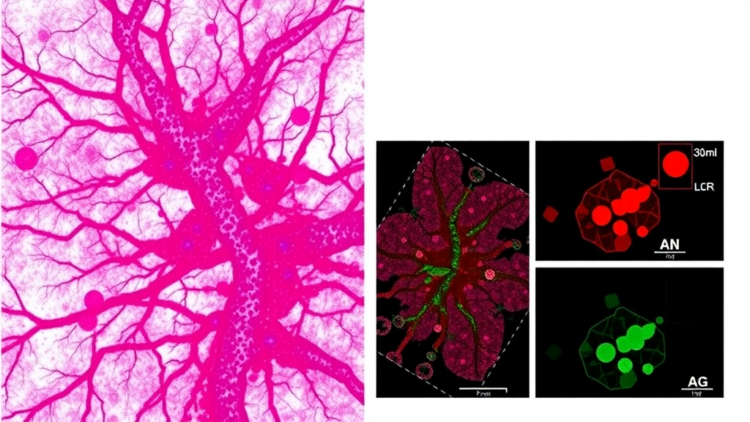
The AI-based system photographs the embryos every five minutes, processes the data of their development and notifies any anomalies observed. This increases the likelihood of choosing the most viable and healthy early-stage embryo for IVF procedures.
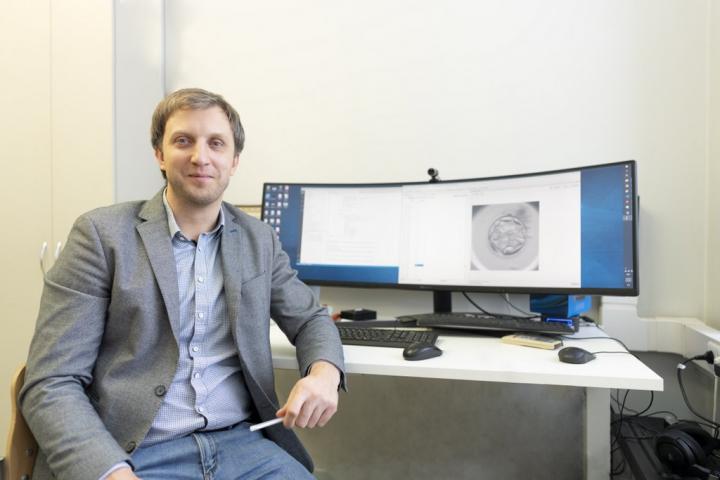
Credit: KTU
The team of researchers at Kaunas University of Technology (KTU), Lithuania applied artificial intelligence (AI) methods to evaluate data of human embryo development. The AI-based system photographs the embryos every five minutes, processes the data of their development and notifies any anomalies observed. This increases the likelihood of choosing the most viable and healthy early-stage embryo for IVF procedures. The innovation was developed in collaboration with Esco Medical Technologies, a manufacturer of medical equipment.
Almost one in six couples face infertility; about 48.5 million couples, 186 million individuals worldwide are inflicted. Europe has one of the lowest birth rates in the world, with an average of just 1.55 children per woman.
The most effective form of assisted reproductive technology is in vitro fertilisation (IVF) – a complex series of procedures used to help with fertility. However, the success of IVF procedures is closely linked to many biological and technical issues. The fertilisation and in vitro culturing of embryos are dependent upon an environment that should be stable and correct concerning temperature, air quality, light, media pH and osmolality. At the end of this procedure, there are several embryos, which consequently leads to a problem of choosing the best of them that is likely to give the greatest success of pregnancy and should be transferred to the uterus.
“Typically, a healthy embryo progresses consistently through known development stages, has a low percentage of cell fragmentation, and there are other indicators of its healthy development. However, assessing the health of an early-stage embryo from its visual information is not an easy task. That’s where the technologies can come to help”, says Dr Vidas Raudonis, Professor at the Department of Automation, KTU Faculty of Electrical and Electronics Engineering.
The interdisciplinary team of KTU researchers lead by Dr Raudonis, developed an automated method for early-stage embryo evaluation. The method is based on processing the visual data collected by photographing the developing embryo every five minutes from seven different sides for up to five days. Up to 20,000 images are generated during the image-capturing process. To evaluate them all manually would be an impossible task for the embryologist in charge of the procedure.
“At this stage, the embryologist can rely on the AI algorithm developed by KTU. Our algorithm automatically analyses the photos and marks all the events and anomalies that can affect the successful further development of the embryo. It’s important to note that the final decision is made by the embryologist – the AI algorithm is only a tool that allows to objectively justify the decision”, Dr Raudonis explains.
He emphasises that due to the rate of embryo development, changes that indicate developmental abnormalities may not be noticed during manual data analysis. AI is trained to notice all the essential features of a healthy embryo in a sequence of photos. Therefore, it can replicate the work of an embryologist, or, to be more exact – to perform the visual inspection of the embryo’s development.
Automated embryo development assessment is a new field not only in Lithuania but also in the world. It has been actively developed in the last six years, when the technical possibilities to create more sophisticated AI methods and algorithms emerged. Strong teams of scientists from Israel, Australia, Denmark and other countries are working in this field. More and more clinics all over the world are applying AI-based solutions for assisting infertility treatment.
The technology created by the KTU team is already being used in certain medical facilities in Lithuania. The commercialisation of the solution is facilitated by Esco Medical Technologies, the leading manufacturer of high-quality equipment for IVF procedures.
“My team and I were probably the first in Lithuania to apply AI methods to process data obtained by registering the development of human embryos in incubators. Our first steps towards cooperation with business were small but focused. Now this work is turning not only into scientific products but also into technological solutions”, says Dr Raudonis.
###
Media Contact
Aldona Tuur
[email protected]
Original Source
https:/
Related Journal Article
http://dx.