• HOME
  • NEWS
  • EXPLORE
    • CAREER
      • Companies
      • Jobs
    • EVENTS
    • iGEM
      • News
      • Team
    • PHOTOS
    • VIDEO
    • WIKI
  • BLOG
  • COMMUNITY
    • FACEBOOK
    • INSTAGRAM
    • TWITTER
Thursday, February 5, 2026
BIOENGINEER.ORG
No Result
View All Result
  • Login
  • HOME
  • NEWS
  • EXPLORE
    • CAREER
      • Companies
      • Jobs
        • Lecturer
        • PhD Studentship
        • Postdoc
        • Research Assistant
    • EVENTS
    • iGEM
      • News
      • Team
    • PHOTOS
    • VIDEO
    • WIKI
  • BLOG
  • COMMUNITY
    • FACEBOOK
    • INSTAGRAM
    • TWITTER
  • HOME
  • NEWS
  • EXPLORE
    • CAREER
      • Companies
      • Jobs
        • Lecturer
        • PhD Studentship
        • Postdoc
        • Research Assistant
    • EVENTS
    • iGEM
      • News
      • Team
    • PHOTOS
    • VIDEO
    • WIKI
  • BLOG
  • COMMUNITY
    • FACEBOOK
    • INSTAGRAM
    • TWITTER
No Result
View All Result
Bioengineer.org
No Result
View All Result
Home NEWS Science News Biology

Artificial intelligence ARTIST instantly captures materials' properties

Bioengineer by Bioengineer
January 30, 2019
in Biology
Reading Time: 3 mins read
0
IMAGE
Share on FacebookShare on TwitterShare on LinkedinShare on RedditShare on Telegram

New approach holds potential to slash research and development costs for designer materials and technologies of the future
IMAGE

Credit: Jari Järvi/Aalto University


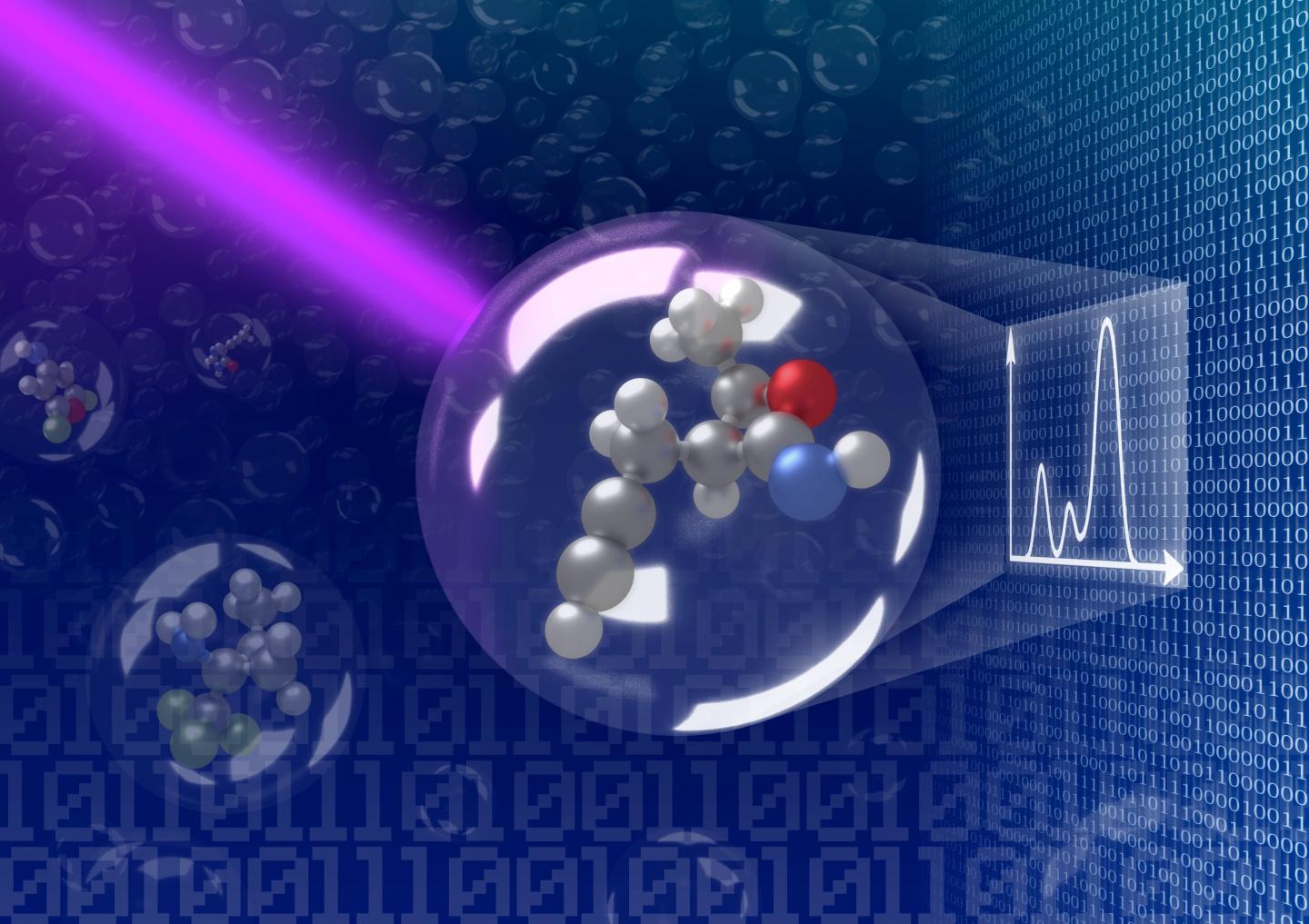
Researchers at Aalto University and the Technical University of Denmark have developed an artificial intelligence (AI) to seriously accelerate the development of new technologies from wearable electronics to flexible solar panels. ARTIST, which stands for Artificial Intelligence for Spectroscopy, instantly determines how a molecule will react to light–clinch-pin knowledge for creating the designer materials needed for tomorrow’s technology.

Scientists traditionally study molecular reactions to external stimuli with spectroscopy, a widely used method across the natural sciences and industry. Spectroscopy probes the internal properties of materials by observing their response to, for example, light, and has led to the development of countless everyday technologies. Existing experimental and computational spectroscopy approaches can be, however, incredibly costly. Time in highly specialised laboratories is expensive and often severely limited, while computations can be tedious and time-intensive.

With ARTIST, the research team offers a paradigm shift to how we determine the spectra–or response to light–of individual molecules.

‘Normally, to find the best molecules for devices, we have to combine previous knowledge with some degree of chemical intuition. Checking their individual spectra is then a trial-and-error process that can stretch weeks or months, depending on the number of molecules that might fit the job. Our AI gives you these properties instantly,’ says Milica Todorovic, a postdoctoral researcher at Aalto University.

With its speed and accuracy, ARTIST has the potential to speed up the development of flexible electronics, including light-emitting diodes (LEDs) or paper with screen-like abilities. Complementing basic research and characterization in the lab, ARTIST may also hold the key to producing better batteries and catalysts, as well as creating new compounds with carefully selected colours.

The multidisciplinary team trained the AI in just a few weeks with a dataset of more than 132,000 organic molecules. ARTIST can predict with exceedingly good accuracy just how those molecules–and those similar in nature–will react to a stream of light. The team now hopes to expand its abilities by training ARTIST with even more data to make an even more powerful tool.

‘Enormous amounts of spectroscopy information sit in labs around the world. We want to keep training ARTIST with further large datasets so that it can one day learn continuously as more and more data comes in,’ explains Aalto University Professor Patrick Rinke.

The researchers aim to release ARTIST on an open science platform in 2019, and it is currently available for use and further training upon request.

###

The study was published in Advanced Science on 29 January 2019.

More information

Professor Patrick Rinke

Aalto University

Telephone: +358504433199

Email: [email protected]

Postdoctoral researcher Milica Todorovic

Aalto University

Telephone: +358503310029

Email: [email protected]

Media Contact
Professor Patrick Rinke
[email protected]
358-504-433-199

Original Source

https://www.aalto.fi/news/artificial-intelligence-artist-instantly-captures-materials-properties

Related Journal Article

http://dx.doi.org/10.1002/advs.201801367

Tags: BiochemistryBiomechanics/BiophysicsBiotechnologyChemistry/Physics/Materials SciencesClimate ScienceComputer ScienceMaterialsMolecular PhysicsOpticsSoftware Engineering
Share12Tweet8Share2ShareShareShare2

Related Posts

blank

Are Returning Pumas Threatening Patagonian Penguins? New Study Uncovers the Risks

February 5, 2026
Burn Injuries: A Crucial Factor in Shaping Human Evolution, Study Reveals

Burn Injuries: A Crucial Factor in Shaping Human Evolution, Study Reveals

February 5, 2026

Enhanced IVF Success: Innovative Transparent Culture Dishes Boost Embryo Selection Accuracy

February 4, 2026

Dog Behavior Traits Connected to Salivary Cortisol Levels and Serotonin Activity

February 4, 2026
Please login to join discussion

POPULAR NEWS

  • Robotic Ureteral Reconstruction: A Novel Approach

    Robotic Ureteral Reconstruction: A Novel Approach

    81 shares
    Share 32 Tweet 20
  • Digital Privacy: Health Data Control in Incarceration

    63 shares
    Share 25 Tweet 16
  • Study Reveals Lipid Accumulation in ME/CFS Cells

    57 shares
    Share 23 Tweet 14
  • Breakthrough in RNA Research Accelerates Medical Innovations Timeline

    53 shares
    Share 21 Tweet 13

About

We bring you the latest biotechnology news from best research centers and universities around the world. Check our website.

Follow us

Recent News

Human ILC1 Cells Fight Leukemia Stem Growth

Gut Microbe–Produced Butyrate Boosts Immune Cell Activation to Improve Vaccine Effectiveness

Mindless Marvels: Insights Robots Can Gain from Sea Stars

Subscribe to Blog via Email

Enter your email address to subscribe to this blog and receive notifications of new posts by email.

Join 73 other subscribers
  • Contact Us

Bioengineer.org © Copyright 2023 All Rights Reserved.

Welcome Back!

Login to your account below

Forgotten Password?

Retrieve your password

Please enter your username or email address to reset your password.

Log In
No Result
View All Result
  • Homepages
    • Home Page 1
    • Home Page 2
  • News
  • National
  • Business
  • Health
  • Lifestyle
  • Science

Bioengineer.org © Copyright 2023 All Rights Reserved.