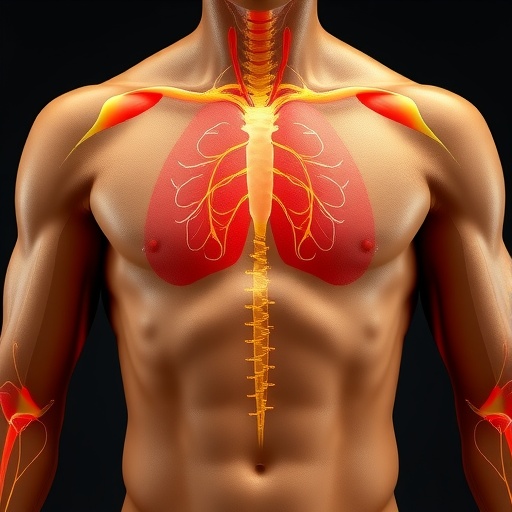
Arginine, an amino acid commonly obtained from protein-rich foods and produced by the human body, may play a direct role in determining how effectively cells display signs of cancer and viral infection to the immune system. Researchers at The Rockefeller University report that arginine deficiency can suppress production of major histocompatibility complex class I (MHC-I) proteins, molecules that are essential for alerting immune cells to infected or abnormal tissue. In experiments involving colon cancer, influenza and SARS-CoV-2, restoring arginine levels improved MHC-I production and was associated with stronger disease resistance in mice.
The study, led by Qiushuang Wu in the laboratory of Sohail Tavazoie, builds on earlier work linking arginine depletion to colon cancer. In 2023, Tavazoie’s team found that depriving colon cancer cells of arginine increased the number of mutations they accumulated. The new research suggests that arginine scarcity may have a second, potentially complementary effect: it can weaken immune surveillance by interfering with the cellular machinery responsible for producing MHC-I proteins.
MHC-I molecules are displayed on the surface of nearly every nucleated cell in the body. They bind short protein fragments generated inside cells and present them to cytotoxic T cells. When these fragments originate from viral proteins or altered cancer proteins, T cells can recognize the cells as dangerous and initiate their destruction. A reduction in MHC-I expression can therefore provide infected or malignant cells with a form of immune concealment, allowing them to evade detection.
The researchers focused on an unusual feature of MHC-I biology. The protein is encoded by genes whose messenger RNA contains a high number of codons specifying arginine. Codons are three-nucleotide sequences that direct ribosomes to insert particular amino acids into a growing protein chain. Although several codons can encode the same amino acid, MHC-I transcripts are particularly dependent on arginine-rich instructions. This dependence appears to make their translation unusually sensitive to fluctuations in the cellular supply of arginine.
Using cultured cells, Wu and colleagues measured changes in protein production under arginine-restricted conditions. They identified 414 proteins whose levels fell abnormally when arginine was scarce. Many were connected to processes already known to depend on arginine, including metabolism and signaling. The most consequential finding, however, involved three HLA genes that encode components of MHC-I. Their expression and the amount of MHC-I protein produced from them declined sharply during arginine deprivation.
Additional experiments indicated that the problem was not simply a failure to transcribe the genes into messenger RNA. Instead, ribosomes stalled while translating MHC-I messages. When a ribosome reaches an arginine codon, it normally receives an arginine-loaded transfer RNA molecule and continues building the protein. Under depleted conditions, the supply of these charged transfer RNAs falls. Ribosomes then pause at arginine-rich sections of the message, slowing or aborting production of the completed MHC-I protein. The result is a reduced ability to present intracellular antigens to T cells.
This mechanism may help explain why arginine levels decline in several disease settings. The researchers found that arginine was the most depleted amino acid across the disease models they examined, including colon cancer, influenza and SARS-CoV-2 infection. Tumors and infected tissues can alter nutrient availability by consuming amino acids rapidly, reshaping local metabolism or triggering systemic changes in nutrient distribution. In addition, arginine levels naturally tend to decrease with age, a change that could contribute to weaker immune responses in older individuals.
The team next tested whether dietary arginine could influence disease outcomes in living animals. Mice fed an arginine-restricted diet developed more colon tumors, whereas animals receiving higher amounts of the amino acid developed fewer tumors. The researchers then studied mouse models of influenza and SARS-CoV-2 infection. Animals on arginine-rich diets experienced milder symptoms than mice receiving lower amounts. In the influenza experiments, administering arginine after infection also improved outcomes, suggesting that supplementation may retain activity even after disease has begun.
The findings raise the possibility that arginine availability could influence responses to both immunotherapy and viral infection, although the evidence remains preclinical. A moderate amount of supplemental arginine was sufficient in laboratory experiments to restore expression of genes involved in MHC-I production, according to the researchers. They propose that arginine supplementation could eventually be evaluated alongside cancer immunotherapies or as a supportive intervention for people at high risk from respiratory viruses. Human studies will be necessary to determine appropriate doses, safety and effectiveness, particularly because arginine metabolism is complex and may affect tumors, pathogens and immune cells in different ways.
The study also points to a broader principle in molecular biology: nutrients may regulate gene expression not only through classical signaling pathways, but also through the physical demands of protein synthesis. If a protein contains an unusually high proportion of codons for a particular amino acid, its production could be selectively reduced when that amino acid becomes limited. Tavazoie’s team is now investigating whether similar codon-dependent effects occur with other amino acids and proteins. For viral disease and cancer, the work offers a new explanation for how altered metabolism can weaken immune recognition—and a potential route for restoring it through nutritional intervention.
Subject of Research: Arginine-dependent MHC-I protein translation, cancer immunity and respiratory viral infection
Article Title: Dietary arginine drives codon-dependent MHC-I translation and improves immunity in colon tumorigenesis and respiratory viral infection
Article Publication Date: 30-Jul-2026
Web References: https://www.rockefeller.edu/news/33574-the-nutrient-that-cancer-cells-crave/ ; https://www.rockefeller.edu/our-scientists/heads-of-laboratories/973-sohail-tavazoie/ ; https://snfiru.rockefeller.edu/
References: Cell, DOI: 10.1016/j.cell.2026.07.020
Image Credits: Elizabeth and Vincent Meyer Laboratory of Systems Cancer Biology at The Rockefeller University
Keywords: Arginine, MHC-I, HLA genes, codon-dependent translation, cancer immunity, colon cancer, influenza, SARS-CoV-2, viral infection, immune evasion, nutritional immunology
Tags: amino acids and cancer immunityamino acids in antiviral defensearginine deficiency and tumor suppressionarginine supplementation and disease resistancearginine’s role in immune systemcellular mechanisms of immune detectioncolon cancer immune modulationimmune response to viral infectionsimpact of nutrient levels on immune surveillanceMHC-I protein regulationprotein synthesis and immune signalingSARS-CoV-2 immune evasion