An international team led by UCLA researchers has found that inserting the amino acid arginine into a layered quantum material can preserve its commensurate charge density wave, or CCDW, at temperatures as high as about 135 degrees Fahrenheit. The compound is tantalum disulfide, built from sheets only three atoms thick. Its quantum behavior was previously observed at extreme cold, around 135 degrees below zero Fahrenheit, but adding arginine raised the temperature at which the phenomenon remained stable to well above room temperature. The study was published in Nature Chemistry and involved researchers from UCLA, the California NanoSystems Institute, USC, Tamkang University, UC Irvine and the University of Chemistry and Technology in Prague.
In a metal, electrons generally move in a disordered way and can be deflected by small vibrations caused by ambient heat. A commensurate charge density wave is different: electrons move cooperatively in a pattern linked to the internal crystal structure of the material. The UCLA-led team showed that this ordered electronic behavior could survive at much warmer temperatures when the compound was arranged as repeating vertical stacks containing two layers of arginine between individual tantalum disulfide layers. The molecular fit appears to suppress the disruptive effect of thermal vibrations while maintaining the electronic pattern associated with the underlying crystal.
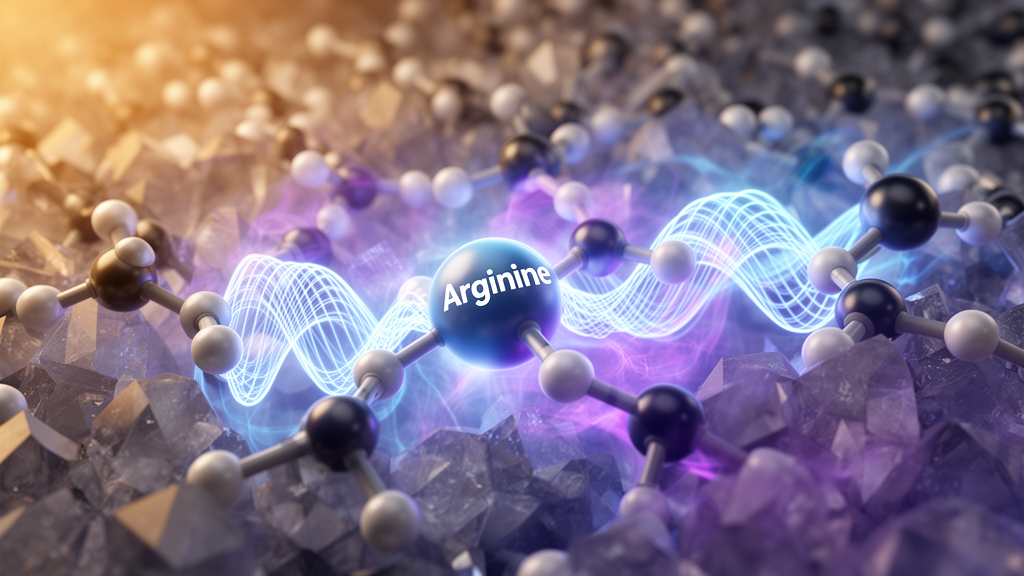
Arginine, one of the amino acids used to build proteins, produced the effect in the researchers’ material, while two other tested amino acids did not show CCDW behavior at room temperature. The investigators found that arginine fits into tantalum disulfide’s crystal matrix like a puzzle piece. Its dimensions and the distribution of its electrons appear well matched to the structure of the inorganic material, providing a plausible explanation for why it extends the temperature range so dramatically. Computer simulations supported this interpretation, although the release describes the molecular fit and its electronic characteristics as an explanation for the observed effect rather than a fully demonstrated technological mechanism.
The work grew from an earlier experiment in which the researchers screened more than 50 carbon-based molecules for their ability to combine with advanced materials. Tantalum disulfide and arginine had already been assembled during that screening, and the unusual temperature dependence was discovered later through further analysis. To characterize the combined material, the team compared it with tantalum disulfide alone and used several complementary techniques to measure vibrations, electrical flow, temperature changes and atomic structure. These measurements, together with the simulations, were used to examine why adding the amino acid altered the material’s quantum behavior.
The result is a rare example of inorganic materials chemists using molecular chemistry to modify the electronic behavior of an inorganic crystal. The investigators said the approach could broaden the range of molecular structures available for designing advanced materials, including the possibility of rationally selecting or designing molecules to achieve a desired property such as superconductivity. That broader goal remains prospective: the current study demonstrates the extended CCDW behavior in the tantalum disulfide–arginine combination but does not establish superconductivity or demonstrate a working memory device. With further development, the researchers said the compound could form the basis of energy-efficient computer memory based on quantum properties rather than the conventional electronic behavior used in today’s electronics. The next stage of the work will seek a deeper understanding of both the composite material and the molecular-intercalation method.
Subject of Research: Molecular engineering of a commensurate charge density wave in layered tantalum disulfide
Article Title: UCLA-led study finds amino acid extends quantum properties above room temperature
Article References: UCLA-led study finds amino acid extends quantum properties above room temperature. Original publication (Bibliographic details unavailable.)
Image Credits: AI Generated
DOI: Not provided
Keywords: arginine, tantalum disulfide, quantum materials, charge density wave, molecular intercalation, UCLA, electronic behavior, materials chemistry, crystal structure, UCLA-led, finds, amino
News Source: Katie Riggs. (October 26, 2026). Arginine extends quantum material behavior above room temperature. Scienmag.