• HOME
  • NEWS
  • EXPLORE
    • CAREER
      • Companies
      • Jobs
    • EVENTS
    • iGEM
      • News
      • Team
    • PHOTOS
    • VIDEO
    • WIKI
  • BLOG
  • COMMUNITY
    • FACEBOOK
    • INSTAGRAM
    • TWITTER
Saturday, May 16, 2026
BIOENGINEER.ORG
No Result
View All Result
  • Login
  • HOME
  • NEWS
  • EXPLORE
    • CAREER
      • Companies
      • Jobs
        • Lecturer
        • PhD Studentship
        • Postdoc
        • Research Assistant
    • EVENTS
    • iGEM
      • News
      • Team
    • PHOTOS
    • VIDEO
    • WIKI
  • BLOG
  • COMMUNITY
    • FACEBOOK
    • INSTAGRAM
    • TWITTER
  • HOME
  • NEWS
  • EXPLORE
    • CAREER
      • Companies
      • Jobs
        • Lecturer
        • PhD Studentship
        • Postdoc
        • Research Assistant
    • EVENTS
    • iGEM
      • News
      • Team
    • PHOTOS
    • VIDEO
    • WIKI
  • BLOG
  • COMMUNITY
    • FACEBOOK
    • INSTAGRAM
    • TWITTER
No Result
View All Result
Bioengineer.org
No Result
View All Result
Home NEWS Science News Biology

Arctic sea ice can’t ‘bounce back’

Bioengineer by Bioengineer
January 21, 2020
in Biology
Reading Time: 2 mins read
0
IMAGE
Share on FacebookShare on TwitterShare on LinkedinShare on RedditShare on Telegram

IMAGE

Credit: Paul Butler

Arctic sea ice cannot “quickly bounce back” if climate change causes it to melt, new research suggests.

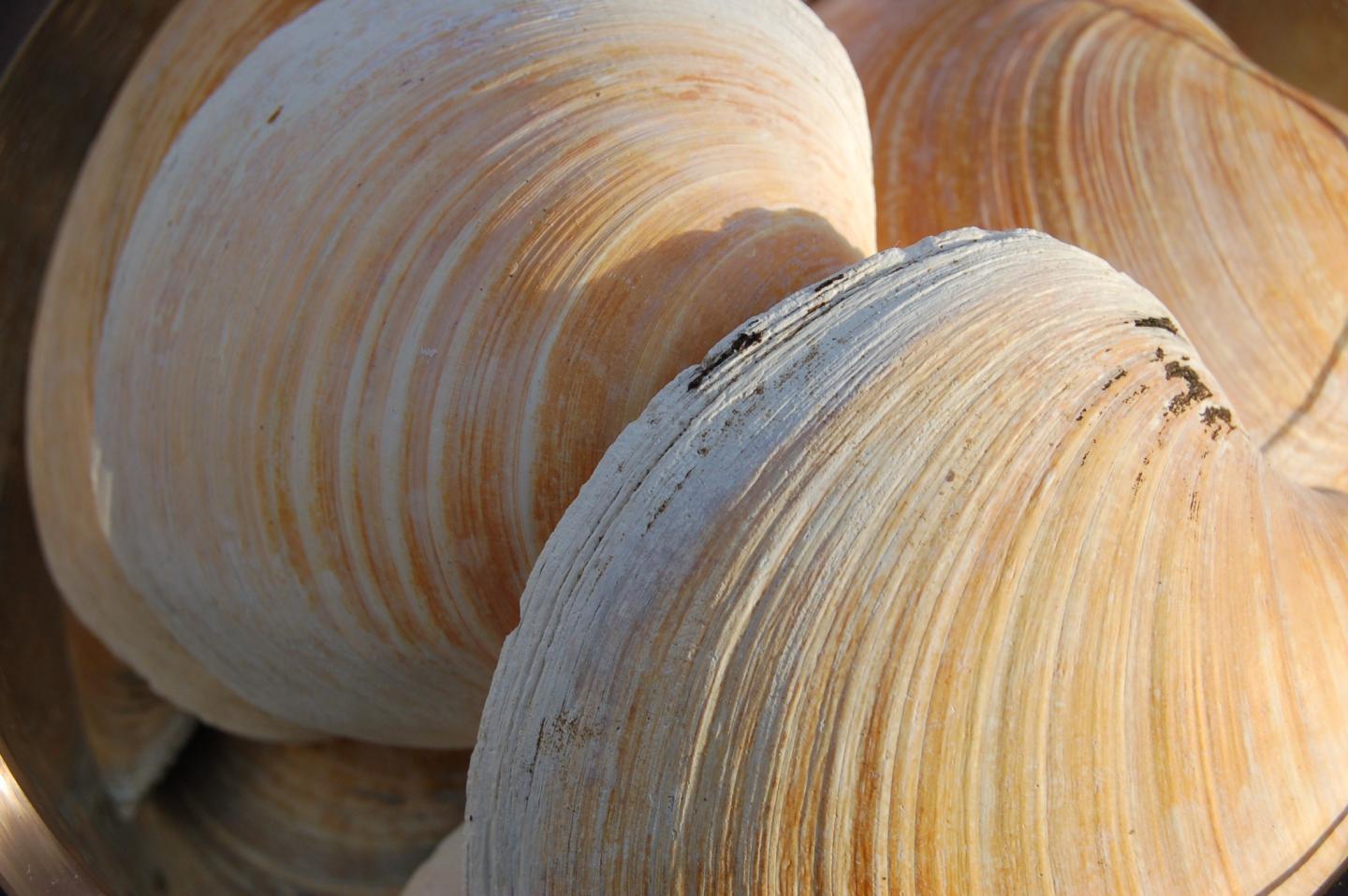
A team of scientists led by the University of Exeter used the shells of quahog clams, which can live for hundreds of years, and climate models to discover how Arctic sea ice has changed over the last 1,000 years.

They found sea ice coverage shifts over timescales of decades to centuries – so shrinking ice cannot be expected to return rapidly if climate change is slowed or reversed.

The study examined whether past ice changes north of Iceland were “forced” (caused by events such as volcanic eruptions and variations in the sun’s output) or “unforced” (part of a natural pattern).

At least a third of past variation was found to be “forced” – showing the climate system is “very sensitive” to such driving factors, according to lead author Dr Paul Halloran, of the University of Exeter.

“There is increasing evidence that many aspects of our changing climate aren’t caused by natural variation, but are instead ‘forced’ by certain events,” he said.

“Our study shows the large effect that climate drivers can have on Arctic sea ice, even when those drivers are weak as is the case with volcanic eruptions or solar changes.

“Today, the climate driver isn’t weak volcanic or solar changes – it’s human activity, and we are now massively forcing the system.”

Co-author of the study Professor Ian Hall, from Cardiff University, said: “Our results suggest that climate models are able to correctly reproduce the long-term pattern of sea ice change.

“This gives us increased confidence in what climate models are telling us about current and future sea ice loss.”

When there is lots of sea ice, some of this drifts southwards and, by releasing fresh water, can slow the North Atlantic Ocean circulation, otherwise known as the Atlantic Meridional Overturning Circulation (AMOC).

The AMOC brings warm water from the tropics towards the Arctic, so slowing it down cools this region and allows sea ice to grow further.

So, with less ice the AMOC can bring in more warm water – a so-called “positive feedback” where climate change drives further warming and sea ice loss.

Quahog clams are thought to be the longest-living non-colonial animal on Earth, and their shells produce growth rings which can be examined to measure past environmental changes.

Dr Halloran is part of the Global Systems Institute, which brings together experts from a wide range of fields to find solutions to global challenges.

The new study is part of a project including Cardiff University, the Met Office and an international team working on climate model simulations of the last millennium. The work was funded by the Natural Environment Research Council.

###

The paper, published in the journal Scientific Reports, is entitled: “Natural drivers of multidecadal Arctic sea ice variability over the last millennium.”

Media Contact
Alex Morrison
[email protected]
44-013-927-24828

Related Journal Article

http://dx.doi.org/10.1038/s41598-020-57472-2

Tags: Atmospheric ScienceClimate ChangeClimate ScienceMarine/Freshwater BiologyTemperature-Dependent PhenomenaWeather/Storms
Share12Tweet8Share2ShareShareShare2

Related Posts

Single mother must adapt swiftly — the survival of her colony depends on it — Biology

Single mother must adapt swiftly — the survival of her colony depends on it

May 15, 2026
Why Are Nearly Everyone Right-Handed? It Might Be Linked to How We Learned to Walk — Biology

Why Are Nearly Everyone Right-Handed? It Might Be Linked to How We Learned to Walk

May 15, 2026

Excessive Neuronal Activity Initiates Severe Autoimmune Brain Disorder

May 15, 2026

Precision Anti-Aging Strategies Focus on Eliminating Harmful Senescent Cells While Preserving Beneficial Ones

May 15, 2026
Please login to join discussion

POPULAR NEWS

  • Research Indicates Potential Connection Between Prenatal Medication Exposure and Elevated Autism Risk

    843 shares
    Share 337 Tweet 211
  • New Study Reveals Plants Can Detect the Sound of Rain

    730 shares
    Share 291 Tweet 182
  • Salmonella Haem Blocks Macrophages, Boosts Infection

    62 shares
    Share 25 Tweet 16
  • Breastmilk Balances E. coli and Beneficial Bacteria in Infant Gut Microbiomes

    58 shares
    Share 23 Tweet 15

About

We bring you the latest biotechnology news from best research centers and universities around the world. Check our website.

Follow us

Recent News

Perinatal and Early Childhood Factors in PFAPA Persistence

New Actinomycin Derivatives Target Malaria More Selectively

Mobile App Enhances Exercise for Older Adults’ Cognition

Subscribe to Blog via Email

Enter your email address to subscribe to this blog and receive notifications of new posts by email.

Join 82 other subscribers
  • Contact Us

Bioengineer.org © Copyright 2023 All Rights Reserved.

Welcome Back!

Login to your account below

Forgotten Password?

Retrieve your password

Please enter your username or email address to reset your password.

Log In
No Result
View All Result
  • Homepages
    • Home Page 1
    • Home Page 2
  • News
  • National
  • Business
  • Health
  • Lifestyle
  • Science

Bioengineer.org © Copyright 2023 All Rights Reserved.