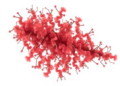
Researchers at Uppsala University have identified a drug substance that reduces blood vessel lesions in the brain in the disease Cerebral Cavernous Malformation (CCM), according to a study published in Science Translational Medicine. The substance, dabrafenib, is already approved to treat a childhood brain tumour, and the researchers say it could therefore be repurposed relatively rapidly to treat CCM, potentially replacing surgery, which is currently the only treatment option.
CCM is a disease in which fragile, mulberry-like malformed blood vessel structures form in the brain. These lesions can cause hemorrhages and, in some cases, acute bleedings such as stroke. At present, the only treatment is surgery to remove the lesions, but because patients often present with multiple lesions, there is an urgent need to develop non-invasive therapeutic strategies.
In the new study, the researchers screened more than 5,000 bioactive molecules on cultured CCM mouse vascular cells to identify compounds capable of normalising the cells’ pathogenic phenotype. The most promising drug candidates were then studied in cultured human brain vascular cells and in CCM animal models.
“The most promising results came from dabrafenib, a BRAF inhibitor that efficiently reversed the pathological phenotype in vitro and halted cavernoma progression in vivo. Remarkably, dabrafenib targeted two pathological signalling pathways that contribute to CCM development and progression,” says Maximiliano Arce, first and co-corresponding author of the study, in a statement from Uppsala University.
To investigate whether dabrafenib could work as a treatment for CCM, the team tested its effect in a mouse model of the disease. In addition to reducing both the number and the size of the lesions, dabrafenib treatment stabilised the vessels and suppressed lesion leakage. The drug also rescued abnormal structural defects in the vasculature of the eye retina, a feature that can in some cases also occur in patients with CCM.
An important advantage of dabrafenib is that it is already in clinical use as a drug, currently to treat low-grade glioma, a brain tumour type in children. According to the researchers, the results from the new study support repurposing dabrafenib as a therapeutic drug for CCM.
“Since dabrafenib is already approved by the U.S. Food and Drug Administration and the European Medicines Agency, and has an established safety profile, it represents a strong candidate for rapid clinical translation to halt brain cavernoma growth and progression,” says Peetra Magnusson, who led the study.
The study, titled “The kinase inhibitor dabrafenib halts progression of cerebral cavernous malformations in a BRAF-independent manner,” was published in Science Translational Medicine and was performed in collaboration with researchers at the SciLifeLab BioImage Informatics Unit. The findings are based on experimental work in cell cultures and animal models, and the reported effects on lesion number, size, vessel stability and leakage have so far been demonstrated in these preclinical systems rather than in patients. The researchers’ suggestion that the drug could be rapidly translated into clinical use rests on its existing regulatory approval and established safety profile for other indications, not on clinical trial data in CCM patients.
Subject of Research: Repurposing the BRAF inhibitor dabrafenib to treat cerebral cavernous malformations
Article Title: Drug substance reduces blood vessel malformations in the brain
Article References: Drug substance reduces blood vessel malformations in the brain. Original publication (Bibliographic details unavailable.)
Image Credits: AI Generated
DOI: Not provided
Keywords: cerebral cavernous malformation, dabrafenib, BRAF inhibitor, drug repurposing, blood vessel malformations, brain, stroke, mouse model, Uppsala University, Science Translational Medicine, low-grade glioma, preclinical study
News Source: Cassandra Pierce. (October 28, 2026). Approved cancer drug dabrafenib halts brain blood vessel malformations in mice. Scienmag.