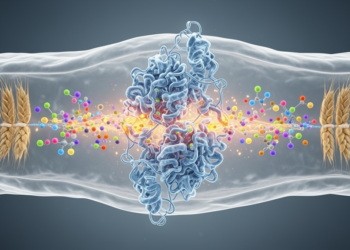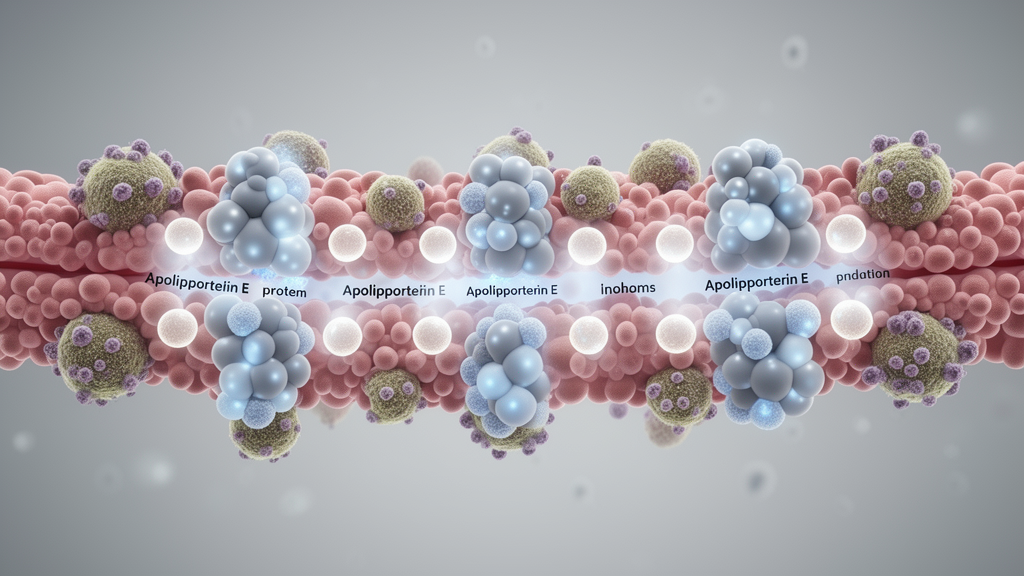
A comprehensive scientific review published in Frontiers in Endocrinology indicates that apolipoprotein E, a plasma protein long recognized for orchestrating systemic cholesterol transport and lipid metabolism, acts as a pivotal regulator of the gut microbiome. Written by researchers Leila Khalili, Sasini S. Hettiarachchi, and Gloria Salazar from Florida State University, the synthesis evaluates structural and functional distinctions among the three major human apolipoprotein E isoforms—APOE2, APOE3, and APOE4—and connects their genetic variations to divergent microbial architectures in the gastrointestinal tract. Beyond their established clinical links to cardiovascular disease and Alzheimer’s disease, these isoforms differentially modulate gut microbial diversity, taxonomic distribution, short-chain fatty acid synthesis, bile acid pools, and intestinal inflammatory signaling. The compiled evidence shows that while the baseline APOE3 isoform maintains balanced physiological profiles and APOE2 supports protective gut ecology despite selective receptor deficiencies, the APOE4 variant consistently correlates with intestinal dysbiosis, attenuated barrier defense, elevated endotoxin vulnerability, and downstream neurodegenerative pathways across preclinical models and human clinical investigations.
Structurally, apolipoprotein E is an amphipathic 299-amino-acid polypeptide organized into an amino-terminal four-helix bundle that binds cell-surface receptors and a carboxyl-terminal domain that mediates lipid association, coupled dynamically through a flexible hinge region. The three primary alleles in the human population—epsilon 2, epsilon 3, and epsilon 4, occurring at approximate frequencies of 7 percent, 78 percent, and 14 percent, respectively—diverge at only two specific amino acid sites, residues 112 and 158. APOE2 possesses cysteine residues at both positions, APOE3 contains cysteine at 112 and arginine at 158, and APOE4 features arginine at both coordinates. In APOE4, the arginine substitution at residue 112 triggers a major conformational reorganization, allowing arginine 61 in the amino-terminal domain to form an ionic salt bridge with glutamic acid 255 in the carboxyl-terminal segment. This compact, closed structural conformation destabilizes the helix bundle, exposes residue 264 to surrounding solvent, and alters lipid-binding affinity. While APOE3 and APOE4 bind the low-density lipoprotein receptor with comparable affinity, APOE4 preferentially associates with large, phospholipid-rich very low-density lipoproteins rather than protein-dense high-density lipoproteins, thereby impairing reverse cholesterol transport.
Conversely, the structural alterations characterizing APOE2 undermine its direct binding capability toward the low-density lipoprotein receptor. The replacement of arginine with cysteine at position 158 disrupts the normal electrostatic contact between arginine 158 and aspartic acid 154 found in APOE3, producing an alternative salt bridge between aspartic acid 158 and arginine 150 that diminishes low-density lipoprotein receptor affinity. Although APOE2 continues to bind low-density lipoprotein receptor-related protein 1 and cell-surface heparan sulfate proteoglycans to allow partial clearance, homozygous carriers frequently experience remnant lipoprotein accumulation. When combined with secondary genetic traits, obesity, or high dietary fat intake, this clearance deficit precipitates type III hyperlipoproteinemia. Paradoxically, the APOE2 allele is generally accompanied by reduced circulating low-density lipoprotein cholesterol and favorable cardiovascular metrics, including thinner carotid intima-media layers, decreased plaque burden, and lower coronary artery calcium scores. In contrast, homozygous APOE4 carriage drives elevated total and low-density lipoprotein cholesterol, premature coronary artery disease, and an estimated ten-fold spike in late-onset Alzheimer’s disease risk relative to APOE3 homozygosity.
Beyond hepatic clearance, apolipoprotein E expression is governed across multiple anatomical sites by shared nuclear receptors like liver X receptor alongside tissue-specific transcription factors including peroxisome proliferator-activated receptor gamma and hepatocyte nuclear factor 4 alpha. Hepatocytes generate approximately 75 percent of circulating apolipoprotein E to direct very low-density lipoprotein secretion and remnant particle uptake, while peripheral macrophages contribute roughly 10 percent of the circulating pool. In the vessel wall, macrophage-derived apolipoprotein E orchestrates atheroprotective actions independent of systemic lipid levels, promoting cellular cholesterol efflux via ATP-binding cassette transporters ABCA1 and ABCG1, resolving apoptotic debris through efferocytosis, and inducing an anti-inflammatory M2 phenotype. Within the central nervous system, astrocytes and reactive microglia express apolipoprotein E to coordinate neural lipid transport and clear toxic amyloid-beta aggregates via receptors such as TREM2 and SorLA. Because brain-derived apolipoprotein E particles cannot cross the blood-brain barrier, neural and systemic lipid pools remain strictly compartmentalized, highlighting the importance of localized tissue signaling.
Investigating the systemic consequences of apolipoprotein E variations has heavily relied on murine models, notably targeted replacement mice wherein human APOE alleles replace the endogenous rodent gene. Unlike humans, wild-type mice carry circulating cholesterol predominantly within high-density lipoproteins and express only a single apolipoprotein E form, rendering them naturally resistant to atheroma formation. Apolipoprotein E-deficient mice, in comparison, display severe hypercholesterolemia and spontaneous arterial lesions even under standard chow diets. Studies utilizing human targeted replacement mice reveal that apolipoprotein E isoforms exert distinct selective pressures on the gut microbiome, with compositional shifts frequently exhibiting a progressive, stepwise gradient from APOE2 through APOE3 to APOE4. In targeted replacement rodents, alpha diversity representing species richness and evenness alongside beta diversity capturing overall community divergence demonstrate significant genotype-dependent clustering, particularly evident in male cohorts. These animal investigations confirm that host apolipoprotein E genotypes directly influence microbial community architecture in the lumen of the gut.
Taxonomic profiling across preclinical models demonstrates that APOE2 genotypes foster an enrichment of beneficial fermentative bacteria within the families Ruminococcaceae and Lachnospiraceae, specifically elevating genera such as Ruminiclostridium, Acetifactor, and Lachnoclostridium. These microbial clades serve as primary drivers of resistant starch degradation and short-chain fatty acid synthesis, yielding elevated concentrations of acetate and butyrate that sustain intestinal epithelial health and support mucosal immune tolerance. Conversely, murine APOE4 expression induces marked dysbiosis, highlighted by an elevated Firmicutes to Bacteroidetes ratio, an expansion of the order Erysipelotrichales, and elevated relative abundance of the family Erysipelotrichaceae alongside genera including Turicibacter, Dubosiella, Muribaculum, and Rikenellaceae RC9. Because elevated Erysipelotrichaceae populations correlate with perturbed host lipid homeostasis, accelerated cholesterol metabolite accumulation, and diet-induced obesity in experimental cohorts, their preferential expansion in APOE4-bearing hosts suggests an intimate alignment between host lipid vulnerability and adverse intestinal microbial ecology.
Clinical investigations in human cohorts mirror the taxonomic patterns identified in animal models, demonstrating distinct microbiome profiles governed by apolipoprotein E status. In patients diagnosed with Alzheimer’s disease, the presence of the APOE epsilon 4 allele correlates positively with increased abundance of opportunistic and pro-inflammatory bacterial taxa belonging to the phylum Proteobacteria, including members of Enterobacteriales, Deltaproteobacteria, and Desulfovibrionales, along with elevations in Escherichia-Shigella, Morganella, and Finegoldia. Concurrently, beneficial genera such as Anaerostipes are substantially depleted in both cognitively impaired and unimpaired APOE4 carriers. Furthermore, comparative analyses in healthy Spanish adults indicate that homozygous APOE4 carriage is associated with depleted populations of Megamonas and the Eubacterium brachy group alongside elevated representation of Incertae sedis 18 from the family Puniceicoccaceae and altered expression of microbial genes governing carotenoid metabolism, reinforcing that apolipoprotein E polymorphisms correlate with measurable intestinal shifts in human populations.
These taxonomic rearrangements translate into substantial functional alterations in microbial metabolite synthesis and host immunological reactivity. Experimental measurements in human targeted replacement mice document significantly lower fecal concentrations of short-chain fatty acids—most notably acetate and butyrate—in APOE4 carriers compared to APOE2 counterparts. Consequently, APOE4 hosts display heightened vulnerability to bacterial lipopolysaccharide, an endotoxin located on outer membranes of Gram-negative bacteria.
In parallel, the review identifies bile acid metabolism and microbial tryptophan degradation as key biochemical axes mediating host-microbe interactions under apolipoprotein E control. Because bile acids possess potent antimicrobial characteristics and undergo bacterial transformation into secondary species like deoxycholate, genotype-driven alterations in bile acid secretion actively filter microbial populations.
The review authors caution that current evidence linking apolipoprotein E variants to microbiome alterations possesses clear methodological boundaries. Much of the underlying mechanistic framework derives from rodent models, which exhibit physiological disparities in baseline lipoprotein distribution, intestinal histology, and bile acid profiles compared to humans, limiting direct clinical translation. Furthermore, the available human studies remain predominantly cross-sectional in design, establishing clear statistical associations without proving direct causal relationships. Many observational human datasets also lack rigorous control for critical confounding factors, including dietary patterns, alcohol consumption, smoking, prescription medications, and recent antibiotic exposure. To resolve these ambiguities, the authors conclude that future longitudinal investigations and controlled clinical trials will be essential to validate whether genotype-specific microbiome interventions, targeted metabolite replenishment, or dietary strategies can effectively mitigate cardiovascular and neurodegenerative disease burdens in genetically vulnerable APOE4 populations.
Subject of Research: Mechanisms linking apolipoprotein E genetic isoforms to gut microbiome dynamics, atherosclerosis, and Alzheimer's disease
Article Title: ApoE and gut-microbiome interplay: implications for atherosclerosis and Alzheimer's disease
Article References: Khalili, L., Hettiarachchi, S. S., & Salazar, G. (2026). ApoE and gut-microbiome interplay: implications for atherosclerosis and Alzheimer's disease. Frontiers in Endocrinology, 17, Article 1935116. https://doi.org/10.3389/fendo.2026.1935116
Image Credits: AI Generated
DOI: 10.3389/fendo.2026.1935116
Keywords: Apolipoprotein E, APOE4, APOE2, APOE3, Gut Microbiome, Atherosclerosis, Alzheimer's Disease, Short-Chain Fatty Acids, Lipopolysaccharide, Dysbiosis, Bile Acid Metabolism, Low-Density Lipoprotein Receptor, Neuroinflammation, Very Low-Density Lipoproteins, Targeted Replacement Mice, Tryptophan Metabolism, Reverse Cholesterol Transport, Intestinal Barrier Integrity
News Source: Morgan Morrow. (November 18, 2026). Apolipoprotein E Isoforms Regulate Gut Microbiome Composition and Metabolic Disease Risk. Scienmag.