• HOME
  • NEWS
  • EXPLORE
    • CAREER
      • Companies
      • Jobs
    • EVENTS
    • iGEM
      • News
      • Team
    • PHOTOS
    • VIDEO
    • WIKI
  • BLOG
  • COMMUNITY
    • FACEBOOK
    • INSTAGRAM
    • TWITTER
Friday, October 2, 2026
BIOENGINEER.ORG
No Result
View All Result
  • Login
  • HOME
  • NEWS
  • EXPLORE
    • CAREER
      • Companies
      • Jobs
        • Lecturer
        • PhD Studentship
        • Postdoc
        • Research Assistant
    • EVENTS
    • iGEM
      • News
      • Team
    • PHOTOS
    • VIDEO
    • WIKI
  • BLOG
  • COMMUNITY
    • FACEBOOK
    • INSTAGRAM
    • TWITTER
  • HOME
  • NEWS
  • EXPLORE
    • CAREER
      • Companies
      • Jobs
        • Lecturer
        • PhD Studentship
        • Postdoc
        • Research Assistant
    • EVENTS
    • iGEM
      • News
      • Team
    • PHOTOS
    • VIDEO
    • WIKI
  • BLOG
  • COMMUNITY
    • FACEBOOK
    • INSTAGRAM
    • TWITTER
No Result
View All Result
Bioengineer.org
No Result
View All Result
Home NEWS Science News Health

Antipsychotic drugs may have protective effect against COVID-19

Bioengineer by Bioengineer
April 9, 2021
in Health
Reading Time: 2 mins read
0
IMAGE
Share on FacebookShare on TwitterShare on LinkedinShare on RedditShare on Telegram

IMAGE

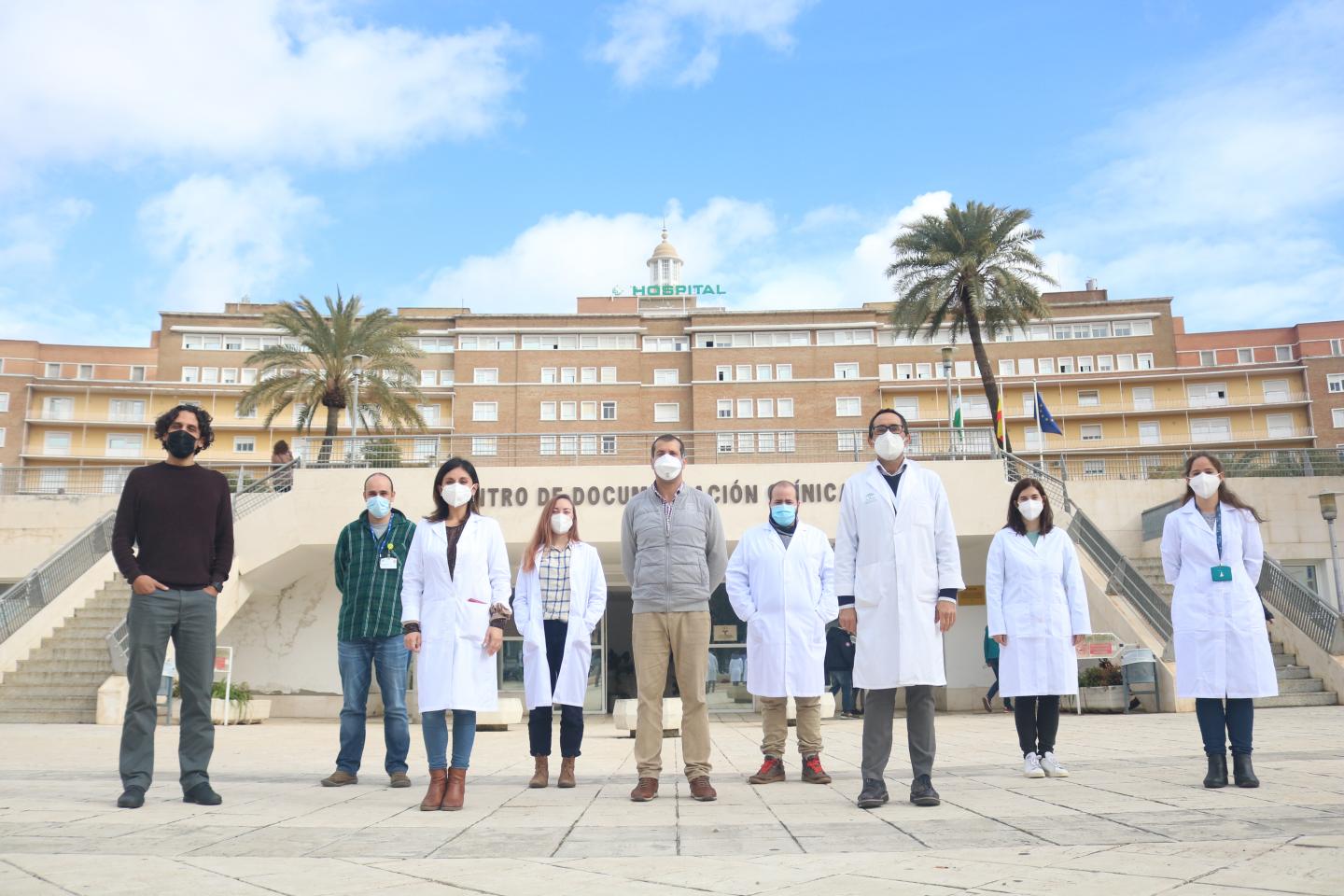
Credit: Universidad de Sevilla

Two studies led by the Mental Health Unit of the Virgen del Rocio University Hospital and involving researchers from the US conclude that antipsychotic drugs could have a protective effect against SARS-CoV-2. For this reason, patients treated with these drugs have a lower risk of becoming infected or suffer a milder form of the disease if they do become infected.

Thus, a first descriptive epidemiological study of a sample of 698 patients treated with antipsychotics at the Seville hospital revealed that antipsychotic drugs could provide protection against both infection and the tendency to clinical severity of Covid-19 infection. “These are very interesting findings that reflect a clinical reality where we see few patients with severe COVID-19, despite the presence of various risk factors,” says Manuel Canal Rivero, clinical psychologist and lead author of one of the two papers.

“The number of Covid-19 patients is lower than expected among this group of people and in cases where a proven infection does occur, the evolution is benign and does not reach a life-threatening clinical situation. These data as a whole seem to point to the protective effect of the medication,” he adds.

Complementary to this study, the same research group has observed that many of the genes whose expression is altered by Covid-19 are significantly down-regulated by antipsychotic drugs, which are commonly used to treat diseases with psychotic symptoms. This finding was achieved by investigating the gene expression profile (indicator of activated biological processes) of Covid-19 patients (Wuhan cohort) and patients being treated with antipsychotic drugs (specifically, aripiprazole) from the cohort of the Early Phases of Psychosis Intervention Programme (PAFIP) initiated 20 years ago at the Marqués de Valdecilla University Hospital in Cantabria by Benedicto Crespo-Facorro, professor at the University of Seville and current director of the Mental Health Unit at the Virgen del Rocío University Hospital.

“In a striking way we have shown how antipsychotics reduce the activation of genes involved in many of the inflammatory and immunological pathways associated with the severity of Covid-19 infection,” says the lead author of the second paper, Professor Crespo-Facorro. Furthermore, he stresses that “although this finding requires replication, the discovery could be very significant because the treatment of Covid-19 with drugs originally indicated for unrelated clinical situations, that is to say drug repositioning, has been shown to be an interesting source of effective treatments for Covid-19 patients”.

###

Both studies, published recently in first quartile journals and therefore of great impact in the international scientific community, were led by the Translational Psychiatry group of the Institute of Biomedicine of Seville, part of the Mental Health CIBER (CIBERSAM), in collaboration with researchers from IDIVAL (Santander), the Infectious Diseases service of the Virgen del Rocío University Hospital, the Bioinformatics Unit of the Nucleus service of the University of Salamanca, and researchers from the CSIC.

Media Contact
Benedicto Crespo
[email protected]

Related Journal Article

http://dx.doi.org/10.1016/j.schres.2021.02.002

Tags: EpidemiologyImmunology/Allergies/AsthmaMedicine/HealthPharmaceutical Science
Share12Tweet8Share2ShareShareShare2

Related Posts

Young Adults on the US-Mexico Border Reveal What Drives Vaccine Trust and Hesitancy

October 2, 2026

AI Reads Scans to Predict Hidden Spread in Colorectal Cancer Before Surgery

October 2, 2026

Prefilled Syringe Delivers Autoimmune Drug Efgartigimod as Fast and Effectively as the Vial

October 2, 2026

Scientists Build a Ribosome That Reads Its Own RNA and Makes Its Own Protein

October 2, 2026
Please login to join discussion

POPULAR NEWS

  • Scientists Uncover Why a Key Antitumor T Cell Loses Its Fight in Ovarian Cancer

    29 shares
    Share 12 Tweet 7
  • Young Adults on the US-Mexico Border Reveal What Drives Vaccine Trust and Hesitancy

    29 shares
    Share 12 Tweet 7
  • Journal Retracts Nanocomposite Cement Study After Image Concerns and Missing Raw Data

    29 shares
    Share 12 Tweet 7
  • Tau Filaments Act Like Prions, Imposing Their Disease Signature on Mouse Brains

    29 shares
    Share 12 Tweet 7

About

We bring you the latest biotechnology news from best research centers and universities around the world. Check our website.

Follow us

Recent News

Scientists Uncover Why a Key Antitumor T Cell Loses Its Fight in Ovarian Cancer

Young Adults on the US-Mexico Border Reveal What Drives Vaccine Trust and Hesitancy

Journal Retracts Nanocomposite Cement Study After Image Concerns and Missing Raw Data

Subscribe to Blog via Email

Enter your email address to subscribe to this blog and receive notifications of new posts by email.

Join 85 other subscribers
  • Contact Us

Bioengineer.org © Copyright 2023 All Rights Reserved.

Welcome Back!

Login to your account below

Forgotten Password?

Retrieve your password

Please enter your username or email address to reset your password.

Log In
No Result
View All Result
  • Homepages
    • Home Page 1
    • Home Page 2
  • News
  • National
  • Business
  • Health
  • Lifestyle
  • Science

Bioengineer.org © Copyright 2023 All Rights Reserved.