• HOME
  • NEWS
  • EXPLORE
    • CAREER
      • Companies
      • Jobs
    • EVENTS
    • iGEM
      • News
      • Team
    • PHOTOS
    • VIDEO
    • WIKI
  • BLOG
  • COMMUNITY
    • FACEBOOK
    • INSTAGRAM
    • TWITTER
Sunday, August 23, 2026
BIOENGINEER.ORG
No Result
View All Result
  • Login
  • HOME
  • NEWS
  • EXPLORE
    • CAREER
      • Companies
      • Jobs
        • Lecturer
        • PhD Studentship
        • Postdoc
        • Research Assistant
    • EVENTS
    • iGEM
      • News
      • Team
    • PHOTOS
    • VIDEO
    • WIKI
  • BLOG
  • COMMUNITY
    • FACEBOOK
    • INSTAGRAM
    • TWITTER
  • HOME
  • NEWS
  • EXPLORE
    • CAREER
      • Companies
      • Jobs
        • Lecturer
        • PhD Studentship
        • Postdoc
        • Research Assistant
    • EVENTS
    • iGEM
      • News
      • Team
    • PHOTOS
    • VIDEO
    • WIKI
  • BLOG
  • COMMUNITY
    • FACEBOOK
    • INSTAGRAM
    • TWITTER
No Result
View All Result
Bioengineer.org
No Result
View All Result
Home NEWS Science News Health

Antibiotics developed in 1960s show promise for TB therapy

Bioengineer by Bioengineer
September 28, 2016
in Health
Reading Time: 2 mins read
0
Share on FacebookShare on TwitterShare on LinkedinShare on RedditShare on Telegram

First generation cephalosporins — antibiotics introduced as a treatment against bacterial infections in 1963 — now show promise for tuberculosis (TB) therapy, according to new research published in Scientific Reports.

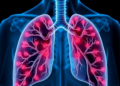
Tuberculosis, caused by Mycobacterium tuberculosis, is the most deadly infectious disease in the world. Standard TB therapy takes at least six months and patients infected with multi-drug resistant (MDR) or extensively drug resistant (XDR) strains undergo treatments that are even longer (up to 24 months). Treatment is often associated with severe side effects. Studies indicate that the cost of developing a new drug has soared to $2.6 billion.

The in vitro study indicates cephalosporins work well on their own against bacteria that cause TB. But they are even more active when used in synergistic combinations with traditional and new TB therapies.

“Cephalosporins can be taken orally and have a good long-term safety record, but were never explored as a TB therapy,” says University of British Columbia (UBC) microbiologist Santiago Ramón-García, who led the study.

“While these are in vitro results, their potent anti-mycobacterial properties suggest cephalosporins could be used as part of new combinatorial TB therapies.”

“Because cephalosporins are already clinically approved drugs, they could be readily tested in the clinic,” says Prof. Charles Thompson from UBC who also led the work.

“New treatments are urgently needed to shorten the duration of the standard treatment and for MDR and XDR-TB therapy.”

The study was performed in collaboration with the Diseases of the Developing World GlaxoSmithKline Centre under an agreement with the Tres Cantos Open Lab Foundation. Grand Challenges Canada, Canadian Institute of Health Research, and British Columbia Lung Association provided initial support for the project.

Web Source: University of Faculty of Science British Columbia.

Journal Reference:

Santiago Ramón-García, Rubén González del Río, Angel Santos Villarejo, Gaye D. Sweet, Fraser Cunningham, David Barros, Lluís Ballell, Alfonso Mendoza-Losana, Santiago Ferrer-Bazaga, Charles J. Thompson. Repurposing clinically approved cephalosporins for tuberculosis therapy. Scientific Reports, 2016; 6: 34293 DOI: 10.1038/srep34293

The post Antibiotics developed in 1960s show promise for TB therapy appeared first on Scienmag.
Share12Tweet8Share2ShareShareShare2

Related Posts

Tirzepatide Versus GLP-1 Agonists for Stroke Risk in Atrial Fibrillation and Diabetes

August 22, 2026
Real-world study examines psychotic complications of subcutaneous foslevodopa/foscarbidopa infusions in 198 patients

Real-world study examines psychotic complications of subcutaneous foslevodopa/foscarbidopa infusions in 198 patients

August 22, 2026

Blood-flow signals from liver vessels direct region-specific liver function through Wnt pathways

August 22, 2026

Proteomics Links Environmental and Genetic Parkinson’s Models to Purine Metabolism

August 22, 2026
Please login to join discussion

POPULAR NEWS

  • KAIST Surface Defects Boost Droplet Formation, Removal, and Heat Transfer by 5.5-Fold

    29 shares
    Share 12 Tweet 7
  • Dual-oxygen pancreatic cancer organoids mirror basal-classical diversity, spatial transcriptomics confirms

    29 shares
    Share 12 Tweet 7
  • Tirzepatide Versus GLP-1 Agonists for Stroke Risk in Atrial Fibrillation and Diabetes

    29 shares
    Share 12 Tweet 7
  • Real-world study examines psychotic complications of subcutaneous foslevodopa/foscarbidopa infusions in 198 patients

    29 shares
    Share 12 Tweet 7

About

We bring you the latest biotechnology news from best research centers and universities around the world. Check our website.

Follow us

Recent News

KAIST Surface Defects Boost Droplet Formation, Removal, and Heat Transfer by 5.5-Fold

Dual-oxygen pancreatic cancer organoids mirror basal-classical diversity, spatial transcriptomics confirms

Tirzepatide Versus GLP-1 Agonists for Stroke Risk in Atrial Fibrillation and Diabetes

Subscribe to Blog via Email

Enter your email address to subscribe to this blog and receive notifications of new posts by email.

Join 85 other subscribers
  • Contact Us

Bioengineer.org © Copyright 2023 All Rights Reserved.

Welcome Back!

Login to your account below

Forgotten Password?

Retrieve your password

Please enter your username or email address to reset your password.

Log In
No Result
View All Result
  • Homepages
    • Home Page 1
    • Home Page 2
  • News
  • National
  • Business
  • Health
  • Lifestyle
  • Science

Bioengineer.org © Copyright 2023 All Rights Reserved.