Credit: Jula Zimmermann
Leipzig, Halle. A new study shows that, in addition to the diversity of tree species, the variety of animal and fungus species also has a decisive influence on the performance of forests. Forest performance comprises many facets besides timber production, such as carbon storage and climate regulation. The study is based on ten years of research in species-rich subtropical forests. A team of researchers led by the German Centre for Integrative Biodiversity Research (iDiv) and the Martin-Luther-University Halle-Wittenberg has published the results in the new issue of Nature Communications. They illustrate that biodiversity must be viewed as a whole in order to maintain the performance of forests.
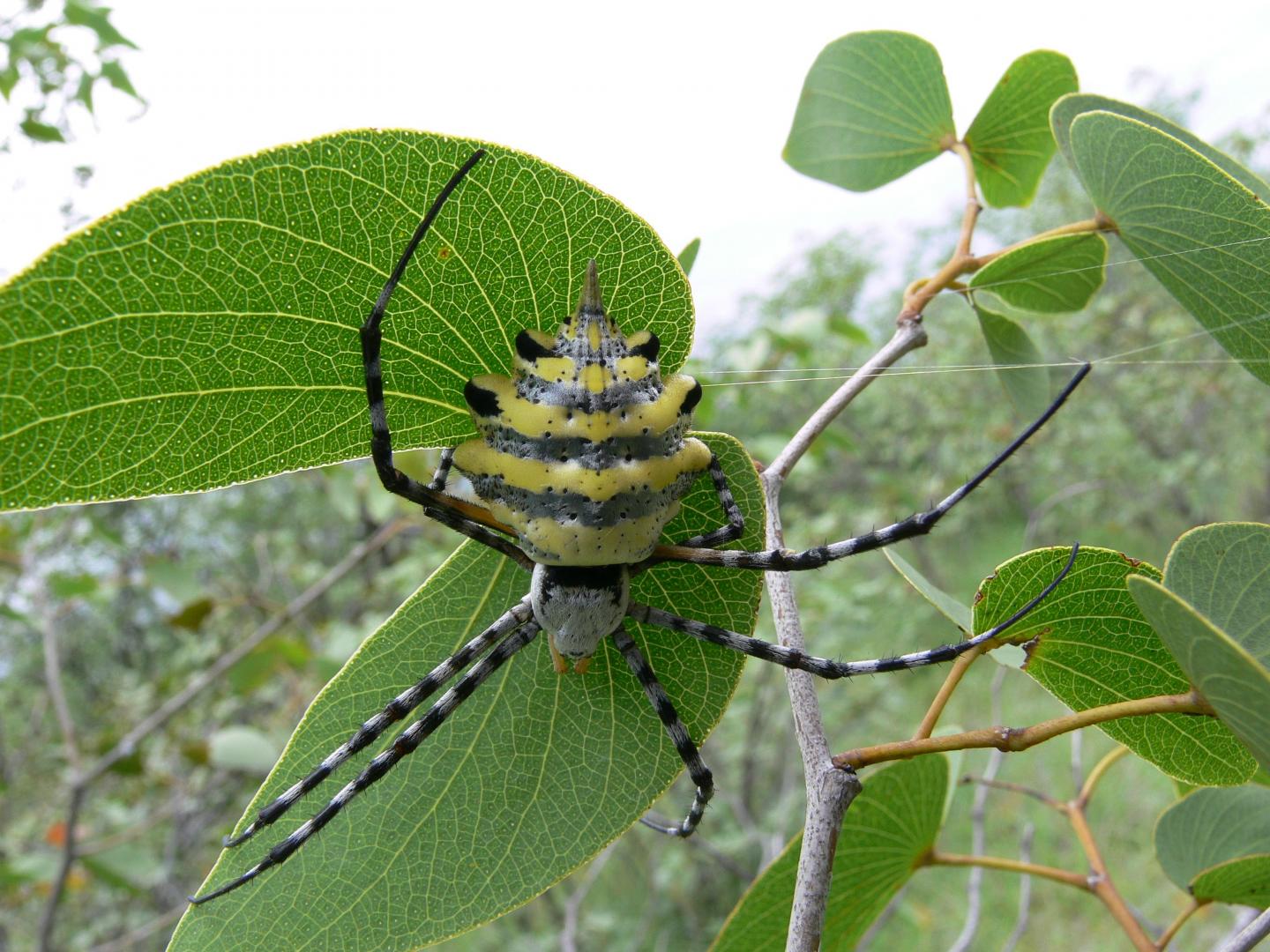
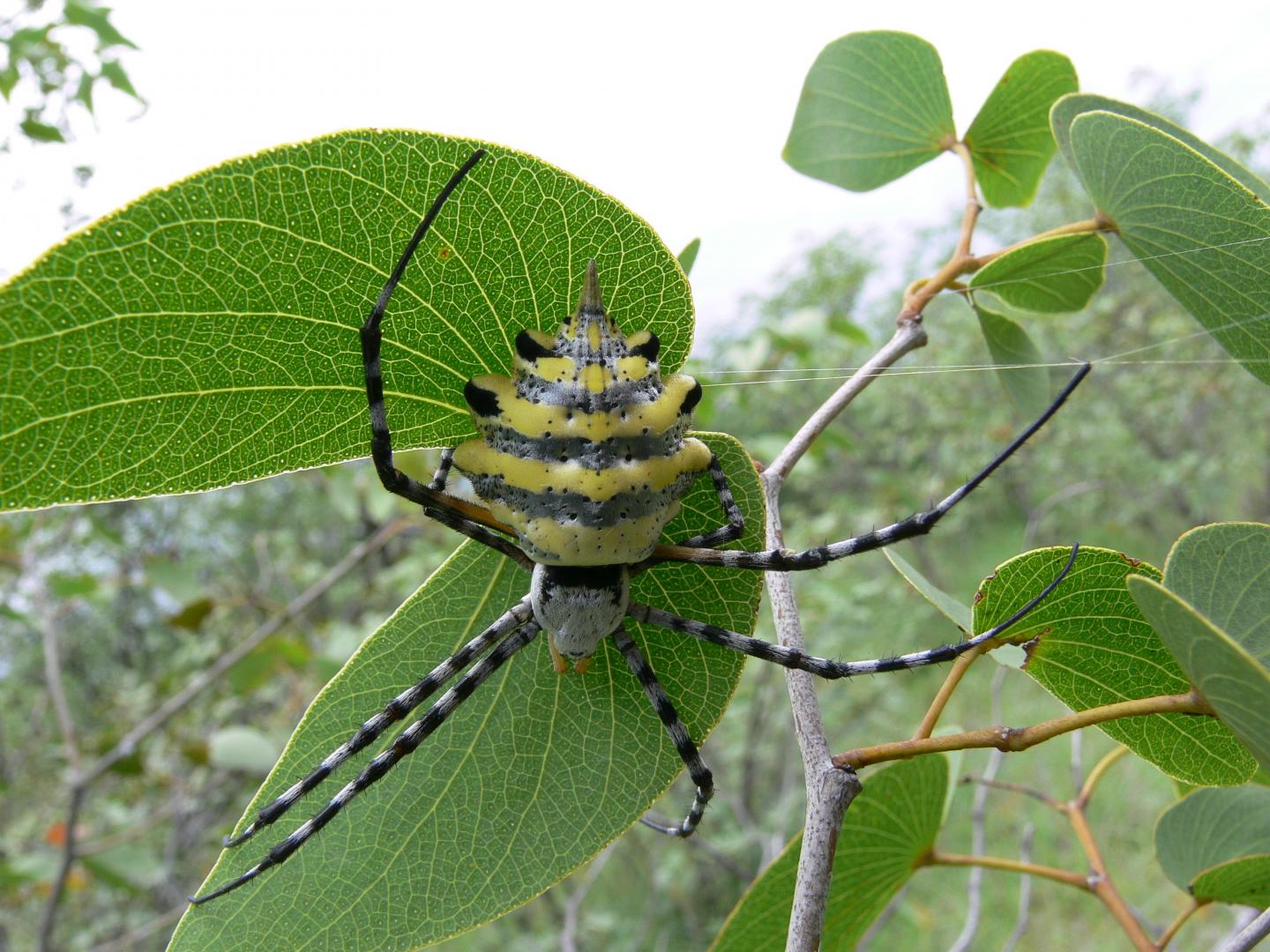
There is a global concern that the loss of biodiversity caused by people is impairing the functioning of our cultural and natural landscapes. In our forests, trees are the most conspicuous and prominent organisms. The consequences of reduced tree species diversity are therefore comparatively easy to grasp. However, it is much more difficult to take into consideration the diversity of the thousands of sometimes tiny animal and micro-organism species that perform important tasks in forests as herbivores, pest controllers or recycling experts. Therefore, the effects of a loss of this species diversity have so far been difficult to quantify. After years of dedication, a team of German, Chinese, Swiss and American researchers has now succeeded in doing this for the first time for particularly species-rich, semi-natural forests in the subtropics of China. The research group has not only studied the enormous species diversity of beetles, spiders, ants, woodlice and fungi in these forests, but at the same time, they investigated a variety of processes that are essential for the functioning of the forests. These processes include the growth of timber, the prevention of soil erosion, the recycling of nutrients or the biological control of potential pests.
"Our analyses show that the diversity of animal and fungal species affects numerous important processes – such as the availability of nutrients for tree growth," said Dr Andreas Schuldt, first author of the study, from the German Centre for Integrative Biodiversity Research (iDiv) and the Martin-Luther-University Halle-Wittenberg. "To understand why and how a loss of biodiversity affects these forests, it is not enough to concentrate solely on the trees and their species diversity." The species richness of herbivores and their competitors was also important, an important finding with regard to the expected intensification and the possible prevention of pest infestation with progressive climate change. Furthermore, besides animals and fungi, the researchers found that the multifunctionality of forest stands is influenced not so much by the number of tree species as by their functional properties and the resulting composition of different types of tree species. "Our previous knowledge on the relationships between multifunctionality and biodiversity mainly comes from comparatively species-poor forests in Europe and North America," said Prof Helge Bruelheide, spokesperson of the research group and senior author of the study. "We can now show for the first time that such relationships in the extremely species-rich subtropics and tropics follow their own dynamics. This is important to understand because these forests are of great importance for global biogeochemical cycles and for us humans."
The results of the study also allow deductions for the management of forests under ever-changing environmental conditions and therefore provide important basic data. These insights were made possible by the many years of funding of biodiversity research and the project by the German Research Foundation (DFG).
###
Original publication:
Schuldt A, Assmann T, Brezzi M, Buscot F, Eichenberg D, Gutknecht J, Härdtle W, He JS, Klein AM, Kühn1 P Liu X, Ma KP, Niklaus PA, Pietsch KA, Purahong W, Scherer-Lorenzen M, Schmid B, Scholten T, Staab M, Tang ZY, Trogisch S, von Oheimb G, Wirth C, Wubet T, Zhu CD, Bruelheide H (2018): Biodiversity across trophic levels drives multifunctionality in highly diverse forests. Nature Communications 9, Article number: 2989 (2018). Open. Published: 31 July 2018
DOI: 10.1038/s41467-018-05421-z
https://www.nature.com/articles/s41467-018-05421-z
The study was funded by the German Research Foundation (DFG FOR 891/1-3), the Sino-German Center for Research Promotion (SGC) (GZ 524, 592, 698, 699, 785, and 1020) and the National Science Foundation of China (NSFC 30710103907 and 584 30930005).
Link: https://www.idiv.de/de/forschung/forschungsplattformen/bef_china.html
Contact:
PD Dr. Andreas Schuldt
German Centre for Integrative Biodiversity Research (iDiv)
Martin Luther University Halle-Wittenberg
Phone: +49-341-973-3232
https://www.idiv.de/groups_and_people/employees/details/eshow/schuldt_andreas.html
Prof. Dr. Helge Bruelheide
Professor for Geobotany, Institute of Biology, Martin Luther University Halle Wittenberg
Co-Director of iDiv
Phone: +49-345-55-26222
http://www.botanik.uni-halle.de/geobotanik/helge_bruelheide/?lang=en
https://www.idiv.de/en/groups_and_people/employees/details/eshow/bruelheide_helge.html
Tilo Arnhold
Media and Communications
German Centre for Integrative Biodiversity Research (iDiv)
Phone: +49-341-973-3197
https://www.idiv.de/de/gruppen_und_personen/mitarbeiterinnen/mitarbeiterdetails/eshow/arnhold_tilo.html
Media Contact
Tilo Arnhold
[email protected]
49-341-973-3197
http://www.idiv.de
Original Source
https://www.idiv.de/news/news_single_view/news_article/animals_and.html http://dx.doi.org/10.1038/s41467-018-05421-z