• HOME
  • NEWS
  • EXPLORE
    • CAREER
      • Companies
      • Jobs
    • EVENTS
    • iGEM
      • News
      • Team
    • PHOTOS
    • VIDEO
    • WIKI
  • BLOG
  • COMMUNITY
    • FACEBOOK
    • INSTAGRAM
    • TWITTER
Thursday, June 25, 2026
BIOENGINEER.ORG
No Result
View All Result
  • Login
  • HOME
  • NEWS
  • EXPLORE
    • CAREER
      • Companies
      • Jobs
        • Lecturer
        • PhD Studentship
        • Postdoc
        • Research Assistant
    • EVENTS
    • iGEM
      • News
      • Team
    • PHOTOS
    • VIDEO
    • WIKI
  • BLOG
  • COMMUNITY
    • FACEBOOK
    • INSTAGRAM
    • TWITTER
  • HOME
  • NEWS
  • EXPLORE
    • CAREER
      • Companies
      • Jobs
        • Lecturer
        • PhD Studentship
        • Postdoc
        • Research Assistant
    • EVENTS
    • iGEM
      • News
      • Team
    • PHOTOS
    • VIDEO
    • WIKI
  • BLOG
  • COMMUNITY
    • FACEBOOK
    • INSTAGRAM
    • TWITTER
No Result
View All Result
Bioengineer.org
No Result
View All Result
Home NEWS Science News Health

Animal-assisted therapy improves social behavior in patients with brain injuries

Bioengineer by Bioengineer
April 9, 2019
in Health
Reading Time: 2 mins read
0
IMAGE
Share on FacebookShare on TwitterShare on LinkedinShare on RedditShare on Telegram

IMAGE

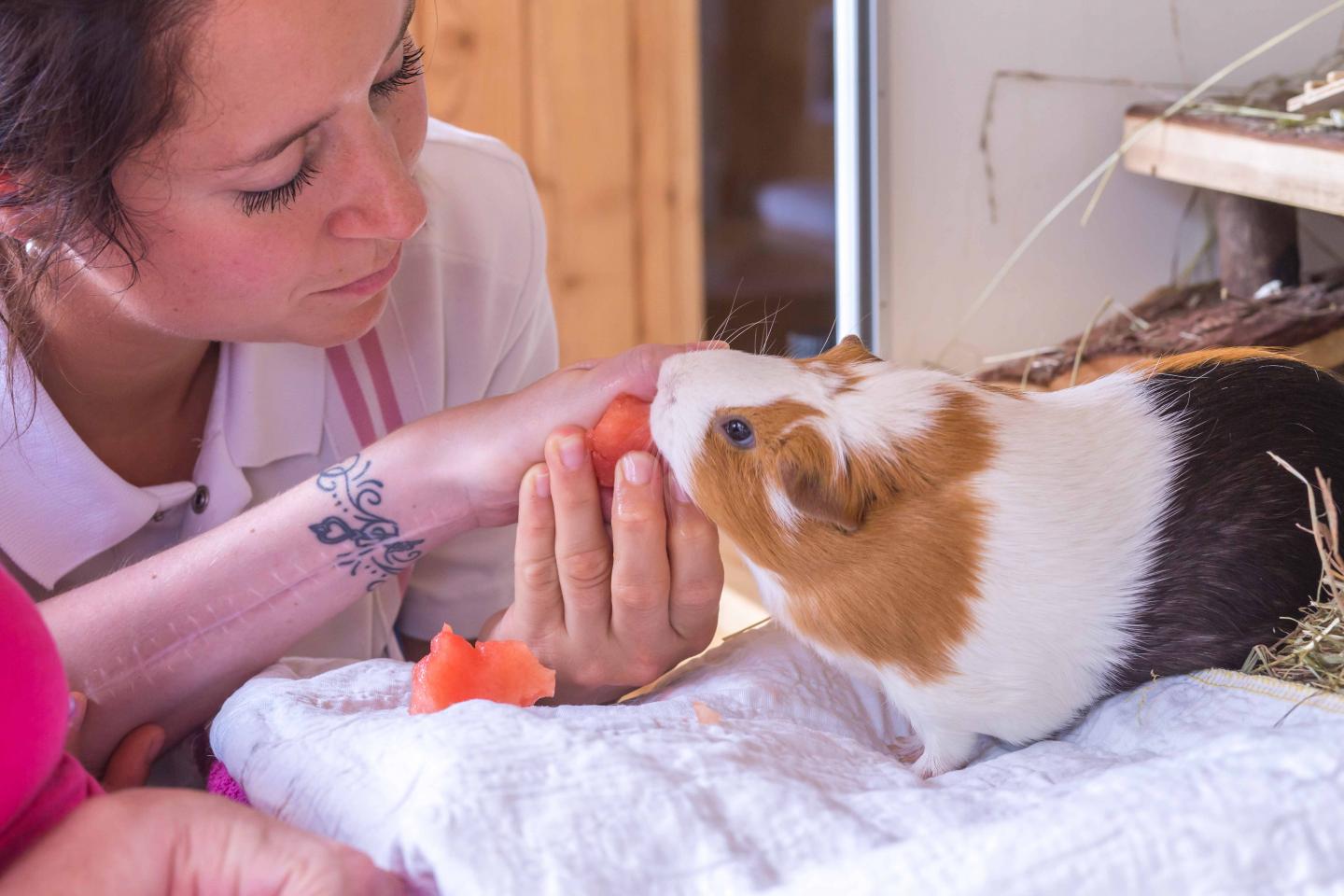
Credit: Image: REHAB Basel

Animal-assisted therapy can foster social competence in patients with brain injuries and increase their emotional involvement during therapy. These were the findings of a clinical trial conducted by psychologists from the University of Basel and published in the journal Scientific Reports.

After a severe traumatic brain injury, patients often exhibit problems in their social behavior. For instance, they may suffer from reduced emotional empathy and show impaired emotional expression, all contributing to communicative problems in social interactions.

Stimulating engagement and motivation

Animal-assisted therapy is increasingly being used in rehabilitation in order to improve these deficits in patients’ social competence. Integrating animals into therapy can, for example, stimulate patient engagement and motivation. In collaboration with REHAB Basel, the clinic for neurorehabilitation and paraplegiology, and the Swiss Tropical and Public Health Institute, researchers in the Faculty of Psychology at the University of Basel have now undertaken the first systematic study on in-patients with acquired brain injury to assess the effectiveness of this therapy method.

The study involved conducting animal-assisted therapy sessions for 19 adult participants alongside conventional therapy sessions. The patients’ social behavior were recorded and evaluated during over 200 animal-assisted and conventional therapy sessions. The study also documented patient mood and satisfaction and their treatment motivation – an important criterion in therapeutic success.

More positive emotions

The results showed that in the presence of an animal – which included guinea pigs, miniature pigs, rabbits and sheep – patients exhibited more active social engagement than during the conventional therapy sessions. They expressed nearly twice as many positive emotions and communicated more frequently both verbally and non-verbally. The animal-assisted therapy had no effect on negative emotions, such as rage or anger. If an animal was present during the therapy session, patients considered themselves more satisfied and their motivation to actively participate in the therapy higher; this was congruent with the assessments of the therapists.

“The results suggest that animal-assisted therapy can have a positive effect on the social behavior of patients with brain injuries,” concluded the study’s principal investigator, Dr. Karin Hediger from the University of Basel in Switzerland.

“Animals can be relevant therapeutic partners, because they motivate patients to care for the animal. Secondly, animals provide a stimulus for patients to actively engage in the therapeutic activities.” Thus, animal-assisted therapy may be a promising supplement to conventional neurorehabilitation, says the psychologist.

###

Media Contact
Reto Caluori
[email protected]

Related Journal Article

http://dx.doi.org/10.1038/s41598-019-42280-0

Tags: Medicine/HealthMental HealthneurobiologyRehabilitation/Prosthetics/Plastic Surgery
Share13Tweet8Share2ShareShareShare2

Related Posts

Post-COVID Surge: Obesity Inequalities in England Widen, with Sharpest Rise Among Young Adults

June 25, 2026

Asian Working Group Revises Sarcopenia Criteria 2019-2025

June 25, 2026

AI-Powered Platform Advances Structure-Based Drug Discovery

June 25, 2026

BALatrine Reduces Helminth Infections: Central Java Trial

June 24, 2026
Please login to join discussion

POPULAR NEWS

  • Saying Goodbye to PGY-6: Pediatric Fellowship Realities

    103 shares
    Share 41 Tweet 26
  • Multi-Hospital Study Reveals Long Covid Burden Is Twice as High as Current Estimates

    92 shares
    Share 36 Tweet 23
  • Detection of EDCs in Breast Milk and Infant Urine Up to Six Months Highlights Early Exposure Risks

    77 shares
    Share 31 Tweet 19
  • New Drug Candidate Developed at McMaster Shows Potential for Treating Brain Cancer

    58 shares
    Share 23 Tweet 15

About

We bring you the latest biotechnology news from best research centers and universities around the world. Check our website.

Follow us

Recent News

Central Venous Pressure and IVC in Ventilated Neonates

New UK Study Reveals Plant-Based Alternatives Have Twice the Additives Compared to Animal Products

FDA Approves New Treatment for HR+, HER2+ Advanced Breast Cancer Following Promising Results from the PATINA Trial by Alliance Foundation

Subscribe to Blog via Email

Enter your email address to subscribe to this blog and receive notifications of new posts by email.

Join 82 other subscribers
  • Contact Us

Bioengineer.org © Copyright 2023 All Rights Reserved.

Welcome Back!

Login to your account below

Forgotten Password?

Retrieve your password

Please enter your username or email address to reset your password.

Log In
No Result
View All Result
  • Homepages
    • Home Page 1
    • Home Page 2
  • News
  • National
  • Business
  • Health
  • Lifestyle
  • Science

Bioengineer.org © Copyright 2023 All Rights Reserved.