• HOME
  • NEWS
  • EXPLORE
    • CAREER
      • Companies
      • Jobs
    • EVENTS
    • iGEM
      • News
      • Team
    • PHOTOS
    • VIDEO
    • WIKI
  • BLOG
  • COMMUNITY
    • FACEBOOK
    • INSTAGRAM
    • TWITTER
Tuesday, May 12, 2026
BIOENGINEER.ORG
No Result
View All Result
  • Login
  • HOME
  • NEWS
  • EXPLORE
    • CAREER
      • Companies
      • Jobs
        • Lecturer
        • PhD Studentship
        • Postdoc
        • Research Assistant
    • EVENTS
    • iGEM
      • News
      • Team
    • PHOTOS
    • VIDEO
    • WIKI
  • BLOG
  • COMMUNITY
    • FACEBOOK
    • INSTAGRAM
    • TWITTER
  • HOME
  • NEWS
  • EXPLORE
    • CAREER
      • Companies
      • Jobs
        • Lecturer
        • PhD Studentship
        • Postdoc
        • Research Assistant
    • EVENTS
    • iGEM
      • News
      • Team
    • PHOTOS
    • VIDEO
    • WIKI
  • BLOG
  • COMMUNITY
    • FACEBOOK
    • INSTAGRAM
    • TWITTER
No Result
View All Result
Bioengineer.org
No Result
View All Result
Home NEWS Science News Biology

Animal aggression depends on rank within social hierarchies

Bioengineer by Bioengineer
March 4, 2021
in Biology
Reading Time: 3 mins read
0
IMAGE
Share on FacebookShare on TwitterShare on LinkedinShare on RedditShare on Telegram

IMAGE

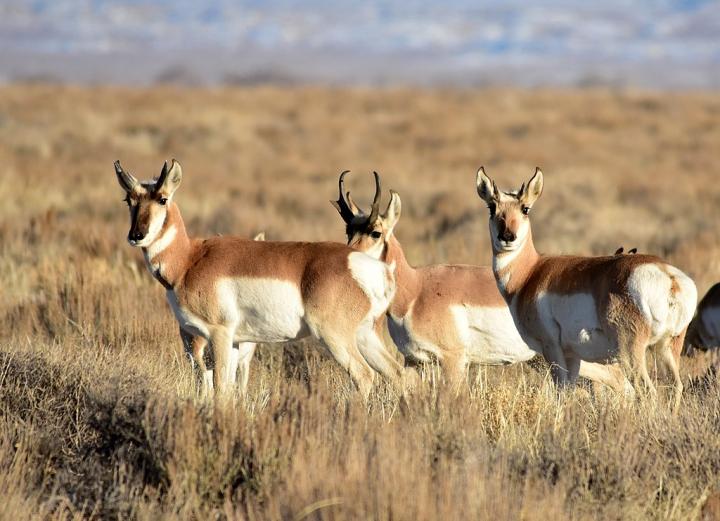
Credit: Tom Koerner/USFWS

Humans and animals alike constantly size up one another. In the workplace, a new employee quickly learns which coworkers are the most respected — and therefore hold more power. Big brothers boss around little brothers. In nature, a dominant male chimpanzee fights off would-be intruders. Even fish and octopi interact within social hierarchies.

These pecking orders have been studied within the behavioral ecology world for almost 100 years. How individuals interact can affect access to food and mates — even survival — and insights into those behaviors can lead to better management of threatened and endangered populations. But few studies have explored what the animals that live within these dominance hierarchies actually know about each other. The more animals know about each other, the more they may be able to optimize their aggression. New research, published March 3 in PNAS, offers the first big-picture look at information in these animal systems.

Using a new computational method, the researchers examined existing data on aggression — the earliest from a 1934 pigeon study — in 172 social groups across 85 species in 23 orders, looking for social dominance patterns. They found three main aggression strategies employed by individuals: simply fighting any lower-ranked opponents; specializing in fighting “close competitors” ranked just below themselves; and bullying opponents ranked much lower. The majority of the groups fell into the first category, where aggression could be explained by animals following a basic dominance hierarchy, but several groups used the more information-rich close competitors or bullying strategies to fine-tune their choice of opponents.

Rank clearly influences how one individual treats another, says biologist Elizabeth Hobson, the lead author of the study. She is currently an Assistant Professor at the University of Cincinnati and was formerly a Complexity Postdoctoral Fellow at the Santa Fe Institute, where she conducted much of the research.

“What we’re able to do with our computational approach is to get new insight into how animals are managing conflict within the groups, and the kind of information that informs those decisions,” she says. Simon DeDeo of Carnegie Mellon University and the Santa Fe Institute and Dan Mønster of Aarhus University in Denmark also contributed to the work.

Some of the results took the team by surprise. For example, it turns out that pronghorn — a speedy North American ungulate prized for its graceful gait — can be bullies. “They look so cute, right?” says Hobson. “You don’t expect them to have a bullying strategy in their group.”

Another unexpected insight was that social dominance patterns can vary from group to group within the same species. For example, one group of African elephants behave according to a close competitor hierarchy, while another group exhibits bullying behavior.

It’s unclear why dominance strategies sometimes differ among groups, but this and other studies suggest that they can change according to the context in which individuals interact.

For example, “it may be that you have near rivals, so you might have to have conflict to sort that out,” DeDeo says.

Hobson says she hopes the study will inspire other researchers to look at how social information is used within and across species. This could provide a foundation for answering even bigger questions about how social complexity arises in animals, and how animals evolved the cognitive skills to enact these social dominance patterns.

###

Media Contact
J Marshall
[email protected]

Original Source

http://www.santafe.edu/news-center/news/animal-aggression-depends-rank-within-social-hierarchies

Related Journal Article

http://dx.doi.org/10.1073/pnas.2022912118

Tags: Algorithms/ModelsBiologyMathematics/StatisticsSystems/Chaos/Pattern Formation/ComplexityZoology/Veterinary Science
Share12Tweet8Share2ShareShareShare2

Related Posts

From Complexity to Clarity: Unraveling the “Topological Laws” Governing Cell Death — Biology

From Complexity to Clarity: Unraveling the “Topological Laws” Governing Cell Death

May 11, 2026
New Classification Framework Identifies Tumor-Associated Bacterial Effectors as Crucial Drivers of Tumor Biology and Immune Response — Biology

New Classification Framework Identifies Tumor-Associated Bacterial Effectors as Crucial Drivers of Tumor Biology and Immune Response

May 11, 2026

HIV-1 Strains Reveal Varied Paths to Antibody Escape

May 11, 2026

CRISPRi Screening Identifies Fungal-Specific Drug Targets

May 11, 2026
Please login to join discussion

POPULAR NEWS

  • Research Indicates Potential Connection Between Prenatal Medication Exposure and Elevated Autism Risk

    841 shares
    Share 336 Tweet 210
  • New Study Reveals Plants Can Detect the Sound of Rain

    728 shares
    Share 290 Tweet 182
  • Salmonella Haem Blocks Macrophages, Boosts Infection

    62 shares
    Share 25 Tweet 16
  • Breastmilk Balances E. coli and Beneficial Bacteria in Infant Gut Microbiomes

    57 shares
    Share 23 Tweet 14

About

We bring you the latest biotechnology news from best research centers and universities around the world. Check our website.

Follow us

Recent News

Humans and Zebra Finches Share Similar Speech Learning Techniques #ASA190

New Study Uncovers How Fungal Parasites Attack Strawberries and Raspberries

City of Hope Researchers to Present Groundbreaking Immunotherapy and Precision Medicine Advances Across Multiple Cancer Types at ASCO 2026

Subscribe to Blog via Email

Enter your email address to subscribe to this blog and receive notifications of new posts by email.

Join 82 other subscribers
  • Contact Us

Bioengineer.org © Copyright 2023 All Rights Reserved.

Welcome Back!

Login to your account below

Forgotten Password?

Retrieve your password

Please enter your username or email address to reset your password.

Log In
No Result
View All Result
  • Homepages
    • Home Page 1
    • Home Page 2
  • News
  • National
  • Business
  • Health
  • Lifestyle
  • Science

Bioengineer.org © Copyright 2023 All Rights Reserved.