

• HOME
  • NEWS
  • EXPLORE
    • CAREER
      • Companies
      • Jobs
    • EVENTS
    • iGEM
      • News
      • Team
    • PHOTOS
    • VIDEO
    • WIKI
  • BLOG
  • COMMUNITY
    • FACEBOOK
    • INSTAGRAM
    • TWITTER
Tuesday, September 15, 2026
BIOENGINEER.ORG
No Result
View All Result
  • Login
  • HOME
  • NEWS
  • EXPLORE
    • CAREER
      • Companies
      • Jobs
        • Lecturer
        • PhD Studentship
        • Postdoc
        • Research Assistant
    • EVENTS
    • iGEM
      • News
      • Team
    • PHOTOS
    • VIDEO
    • WIKI
  • BLOG
  • COMMUNITY
    • FACEBOOK
    • INSTAGRAM
    • TWITTER
  • HOME
  • NEWS
  • EXPLORE
    • CAREER
      • Companies
      • Jobs
        • Lecturer
        • PhD Studentship
        • Postdoc
        • Research Assistant
    • EVENTS
    • iGEM
      • News
      • Team
    • PHOTOS
    • VIDEO
    • WIKI
  • BLOG
  • COMMUNITY
    • FACEBOOK
    • INSTAGRAM
    • TWITTER
No Result
View All Result
Bioengineer.org
No Result
View All Result
Home NEWS Science News Biology

Animal acoustic activity decline shows forest fire pollution wreaks havoc on wildlife

Bioengineer by Bioengineer
September 20, 2017
in Biology
Reading Time: 2 mins read
0
Share on FacebookShare on TwitterShare on LinkedinShare on RedditShare on Telegram
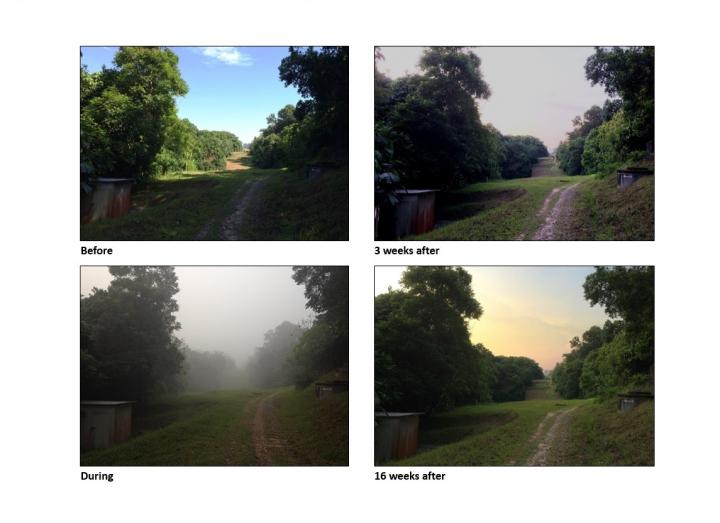
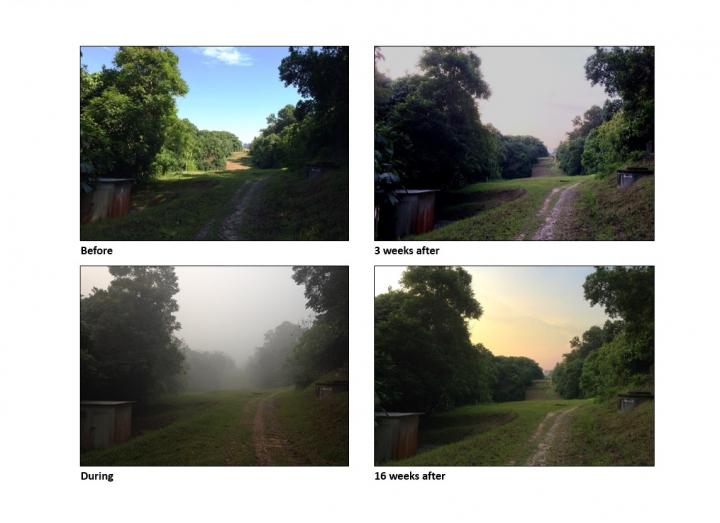
IMAGE

Credit: Benjamin Lee

Forest fires in Southeast Asia during the El Niño droughts of 2015 caused considerable disruption to the biodiversity of the region due to the smoke-induced 'haze' they created, according to new research led by Benjamin Lee at the University of Kent and the National Parks Board in Singapore.

In the first study of its kind Benjamin, who completed his PhD at the Durrell Institute of Conservation and Ecology (DICE) at Kent, monitored wildlife acoustic activity in Singapore before, during and after the major forest fires that hit the region in 2015.

The data showed there was a dramatic drop in acoustic activity by as much as 37.5% during the haze as animals were affected by the pollution. It took a further 16 weeks after the haze had dissipated before acoustic levels showed even a partial recovery.

Furthermore, the researchers said it is highly likely the damage to wildlife was even greater in locations closer to the fires, where air pollution levels were 15-times higher than those in Singapore.

Tropical Asia experiences fires and haze annually, which cause significant human health problems and economic damage across the region. The 2015 event was one of the worst on record.

The findings indicate that large-scale air pollution events, such as those caused by forest or peatland fires, have a far greater impact on biodiversity that previously thought and that preventing such events occurring is paramount.

Benjamin was assisted in his research by Dr Matthew Struebig and Dr Zoe Davies from DICE.

The paper, Smoke pollution disrupted biodiversity during the 2015 El Niño fires in Southeast Asia, has been published in the journal Environmental Research Letters.

###

Media Contact

Dan Worth
[email protected]
01-227-823-581
@UniKent

http://www.kent.ac.uk

Original Source

https://www.kent.ac.uk/news/environment/15131/forest-fire-pollution-wreaks-havoc-on-wildlife http://dx.doi.org/10.1088/1748-9326/aa87ed


Share12Tweet8Share2ShareShareShare2

Related Posts

Three-Spot Gourami’s Secret Life Revealed in Vietnam’s Tra Su Wetlands

Three-Spot Gourami’s Secret Life Revealed in Vietnam’s Tra Su Wetlands

September 14, 2026
Engineered E. coli swarms record chemical and light inputs in visible patterns

Engineered E. coli swarms record chemical and light inputs in visible patterns

September 13, 2026

Hidden RNA Circles Help Rice Survive Heat and Drought Together

September 13, 2026

Not All TCBS Agar Is Equal: Study Reveals Hidden Variability in Cholera and Vibrio Detection

September 13, 2026
Please login to join discussion

POPULAR NEWS

  • Ancient Chinese Herbal Formula Decoded: How Danggui Buxue Decoction Fights Chronic Kidney Disease

    29 shares
    Share 12 Tweet 7
  • Polariton OLEDs Combine Narrowband Color, Angle Stability and High Efficiency Through TADF

    29 shares
    Share 12 Tweet 7
  • Falls Are Rising Sharply Among Older Adults in Ireland, Landmark 15-Year Study Finds

    29 shares
    Share 12 Tweet 7
  • Sintering Rewritten: New Review Maps How Aluminum Powders Shed Their Oxide Skin and Gain Strength

    29 shares
    Share 12 Tweet 7

About

We bring you the latest biotechnology news from best research centers and universities around the world. Check our website.

Follow us

Recent News

Ancient Chinese Herbal Formula Decoded: How Danggui Buxue Decoction Fights Chronic Kidney Disease

Polariton OLEDs Combine Narrowband Color, Angle Stability and High Efficiency Through TADF

Falls Are Rising Sharply Among Older Adults in Ireland, Landmark 15-Year Study Finds

Subscribe to Blog via Email

Enter your email address to subscribe to this blog and receive notifications of new posts by email.

Join 85 other subscribers
  • Contact Us

Bioengineer.org © Copyright 2023 All Rights Reserved.

Welcome Back!

Login to your account below

Forgotten Password?

Retrieve your password

Please enter your username or email address to reset your password.

Log In
No Result
View All Result
  • Homepages
    • Home Page 1
    • Home Page 2
  • News
  • National
  • Business
  • Health
  • Lifestyle
  • Science

Bioengineer.org © Copyright 2023 All Rights Reserved.