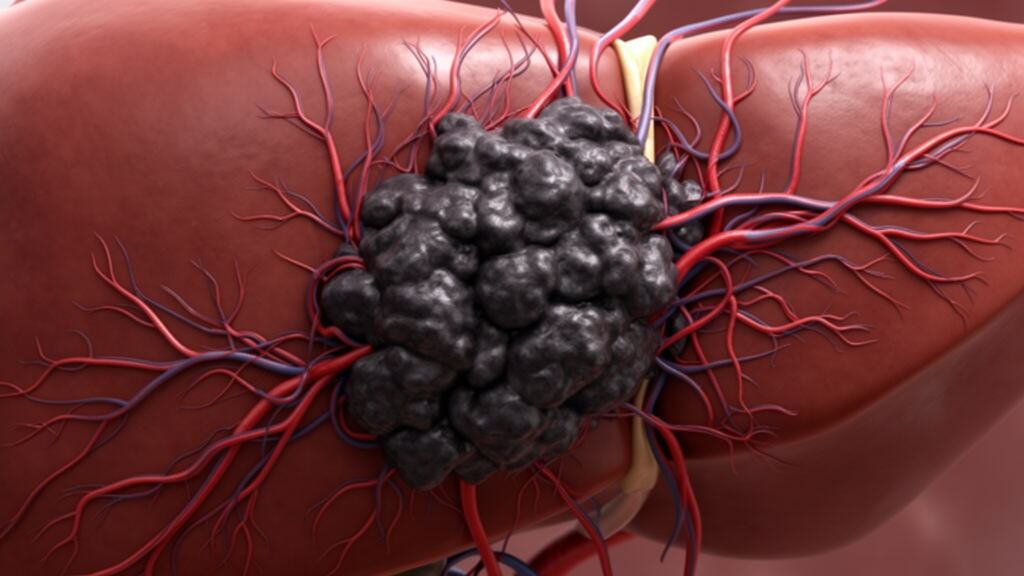
Researchers from Fudan University Shanghai Zhongshan Hospital and collaborators have developed a prognostic model for hepatocellular carcinoma (HCC) that identifies Angiopoietin-2 (ANGPT2) as a central molecular driver of malignant progression. Published in Biological Procedures Online in May 2026, the study integrates machine learning algorithms with multi-cohort clinical data and functional experiments to link microvascular invasion (MVI) with specific gene signatures. The findings suggest that ANGPT2 not only serves as a robust biomarker for poor prognosis but also plays a mechanistic role in tumor growth, immune evasion, and differential drug sensitivity.
Hepatocellular carcinoma is the predominant histological type of primary liver cancer, accounting for approximately 80% of all cases. It remains a highly lethal malignancy with high recurrence rates and limited therapeutic options. Microvascular invasion, defined as the invasion of tumor cells into small blood vessels of the liver, is a critical prognostic factor that often marks the early stages of metastasis. Despite its clinical significance, the molecular mechanisms underlying MVI and precise predictive tools for its assessment have remained largely undefined, prompting the need for dynamic risk assessment tools that integrate molecular features.
The study team collected follow-up data from patients who underwent radical surgical resection for HCC at Zhongshan Hospital between 2009 and 2021. Patients were classified into MVI-positive and MVI-negative groups based on microscopic examinations to investigate the impact of microvascular invasion on survival and recurrence. The research also utilized multiple public databases, including The Cancer Genome Atlas (TCGA) LIHC dataset, the International Cancer Genome Consortium (ICGC) LIRI-JP dataset, and the Gene Expression Omnibus (GEO) database, to enhance the robustness of the model and validate findings across independent cohorts.
Using machine learning techniques, the researchers identified microvascular invasion-related genes (MVIRGs) and constructed a prognostic model. The analytical workflow involved univariate Cox regression, Support Vector Machine-Recursive Feature Elimination (SVM-RFE), Least Absolute Shrinkage and Selection Operator (LASSO) regression, and Random Survival Forest (RSF) analysis. This stepwise approach refined a pool of candidate genes into a final six-gene signature comprising PPP4R4, SLC2A9, ANGPT2, MOGAT2, OTC, and CYP2C9. Among these, ANGPT2 was identified as the sole oncogenic gene, with its expression strongly associated with aggressive tumor features.
Clinical validation confirmed that ANGPT2 protein was significantly overexpressed in HCC tissues compared to adjacent non-tumorous tissues. Immunohistochemical analysis of 151 clinical specimens showed that high ANGPT2 expression correlated strongly with adverse clinicopathological features, including higher MVI risk ranking, vascular invasion, and the presence of satellite lesions. In the TCGA cohort, high ANGPT2 mRNA expression was positively correlated with later pathological stages, lymph node metastasis, and poorer Child-Pugh grade, establishing it as a core molecular feature of the aggressive HCC phenotype.
The prognostic model demonstrated superior predictive capability compared to conventional clinical variables. In the TCGA training cohort, the model achieved 1-year, 3-year, and 5-year Area Under the Curve (AUC) values of 0.851, 0.852, and 0.872, respectively. This predictive strength was maintained in external validation cohorts, including the ICGC LIRI-JP dataset and GSE76427. Kaplan-Meier survival analysis revealed that patients stratified into the high-risk group by the model exhibited significantly poorer overall survival and progression-free interval outcomes, confirming the model’s capacity for risk discrimination.
Functional experiments in vitro and in vivo further elucidated the biological role of ANGPT2. Stable knockdown of ANGPT2 in the SNU449 HCC cell line significantly inhibited cell proliferation, as measured by CCK-8 assays and colony formation tests. Additionally, ANGPT2 silencing reduced cell migration in Transwell and wound healing assays. In a subcutaneous xenograft mouse model, tumors derived from ANGPT2-knockdown cells were significantly smaller and lighter than those from control cells, providing direct evidence that ANGPT2 promotes HCC tumorigenicity and growth.
Bioinformatics analysis revealed that ANGPT2 fosters an immunosuppressive tumor immune microenvironment (TIME). High ANGPT2 expression was associated with increased infiltration of immunosuppressive cells, such as macrophages and Th2 cells, and decreased infiltration of anti-tumor effector cells like CD8+ T cells and natural killer cells. This immunosuppressive state appears to be maintained through the upregulation of immune checkpoint molecules, including PD-L1, CTLA-4, and VISTA. Consequently, high ANGPT2 expression was linked to resistance to immune checkpoint inhibitors (ICIs), although the predictive accuracy for ICI efficacy was limited, with an AUC of 0.555 in a pan-cancer cohort.
The study also uncovered a complex, drug-class-dependent regulatory pattern of ANGPT2 in drug sensitivity. Analysis of the Genomics of Drug Sensitivity in Cancer (GDSC) database indicated that high ANGPT2 expression was associated with increased half-maximal inhibitory concentration (IC50) values for targeted therapies, particularly EGFR tyrosine kinase inhibitors such as Afatinib and Erlotinib, suggesting potential resistance. Conversely, high ANGPT2 expression correlated with decreased IC50 values for chemotherapeutic agents like docetaxel and paclitaxel, indicating that tumor cells with high ANGPT2 levels may exhibit greater sensitivity to these standard chemotherapies.
The researchers acknowledge several limitations in their work. The prognostic model was primarily constructed and validated using retrospective data from public databases, which may introduce selection bias and data heterogeneity. Furthermore, functional validations relied on a single HCC cell line and a subcutaneous tumor model, which may not fully recapitulate the complex tumor microenvironment of human HCC. The specific signaling pathways through which ANGPT2 drives microvascular invasion remain unclear and require further investigation through gene knockout and pharmacological interventions.
Despite these limitations, the study provides a comprehensive framework for understanding the molecular basis of MVI in HCC. By identifying ANGPT2 as a key target, the research offers new insights into the mechanisms of tumor progression and immune resistance. The six-gene MVIRG model presents a potential tool for individualized prognostic assessment, while the characterization of ANGPT2’s role in drug sensitivity may guide the selection of appropriate therapeutic strategies for patients with HCC.
The findings highlight the potential of ANGPT2 as a dual-purpose biomarker for both prognosis and treatment guidance. While the theoretical rationale for targeting ANGPT2 is strong, previous clinical translations of ANGPT2 inhibitors have been suboptimal, with some studies observing no progression-free survival benefit. Optimizing inhibitory strategies, such as selecting specific patient populations or exploring novel combination timings, remains a critical challenge for future research. The study underscores the importance of integrating molecular features with clinical data to improve the precision of HCC management.
As the incidence and mortality rates of HCC remain high due to inadequate early detection, the development of precise staging and individualized treatment strategies is essential. This study contributes to that goal by elucidating the role of ANGPT2 in HCC progression. Future prospective, multi-center clinical trials are necessary to validate the clinical utility of the MVIRG model and to explore the therapeutic potential of targeting ANGPT2 in combination with other modalities.
Subject of Research: Identification of ANGPT2 as a prognostic biomarker and therapeutic target in hepatocellular carcinoma
Article Title: A novel prognostic model based on MVIRGs identifies ANGPT2 as a key target driving the malignant progression of HCC
Article References: Li, X., Tan, Z., Feng, S., Yu, Q., Zhou, J., Fan, J., & Xu, Y. (2026). A novel prognostic model based on MVIRGs identifies ANGPT2 as a key target driving the malignant progression of HCC. Biological Procedures Online, 28(1), Article 32. https://doi.org/10.1186/s12575-026-00347-z
Image Credits: AI Generated
DOI: 10.1186/s12575-026-00347-z
Keywords: hepatocellular carcinoma, ANGPT2, prognostic model, microvascular invasion, machine learning, tumor immune microenvironment, drug sensitivity, biomarker, novel, prognostic, model, based
News Source: Nathaniel Bowman. (November 8, 2026). ANGPT2 Identified as Key Driver in Liver Cancer Progression. Scienmag.