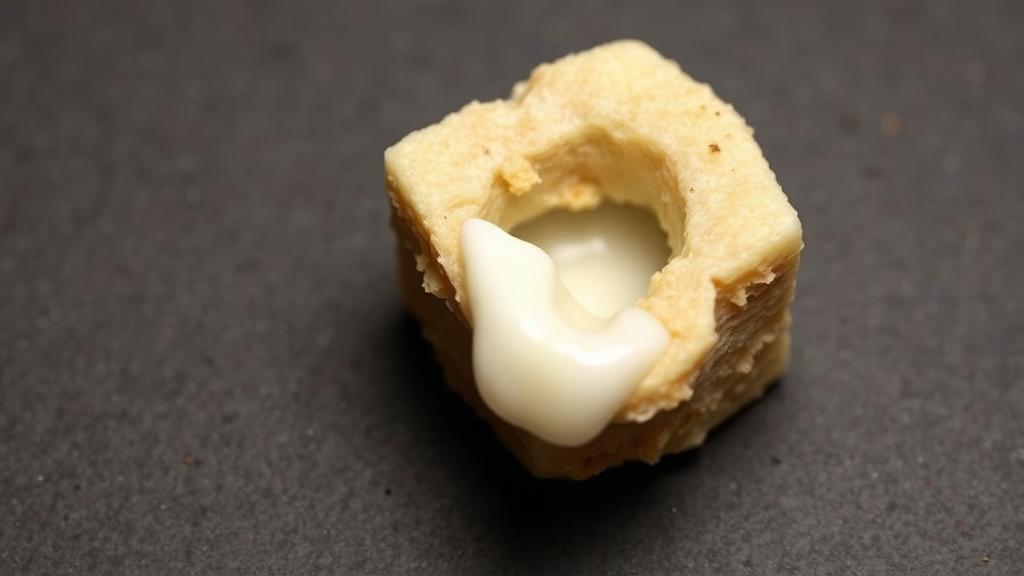
Hidden inside the hardened plaque of ancient teeth, scientists have found molecular traces of one of humanity’s most transformative food habits. A new study of archaeological dental calculus from Armenia shows that people across the South Caucasus were consuming milk from cattle, sheep, and goats over thousands of years, from the Middle Bronze Age through the Medieval period, while the genetic variant that allows adults to digest lactose remained rare and appeared surprisingly late. The research, published in iScience, offers one of the most detailed regional reconstructions of dairying anywhere in the ancient world and challenges the assumption that milk drinking and lactose tolerance evolved hand in hand.
The team, led by Mariya Antonosyan of the Max Planck Institute for Geoanthropology together with Anahit Hovhannisyan and colleagues, analyzed dental calculus from 77 individuals excavated at 22 archaeological sites across Armenia, spanning the Late Neolithic to the Middle Ages. Dental calculus, the mineralized bacterial biofilm that accumulates on teeth, acts as a remarkable time capsule. As it forms during life, it traps fragments of proteins from everything a person ate, preserving them for millennia in a protective mineral matrix. Using liquid chromatography-tandem mass spectrometry, the researchers extracted and identified these ancient proteins, screening each sample against a curated database of oral and contaminant proteins to ensure that only well-preserved, authentic samples were analyzed.
Of the 77 samples, 60 showed well-preserved oral signatures, indicating their suitability for dietary analysis. Within this group, dairy peptides were identified in 16 individuals from nine sites. The overwhelming majority of these milk proteins were beta-lactoglobulin, a major whey protein found in ruminant milk, detected in 14 samples, while beta-casein appeared in two others. Crucially, some peptides allowed the researchers to identify the species of origin: seven peptide matches pointed to goat milk, four to cattle, and four to sheep, with a larger group of 55 matches that could not distinguish between sheep and cattle. This taxonomic resolution is what transforms a simple detection of milk into a nuanced picture of ancient herd management and dietary choice.
The chronological pattern that emerged is striking. The earliest individual in the study, an adult male aged 45 to 60 from the Late Neolithic site of Masis Blur, showed no direct evidence of milk consumption, nor did any of the Early Bronze Age individuals associated with the Kura-Araxes cultural complex. The earliest direct evidence of milk drinking in the Armenian dataset comes from the Middle Bronze Age, around the 2nd millennium BCE, when all four individuals analyzed, buried at the high-altitude sites of Sotk-2 and Sotk-10 near Lake Sevan, carried milk proteins in their calculus. From that point onward, milk consumption persisted continuously through the Late Bronze, Iron, Classical, and Medieval periods, with both the intensity of consumption and the diversity of exploited animals increasing over time.
Geography mattered as much as chronology. Milk proteins were recovered predominantly from high-altitude sites situated above 1,500 meters above sea level. Among prehistoric individuals with confirmed protein preservation, all seven who yielded dairy peptides came from sites above 1,600 meters, while six individuals from lowland sites showed no milk signal at all. The researchers suggest that milk may have functioned as an adaptive resource in harsh highland environments, where crop cultivation was difficult and livestock offered a reliable source of hydration and nutrition without the need to slaughter valuable animals. A parallel pattern has been observed on the Tibetan Plateau, where ancient milk proteins were found only at high-elevation sites beyond the limits of agriculture. Yet the relationship is not straightforward: seven high-altitude individuals from the Iron Age and Medieval periods passed preservation screening without yielding dairy proteins, indicating that elevation alone cannot explain the mosaic of dietary preferences across landscapes and centuries.
The genetic side of the study tells an equally compelling story. Adult digestion of lactose, the sugar in milk, depends on lactase persistence, a trait controlled by regulatory variants near the LCT gene. The team screened five known lactase persistence-associated variants in 158 modern Armenian individuals and found only the European variant, 13910C>T, at a modest frequency of roughly 6 to 8 percent. The other four variants, including the 13915T>G allele that predominates in the Near East just to Armenia’s south, were entirely absent. This finding resolves previously conflicting estimates for Armenians, which had ranged from 2.7 to 18 percent, and highlights the population’s distinctive genetic position at the crossroads of Europe and the Middle East.
Ancient DNA screening added a temporal dimension to this genetic picture. After imputing lactase genotypes in published ancient genomes from Armenia, the researchers directly examined sequencing reads covering the rs4988235 position using stringent filtering criteria designed to guard against false positives, a critical safeguard because the C>T transition at this site mimics characteristic ancient DNA damage patterns. The earliest confirmed carrier of the derived allele in Armenia dates to the Late Urartian period, around 680 to 550 BCE, approximately 3,000 years ago. Results for eight other samples, including Early Bronze Age specimens, could not be confirmed and may represent imputation artifacts. The confirmed appearance of the allele post-dates a documented Late Bronze and Iron Age genetic influx into the region, suggesting the variant may have been introduced through population interactions rather than arising locally.
Placed side by side, the proteomic and genetic data reveal a profound mismatch. Dairying in the South Caucasus intensified from at least the Middle Bronze Age onward, sustaining mobile pastoral communities, highland herders, and eventually the elite of medieval burial complexes, yet lactase persistence never became widespread in the population. The authors argue that cultural and dietary strategies, rather than genetic adaptation, were the key enablers of milk consumption. Fermentation into products such as matsun, Armenia’s traditional yoghurt, along with cheese-making and the mixing of milk with grains and other foods, reduces lactose content and allows lactose-intolerant people to benefit from dairy without discomfort. Armenia’s rich fermented dairy cuisine, which persists today, may itself be a living legacy of this ancient workaround.
The study also uncovered intriguing social dimensions. In the Late Classical period, individuals from the Odzaberd site displayed the earliest evidence of goat milk consumption in the assemblage, with some showing diversified profiles spanning sheep, goat, and cattle milk, possibly reflecting mixed herding practices or access to trade networks. In the Medieval Aghtsg burial complex, dairy proteins were detected exclusively in two individuals interred in sarcophagi, markers of elevated social status, hinting at preferential elite access to milk, although better preservation conditions inside sarcophagi cannot be ruled out. Meanwhile, the absence of horse milk proteins in the South Caucasus, despite their identification in the neighboring North Caucasus steppe, suggests that horse milking may have been a specifically steppe-based adaptation of mobile horse-reliant groups.
The researchers caution that absence of evidence is not evidence of absence: missing milk proteins may reflect sampling bias, small sample sizes, or individual dietary choices rather than a true lack of consumption. Only one Late Neolithic individual and no Chalcolithic individuals from Armenia were available for analysis, leaving the earliest chapters of the region’s dairy history open. Future work combining larger sample sets, ceramic residue analysis, and stable isotope studies of human bones and teeth promises to refine the picture. Even so, this first integrated genetic and palaeoproteomic reconstruction for a single region across such a wide temporal span delivers a powerful message: for six millennia, the people of the Armenian highlands drank their milk on their own cultural terms, and their genes never needed to catch up.
Subject of Research: Millennial-scale dairy consumption and lactase persistence in ancient Armenia
Article Title: Palaeoproteomic and genetic insights into millennial-scale dairy consumption in Armenia
Article References: Antonosyan, M., Hovhannisyan, A., Roberts, P., Cassidy, L. M., Mkrtchyan, S., Simonyan, H., Bobokhyan, A., Aghikyan, L., Piliposyan, A., Badalyan, R., Yeranyan, N., Gnuni, A., Avetisyan, H., Badalyan, M., Gabrielyan, A., Sarkisian, N., Grigoryan, A., Simonyan, H., Safaryan, M., … Wilkin, S. (2026). Palaeoproteomic and genetic insights into millennial-scale dairy consumption in Armenia. iScience, 29(11), Article 117829. https://doi.org/10.1016/j.isci.2026.117829
Image Credits: AI Generated
DOI: 10.1016/j.isci.2026.117829
Keywords: palaeoproteomics, dental calculus, dairying, lactase persistence, ancient DNA, Armenia, South Caucasus, Bronze Age, fermented dairy, matsun, beta-lactoglobulin, highland pastoralism
News Source: Gavin Prescott. (October 11, 2026). Ancient Tooth Tartar Reveals 6,000 Years of Milk Drinking in Armenia Without Lactase Evolution. Scienmag.