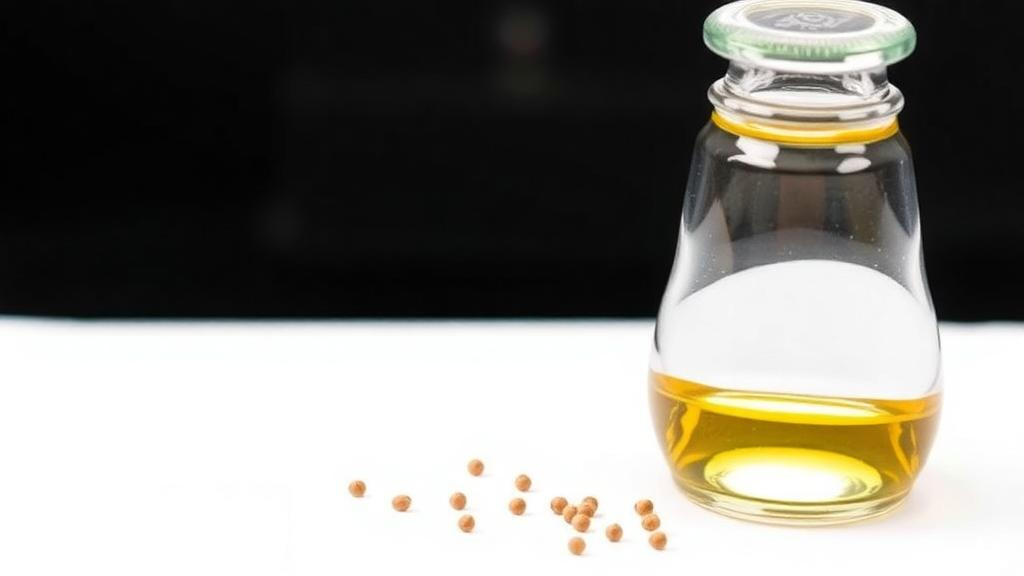
A humble spice that has sat on kitchen shelves for centuries may be on the verge of a high-tech makeover. Ajwain, the pungent seed of Trachyspermum ammi used across South Asian and Middle Eastern kitchens and traditional apothecaries, yields an essential oil with well-documented antimicrobial power. Yet the oil has always had a fatal flaw as a medicine: it evaporates almost as fast as it works, and its active molecules degrade quickly when exposed to air and light. A team of researchers in Iran now reports a way around that problem, wrapping the volatile oil inside chitosan nanoparticles and embedding the resulting nanocarriers in a smooth hydrogel that kills two of the most clinically feared bacteria on contact.
The study, published in BMC Complementary Medicine and Therapies by Maryam Roozegar, Mahmoud Osanloo and colleagues at Fasa University of Medical Sciences, tackles a challenge that has long frustrated anyone trying to turn essential oils into real therapeutic products. Essential oils are complex cocktails of small organic molecules with genuine biological activity, but their high volatility and chemical instability mean that a free oil applied to skin or a wound loses potency within minutes. Nanoencapsulation offers a physical solution: by sealing the oil inside a protective polymer shell, the active compounds are shielded from evaporation and oxidation, and can be released gradually at the site of infection rather than dissipating into the air.
The researchers began with rigorous chemical characterization of the oil itself. Using gas chromatography coupled with mass spectrometry, a technique that separates volatile compounds and identifies each by its molecular fingerprint, they confirmed that thymol, p-cymene and gamma-terpinene dominate the ajwain oil profile. Thymol, a phenolic monoterpene also found in thyme, is the heavyweight of the trio, known to disrupt bacterial membranes and interfere with essential enzymes. P-cymene and gamma-terpinene are less directly toxic but act as precursors and synergists, and their presence shapes how the oil interacts with biological targets. Knowing exactly what is in the oil is the essential first step toward understanding what the final formulation actually delivers.
Next came the nanoscale engineering. The team used ionic gelation, a gentle method that relies on electrostatic attraction between positively charged chitosan, a natural polymer derived from crustacean shells, and negatively charged crosslinking molecules, to self-assemble nanoparticles around the oil droplets. The resulting particles measured an average of 132 nanometers, with a standard deviation of just 7 nanometers, a remarkably tight distribution that speaks to the reproducibility of the process. That size matters: particles in the 100 to 200 nanometer range can penetrate the sticky matrix of bacterial biofilms and accumulate in the microscopic crevices of skin and wounds where free-floating oil molecules would never reach.
Colloidal stability was equally impressive. The nanoparticles carried a zeta potential of minus 44 millivolts, a strong negative surface charge that makes the particles repel one another vigorously and resist clumping into larger aggregates over time. Formulations with zeta potentials beyond plus or minus 30 millivolts are generally considered stable, so the ajwain-loaded carriers should survive storage without losing their finely tuned dimensions. The encapsulation efficiency, the fraction of oil successfully captured inside the particles, reached 68 percent, and the loading capacity, the amount of oil carried per unit mass of polymer, hit 26 percent. Both figures indicate that the chitosan matrix is an economical and efficient host for the precious oil.
Structural spectroscopy sealed the case for successful encapsulation. Attenuated total reflectance Fourier-transform infrared spectroscopy, which probes the vibrational modes of chemical bonds, revealed the characteristic signatures of the oil’s constituents embedded within the polymeric matrix rather than sitting loosely on the particle surface. The team then turned the formulation into a usable product by dispersing the nanoparticles in hydroxypropyl methylcellulose, or HPMC, a widely used pharmaceutical gelling agent. Rheological testing showed that the hydrogel exhibits shear-thinning behavior, meaning it flows easily when squeezed from a tube or rubbed onto skin but holds its shape when at rest. That is precisely the flow profile a topical medication needs.
The antibacterial payoff came from a standardized textile-industry challenge known as the AATCC 100 method, which quantifies how thoroughly a formulation kills bacteria on a treated surface. The researchers pitted the nano-hydrogel against Staphylococcus aureus, the Gram-positive culprit behind skin abscesses and life-threatening bloodstream infections, and Pseudomonas aeruginosa, the notoriously drug-resistant Gram-negative pathogen that plagues burn wounds and cystic fibrosis lungs. These two organisms represent opposite ends of the bacterial defensive spectrum, since Gram-negative bacteria wrap themselves in an additional outer membrane that repels many antibiotics. A formulation that defeats both is genuinely noteworthy.
The results were unambiguous. The nanoparticle-loaded hydrogel achieved complete inhibition of both pathogens at a concentration of 625 micrograms per milliliter, while the non-nano formulation of the same oil required significantly higher doses to achieve comparable killing. The difference illustrates a central principle of nanomedicine: it is not just what an active compound does, but where and how it is delivered. By concentrating the oil at the bacterial surface in nanoscale packets, the formulation multiplies the effective local dose while reducing the total amount of oil needed, which also limits the irritation and toxicity that concentrated essential oils can cause on healthy tissue.
To understand the mechanism at the molecular level, the team performed molecular docking, a computational technique that predicts how small molecules fit into the binding pockets of proteins. They docked thymol, p-cymene and gamma-terpinene against key bacterial enzymes involved in DNA replication, fatty acid biosynthesis and cell wall construction. The simulations showed favorable binding interactions between the major oil constituents and these essential targets, suggesting that the oil does not rely on a single mode of attack but instead hits several vital bacterial processes simultaneously. Multi-target action of this kind is particularly valuable in the era of antimicrobial resistance, because a pathogen cannot easily evolve resistance to a compound that attacks its machinery from several directions at once.
The work, funded by Fasa University of Medical Sciences and approved by the institution’s ethics committee, remains at the laboratory stage, and the authors are careful to frame it as a promising strategy rather than a finished medicine. Clinical use will require safety testing, stability studies over long storage periods and eventually trials in real wounds. Still, the study offers a compelling template for rescuing traditional remedies with modern materials science. Chitosan is cheap, biodegradable and inherently antimicrobial itself, HPMC is already a mainstay of topical pharmaceuticals, and ajwain oil is an agricultural byproduct of a widely cultivated spice. If subsequent studies confirm the formulation’s safety and effectiveness in living tissue, the pungent seeds of Trachyspermum ammi could find a second career not as a flavoring but as the payload inside a next-generation antimicrobial gel, at a moment when medicine desperately needs new weapons against resistant bacteria.
Subject of Research: Nanoencapsulation of ajwain essential oil in chitosan nanoparticle hydrogels for enhanced topical antibacterial activity
Article Title: Ajwain Essential Oil-loaded chitosan nanoparticle hydrogel with antibacterial activity: experimental evaluation and molecular docking analysis
Article References: Roozegar, M., Ansari, M., Fazlali, M., Safari, M., Namdar, N., Montaseri, Z., & Osanloo, M. (2026). Ajwain Essential Oil-loaded chitosan nanoparticle hydrogel with antibacterial activity: experimental evaluation and molecular docking analysis. BMC Complementary Medicine and Therapies. https://doi.org/10.1186/s12906-026-05556-3
Image Credits: AI Generated
DOI: 10.1186/s12906-026-05556-3
Keywords: ajwain essential oil, chitosan nanoparticles, hydrogel, antibacterial activity, thymol, nanoencapsulation, Staphylococcus aureus, Pseudomonas aeruginosa, molecular docking, topical drug delivery, antimicrobial resistance, HPMC
News Source: Alan Morgan. (October 8, 2026). Ancient Seed Oil Trapped in Nanoparticles Wipes Out Two Deadly Superbugs. Scienmag.