In the rich soil of every backyard, park, and playground across the globe, an astonishing microbial world thrives, dominated in part by an exceptionally prolific genus of bacteria known as Streptomyces. These filamentous soil bacteria are not only celebrated for producing the quintessential earthy scent following rainfall—a result of their metabolic byproduct geosmin—but also for their unparalleled capacity to manufacture a vast arsenal of biologically active compounds. Among their chemical outputs are many of the antibiotics, immunosuppressants, and anticancer agents that medical science relies upon, rendering Streptomyces indispensable in clinical therapeutics.
A groundbreaking study recently published in Nature Microbiology has unveiled an intriguing addition to the biochemical repertoire of Streptomyces—a novel family of bacterial toxins that share distant evolutionary ties with the infamous diphtheria toxin, yet exhibit a strikingly divergent biological role. Conducted through a multi-institutional collaboration involving experts from McMaster University, Boston Children’s Hospital, Harvard Medical School, Stockholm University, and Yale University, this research elucidates the molecular and evolutionary complexities of these newly identified toxins.
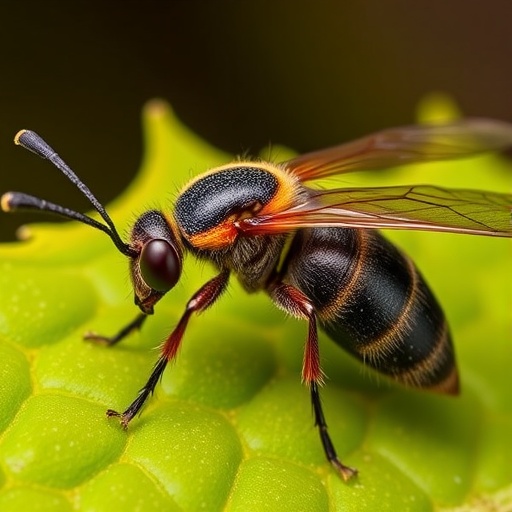
Unlike the diphtheria toxin, which is a well-characterized virulence factor causing severe disease in humans, the newly discovered Streptomyces toxins—termed Streptomyces antiquus insecticidal proteins (SAIPs)—exert their toxicity specifically on insect hosts. These proteins demonstrate broad-spectrum insecticidal activity, selectively targeting insect cells without posing any known threat to mammalian or human cellular physiology, highlighting a remarkable specificity mechanism at the molecular level.
The mechanistic basis for this insect-specific toxicity was dissected using cutting-edge CRISPR-Cas9 gene editing in insect cell cultures. By systematically knocking out candidate genes required for SAIP activity, researchers identified a critical cell surface receptor, dubbed ‘Flower,’ that mediates toxin entry exclusively in insects. This receptor’s insect-specific isoform appears indispensable for SAIP binding and subsequent cytotoxic activity, explaining why these toxins fail to affect non-insect organisms.
Bioinformatic and phylogenomic analyses place the origin of these SAIP toxins deep in evolutionary history, tracing them back more than 100 million years. This suggests that these proteins have been an integral part of Streptomyces biology for a substantial fraction of Earth’s biosphere evolution. Such longevity invites speculation about their ecological roles and potential historical impacts on the evolutionary arms race between microbes and insects.
While the diphtheria toxin is known to have been horizontally acquired from another bacterial species, the striking structural similarities and ancient origins of SAIPs raise the possibility that these Streptomyces toxins may have served as evolutionary precursors or reservoirs for the eventual emergence of diphtheria-like toxins in pathogenic bacteria. This evolutionary connection, though speculative, underscores the complexity of toxin evolution and the dynamic genetic interplay among microbial species.
Interestingly, only a select subset of Streptomyces species possess the genetic capacity to synthesize these insecticidal toxins. The vast majority of Streptomyces strains engage in mutualistic or commensal relationships with insects, often living in harmony without harming their hosts. The toxin-producing strains form a discrete clade that appear to have specialized as insect pathogens, employing their toxins to immobilize and consume insect prey actively.
The ecological niche occupied by these insect-pathogenic Streptomyces strains is multifaceted. Beyond merely killing insects, these bacteria efficiently degrade insect carcasses, capitalizing on the nutrient-rich resources and generating potent antimicrobial compounds in the process. These secondary metabolites presumably inhibit other competing microorganisms from exploiting the same resource pool, providing an ecological advantage and ensuring monopolization of nutrients.
This dual role—predation on insects coupled with antimicrobial production—positions these Streptomyces strains as potential goldmines for bioprospecting new antibiotics and bioactive molecules. Already, prior investigations by the Currie lab and collaborators have isolated promising antibiotic candidates from Streptomyces, fueling optimism that these newly identified strains could yield novel therapeutics, a critical need in an era of rising antibiotic resistance.
The discovery of SAIPs carries broader scientific and practical implications beyond natural product chemistry. Bacterial toxins have historically transcended their role in pathogenesis, being harnessed in biotechnology, medicine, and agriculture. For instance, botulinum toxin serves not only as a potent neurotoxin but also as a widely used therapeutic and cosmetic agent. This precedent reinforces the potential for SAIPs to be developed into tools for biological control or therapeutic applications.
One compelling avenue is the application of SAIPs in managing insect vectors responsible for transmitting human diseases such as malaria and West Nile virus. By selectively targeting such insects, SAIP-based bioinsecticides could reduce vector populations without harming non-target organisms, aligning with sustainable pest management principles. Additionally, protecting valuable crops from insect herbivores could be revolutionized by deploying such precision toxins in integrated pest management systems.
The researchers have proactively patented their discovery, signaling intent toward commercialization, with agricultural pest control being an immediate target market. Given that insecticidal proteins are in high demand worldwide—especially those exhibiting specificity and minimal environmental impact—the potential for SAIPs in agritech appears promising.
Current experimental pursuits involve evaluating SAIP efficacy and behavior in model insect organisms such as crickets and mealworms. These systems provide tractable platforms to investigate infection dynamics, toxin dissemination, and immune responses. Concurrently, assays are being conducted to isolate and characterize antimicrobial compounds secreted by SAIP-producing Streptomyces, with an eye toward their therapeutic potential.
Ultimately, this discovery embodies a compelling reminder of the vast unknown biological capabilities harbored by even the most extensively studied microbial taxa. Streptomyces, a genus with over 500 recognized species and long-recognized biotechnological value, continues to surprise researchers, demonstrating that microbial biodiversity and chemical innovation remain rich fields for exploration.
This study’s revelations emphasize the need to reassess microbial ecological roles and the biochemical versatility that underpins their survival and evolutionary trajectories. As microbial genome sequencing and functional studies advance, it becomes clear that bacterial metabolites extend beyond human health, influencing ecosystems, agriculture, and global biodiversity in profound, yet often overlooked, ways.
As Cameron Currie, a lead investigator on the study, succinctly puts it: uncovering such novel bioactive proteins in one of Earth’s most abundant bacteria underscores how much remains to be understood about microbial diversity. The SAIP toxins not only enrich our knowledge of microbial ecology but also invite future innovations in medicine, agriculture, and biotechnology, driven by the molecular ingenuity of nature’s smallest chemists.
Subject of Research: Discovery and characterization of a new class of insect-specific toxins produced by Streptomyces bacteria and their evolutionary and potential applied significance.
Article Title: Newly Discovered Streptomyces Insecticidal Proteins Illuminate Microbial Evolution and Promise Agricultural Innovations
News Publication Date: 30-Apr-2026
Web References: https://dx.doi.org/10.1038/s41564-026-02315-5
References:
Currie, C., Dong, M., Perrimon, N., et al. (2026). Identification and characterization of Streptomyces antiquus insecticidal proteins (SAIPs) with diphtheria toxin-like domains. Nature Microbiology. DOI: 10.1038/s41564-026-02315-5
Image Credits: Not provided
Keywords: Streptomyces, insecticidal toxins, SAIPs, diphtheria toxin, microbial natural products, bioinsecticides, CRISPR gene editing, antimicrobial compounds, microbial evolution, insect-pathogen interactions, biotechnology, agriculture, vector control