


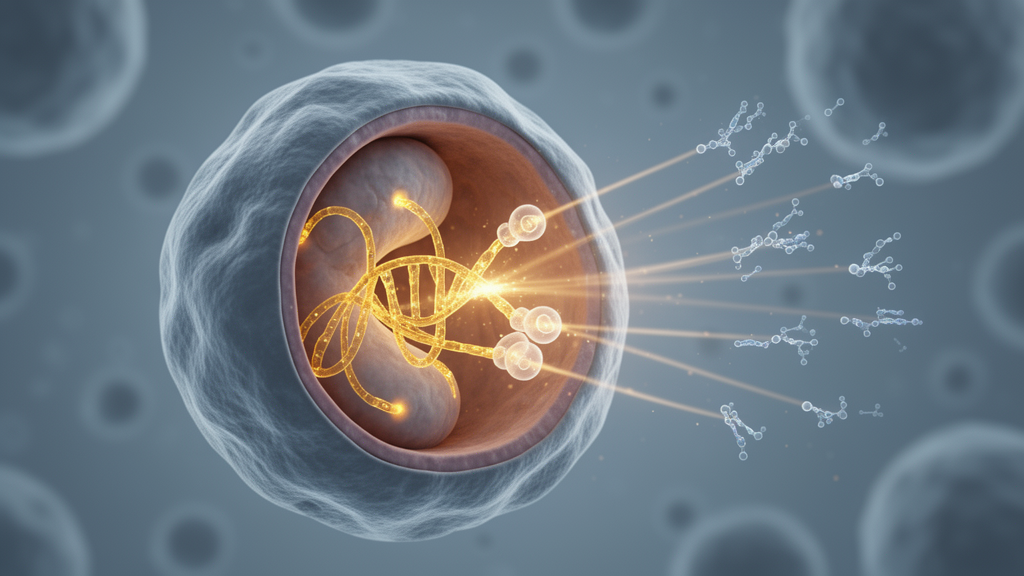
Alu elements, the short interspersed nuclear elements that make up a substantial fraction of the human genome, have long been regarded as genomic hitchhikers, molecular fossils of primate evolution that mostly do little more than accumulate. A new study published in Epigenetics & Chromatin argues that at least some of these sequences play an active role in how human immune cells respond to bacterial infection. By reanalyzing published chromatin data from human monocytes exposed to bacterial lipopolysaccharide, or LPS, the researchers found that Alu-containing regulatory regions undergo widespread and dynamic changes in enhancer-associated chemical marks, accounting for roughly 15 percent of all enhancer-associated chromatin peaks detected with and without stimulation.
The work, led by Yonghao Pan and Kenji Ichiyanagi, is a reanalysis of publicly available ChIP-seq datasets rather than a set of new laboratory experiments. The team examined chromatin immunoprecipitation sequencing data for three histone modifications, H3K4me1, H3K4me3, and H3K27ac, in human monocytes under three conditions: an unstimulated negative control, stimulation with LPS for one hour, and stimulation for a full day. These marks are classic signatures of enhancer activity, the regulatory elements that boost gene expression from a distance. The researchers identified approximately 40,000 H3K27ac peaks, 90,000 H3K4me1 peaks, and 35,000 H3K4me3 peaks per condition, and found that about 15 percent of them overlapped with Alu sequences.
The most striking observation concerned the timing of these changes. More than one quarter of the Alu-containing H3K27ac and H3K4me1 peaks appeared only after LPS treatment, suggesting that these ancient sequences become epigenetically activated as part of the immune response rather than sitting passively in the chromatin. When the researchers applied k-means clustering to sort the Alu-containing peaks by their signal patterns across the three conditions, they found that 68 percent of the 8,478 Alu-containing H3K27ac peaks showed increased signal following LPS stimulation, with the strongest average enrichment at the one-day time point. The clustering also revealed distinct temporal classes, including rapid-response peaks that peaked at one hour, late-response peaks that peaked at a day, and peaks that were repressed or transiently silenced during stimulation.
To understand what these activated Alu enhancers might be doing, the researchers linked them to potential target genes using a multi-step approach. They first identified nearby genes with the GREAT algorithm, then restricted candidates to genes residing in the same topologically associating domain, or TAD, using published Hi-C data on three-dimensional genome folding, and finally filtered for genes that were actually expressed in the relevant condition. The resulting gene associations shifted over the course of the immune response. Alu-containing enhancers active under unstimulated conditions were linked to genes involved in cell morphology, adhesion, and LPS-related signaling pathways including NF-κB signaling. Enhancers appearing after one hour of LPS were associated with genes involved in acute immune and inflammatory responses, while those active after a full day of stimulation were linked to genes with more dispersed pathway associations, a pattern the authors interpret as consistent with post-stimulation adaptation or tolerance.
A key mechanistic finding emerged from motif analysis of the Alu-containing enhancers. Using the HOMER tool, the researchers found enrichment of binding motifs for Homeobox, zinc finger, and MADS-box transcription factor families, and crucially, this enrichment was confined to the Alu sequences themselves rather than the surrounding DNA. Among the enriched motifs, those from the MEF2 family, comprising MEF2A, MEF2B, and MEF2C, stood out because MEF2 proteins are known to regulate macrophage polarization, survival, and the selective modulation of specific LPS-induced gene subsets. When the researchers scanned the Alu consensus sequences with FIMO, they discovered a canonical MEF2 binding motif located around the 120th position, within the A-rich linker that separates the left and right arms of the Alu element. This linker motif is absent from the rodent B1 and B2 sequences, which are the evolutionary counterparts of Alu in mice.
The species-specific nature of this motif carries evolutionary implications. Alu elements are primate-specific, with over one million copies in the human genome, whereas mice carry B1 and B2 elements that arose from separate lineage-specific expansions. Because the LPS receptors themselves, including Toll-like receptor 4 and CD14, are relatively conserved among species while sensitivity to LPS varies dramatically, the authors suggest that Alu elements may contribute to heightened human sensitivity to LPS by shaping species-specific enhancer landscapes. To test whether MEF2C can actually bind Alu sequences, the team reanalyzed a publicly available MEF2C ChIP-seq dataset from human induced pluripotent stem cell-derived microglia, a myeloid cell type related to monocytes. Among 60,809 MEF2C peaks, 8,116 were located in Alu elements, supporting the idea that MEF2C can bind Alu sequences, although significant enrichment was not observed.
Not every regulatory scale showed Alu involvement. The researchers also examined super-enhancers, large clusters of enhancers marked by dense H3K27ac signal, using the ROSE algorithm on the same monocyte data. They identified between 1,200 and 1,700 super-enhancers per condition, with the one-day LPS condition yielding the most. While the older Alu subfamilies AluJ and AluS were significantly enriched within super-enhancer regions, no significant differences in Alu composition emerged between unstimulated and LPS-treated groups, and correlation analyses revealed no association between super-enhancer signal strength and Alu abundance or length. Alu content also did not differ between hierarchical and non-hierarchical super-enhancers, or between hub and non-hub enhancers. The authors conclude that Alu elements do not act as architectural drivers of enhancer strength or super-enhancer formation, but instead function as sequence-level regulatory modules within typical enhancers.
The study also addressed a potential artifact. The roughly 15 percent overlap of H3K27ac and H3K4me1 peaks with Alu sequences was actually less than the approximately 27 percent expected by random permutation, meaning Alu is not disproportionately represented in active chromatin overall. The authors propose that because each Alu copy carries a MEF2 motif, every copy potentially had LPS-responsive activation potential when it was generated by retrotransposition, but maintaining a million such responsive regions could disrupt proper transcriptional control during bacterial infection. They suggest that most Alu loci may have been silenced through mutation or stable repressive chromatin states, while a limited number of functionally important loci were retained as LPS-responsive enhancers through natural selection.
Several caveats temper these conclusions. The study relied entirely on reanalysis of published datasets, and the authors acknowledge the absence of direct perturbation experiments targeting specific Alu elements, noting that future work using targeted deletion or epigenome editing will be needed to establish causal relationships between individual Alu insertions and immune regulatory outcomes. The analysis also used only uniquely mapped sequencing reads to avoid multi-mapping artifacts, a conservative choice that likely underestimates the contribution of the youngest AluY subfamily, whose members are so similar to one another that short reads cannot be confidently assigned. The authors note that long-read sequencing and the recently published T2T genomes, which contain about one percent more SINE copies than the hg38 and mm39 references used here, could improve future analyses. The mouse comparison also carried limitations, as the available mouse data covered only early LPS response, leaving open whether mouse SINEs participate in later phases. What the study establishes is a detailed correlative map of how Alu-associated chromatin changes during immune activation, and a testable model in which these primate-specific elements serve as pre-positioned binding platforms that help shape the temporal organization of the human innate immune response.
Subject of Research: Epigenetic activation of Alu elements in human monocytes during LPS response
Article Title: Human Alu loci gain enhancer-type epigenetic modifications in monocytes during response to bacterial LPS
Article References: Pan, Y., & Ichiyanagi, K. (2026). Human Alu loci gain enhancer-type epigenetic modifications in monocytes during response to bacterial LPS. Epigenetics & Chromatin, 19(1), Article 40. https://doi.org/10.1186/s13072-026-00686-x
Image Credits: AI Generated
DOI: 10.1186/s13072-026-00686-x
Keywords: Alu elements, transposable elements, monocytes, lipopolysaccharide, enhancers, H3K27ac, H3K4me1, MEF2, ChIP-seq, innate immunity, epigenomics, primate evolution
News Source: Juliet Wilcox. (October 30, 2026). Ancient Alu Elements Emerge as Dynamic Immune Enhancers in Human Monocytes. Scienmag.



