• HOME
  • NEWS
  • EXPLORE
    • CAREER
      • Companies
      • Jobs
    • EVENTS
    • iGEM
      • News
      • Team
    • PHOTOS
    • VIDEO
    • WIKI
  • BLOG
  • COMMUNITY
    • FACEBOOK
    • INSTAGRAM
    • TWITTER
Tuesday, July 7, 2026
BIOENGINEER.ORG
No Result
View All Result
  • Login
  • HOME
  • NEWS
  • EXPLORE
    • CAREER
      • Companies
      • Jobs
        • Lecturer
        • PhD Studentship
        • Postdoc
        • Research Assistant
    • EVENTS
    • iGEM
      • News
      • Team
    • PHOTOS
    • VIDEO
    • WIKI
  • BLOG
  • COMMUNITY
    • FACEBOOK
    • INSTAGRAM
    • TWITTER
  • HOME
  • NEWS
  • EXPLORE
    • CAREER
      • Companies
      • Jobs
        • Lecturer
        • PhD Studentship
        • Postdoc
        • Research Assistant
    • EVENTS
    • iGEM
      • News
      • Team
    • PHOTOS
    • VIDEO
    • WIKI
  • BLOG
  • COMMUNITY
    • FACEBOOK
    • INSTAGRAM
    • TWITTER
No Result
View All Result
Bioengineer.org
No Result
View All Result
Home NEWS Science News Biology

Alternative antimicrobial compounds could come from wastewater

Bioengineer by Bioengineer
July 20, 2017
in Biology
Reading Time: 2 mins read
0
Share on FacebookShare on TwitterShare on LinkedinShare on RedditShare on Telegram

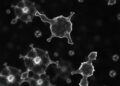
Credit: Stefan Els

Municipal wastewater may become a key ally in the fight against antibiotic-resistant disease-causing bacteria and fungi, a new study at Stellenbosch University (SU) found.

"Certain bacteria in municipal wastewater produce antimicrobial compounds or biosurfactants that can help prevent the growth of antibiotic-resistant microorganisms which cause serious infections in humans," says Dr Thando Ndlovu a postdoctoral researcher in the Department of Microbiology at SU. Ndlovu recently obtained his doctorate in Microbiology at SU under the supervision of Prof Wesaal Khan from the same department.

He says the rapid increase in the emergence of antibiotic-resistant bacteria was a major reason behind his search for new antimicrobial compounds.

As part of his research, Ndlovu collected wastewater samples and also carried out molecular and microbiological tests in a laboratory on various biosurfactants-producing bacteria found in these samples. He isolated two bacterial strains whose biosurfactants proved effective against antibiotic-resistant disease-causing bacteria.

Biosurfactants are compounds produced naturally by bacteria, fungi or yeasts and they have been commercially utilised in shampoos, shower gels, and household cleaning products. They are also used in food, agriculture, cosmetic and medical industries as well as in environmental bioremediation to prevent the spread of spoilage and disease-causing bacteria.

"The biosurfactants produced by the two bacteria in my study prevented the growth of major disease-causing bacteria such as methicillin-resistant Staphylococcus aureus and gentamicin-resistant E. coli which can lead to life-threatening infections in humans," says Ndlovu.

"This finding is promising given worldwide reports on the number of deaths caused by antimicrobial resistant microorganisms that are becoming increasingly difficult to treat with current drugs."

"The discovery of novel antimicrobial compounds is a priority and biosurfactant compounds could be used to develop new antibiotics for treatment of various infections caused by antibiotic resistant bacteria and eventually replace ineffective antibiotics in future."

Ndlovu says his study showed that municipal wastewater is ideal for the isolation of diverse biosurfactant-producing bacteria that could be utilised in the production of such compounds for commercial use.

"While numerous studies have reported on the isolation of biosurfactant-producing bacteria from contaminated soil and terrestrial environments, the current study indicated that municipal wastewater could be exploited for the isolation of diverse biosurfactant-producing bacterial strains."

"Biosurfactant-producing bacteria thrive in polluted environments such as contaminated soil or water. These bacteria also have the ability to outcompete other bacteria in the same environment because the biosurfactant compounds help them to absorb nutrients and to protect them from toxic materials."

Ndlovu adds that biosurfactant compounds can be used to reduce the use of synthetic antimicrobial agents for various purposes such as cleaning and coating agents to prevent the build-up of disease-causing and spoilage bacteria.

As far as future research is concerned, Ndlovu says he is now focusing on the application of biosurfactant compounds with antimicrobial properties.

###

Media Contact

Thando Ndlovu
[email protected]
27-021-808-5803
@scienceSUN

http://www.sun.ac.za

Share12Tweet8Share2ShareShareShare2

Related Posts

Here are a few rewritten headlines for a science magazine post, each with a slightly different tone: Intriguing & poetic: How do organs sculpt themselves? Sea stars hold the secret Direct & research-focused: Sea stars reveal the hidden rules of organ formation Metaphorical & inviting: Tiny architects beneath the waves: What sea stars teach us about building organs Short & punchy: Star-shaped clues to how our organs take shape Question-led: Could a sea star show us how organs form? Elegant & feature-style: The body’s blueprint, glimpsed in a sea star’s arm

July 6, 2026
Bacteria evolve faster with unconventional gene copies — Biology

Bacteria evolve faster with unconventional gene copies

July 6, 2026

Neighbours rewire soil feedback via root microbiome shifts

July 6, 2026

Evolution-Inspired Biosensors Revolutionize Lipid Tracking in Real Time

July 2, 2026
Please login to join discussion

POPULAR NEWS

  • Detection of EDCs in Breast Milk and Infant Urine Up to Six Months Highlights Early Exposure Risks

    77 shares
    Share 31 Tweet 19
  • New Drug Candidate Developed at McMaster Shows Potential for Treating Brain Cancer

    58 shares
    Share 23 Tweet 15
  • Saying Goodbye to PGY-6: Pediatric Fellowship Realities

    103 shares
    Share 41 Tweet 26
  • KTU Researchers Explore Ultrasound’s Role in Enhancing Blood Flow Beyond Diagnostics

    53 shares
    Share 21 Tweet 13

About

We bring you the latest biotechnology news from best research centers and universities around the world. Check our website.

Follow us

Recent News

Flame retardant BDE-209 targets molecularly linked to ulcerative colitis

Ultra-high frequency particle impacts mimic rockbursts to shatter hard rock

Kidney transplant outcomes in older adults studied by German researchers

Subscribe to Blog via Email

Enter your email address to subscribe to this blog and receive notifications of new posts by email.

Join 83 other subscribers
  • Contact Us

Bioengineer.org © Copyright 2023 All Rights Reserved.

Welcome Back!

Login to your account below

Forgotten Password?

Retrieve your password

Please enter your username or email address to reset your password.

Log In
No Result
View All Result
  • Homepages
    • Home Page 1
    • Home Page 2
  • News
  • National
  • Business
  • Health
  • Lifestyle
  • Science

Bioengineer.org © Copyright 2023 All Rights Reserved.