• HOME
  • NEWS
  • EXPLORE
    • CAREER
      • Companies
      • Jobs
    • EVENTS
    • iGEM
      • News
      • Team
    • PHOTOS
    • VIDEO
    • WIKI
  • BLOG
  • COMMUNITY
    • FACEBOOK
    • INSTAGRAM
    • TWITTER
Saturday, May 16, 2026
BIOENGINEER.ORG
No Result
View All Result
  • Login
  • HOME
  • NEWS
  • EXPLORE
    • CAREER
      • Companies
      • Jobs
        • Lecturer
        • PhD Studentship
        • Postdoc
        • Research Assistant
    • EVENTS
    • iGEM
      • News
      • Team
    • PHOTOS
    • VIDEO
    • WIKI
  • BLOG
  • COMMUNITY
    • FACEBOOK
    • INSTAGRAM
    • TWITTER
  • HOME
  • NEWS
  • EXPLORE
    • CAREER
      • Companies
      • Jobs
        • Lecturer
        • PhD Studentship
        • Postdoc
        • Research Assistant
    • EVENTS
    • iGEM
      • News
      • Team
    • PHOTOS
    • VIDEO
    • WIKI
  • BLOG
  • COMMUNITY
    • FACEBOOK
    • INSTAGRAM
    • TWITTER
No Result
View All Result
Bioengineer.org
No Result
View All Result
Home NEWS Science News Biology

Aloe sanguinalis, a new red Aloe from Somaliland

Bioengineer by Bioengineer
February 14, 2019
in Biology
Reading Time: 2 mins read
0
IMAGE
Share on FacebookShare on TwitterShare on LinkedinShare on RedditShare on Telegram

IMAGE

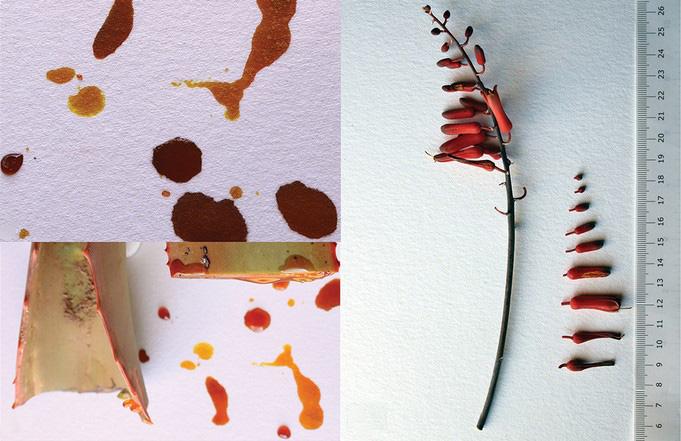
Credit: Barkworth M, et al.


Aloe sanguinalis, or Somali Red Aloe, forms large, conspicuous clumps and has blood red sap. Its can easily be spotted from the road, but the species has only just been named and described in the open access journal PhytoKeys.

It remains a mystery how this beautiful and showy aloe species has remained undescribed by science for so long, but one of the theory is that the plant was ‘hiding in plain sight”‘ in an area not usually known for its hight biological diversity.

The locals in the area have long known that the plants were different from other kinds of “Dacar”, (the Somali name for Aloes) in the region and were referring to them as “Dacar cas” or “Red aloe”.

Similarly, the scientific name for the new species – Aloe sanguinalis – is based on one of its most distinct characters, its bright red color, coming from the peculiar blood-red sap the plant produces. The leaves also become reddish as they mature.

The story of the formal recognition of “Dacar cas” or Aloe sanguinalis, however, began when Ahmed Awale, a leading Somaliland environmentalist, spotted the large, reddish clumps plants, while driving through the country on behalf of Candlelight, an NGO focused on the environment, education, and health.

Later on, when the plant came to the attention of Mary Barkworth, a botanist interested in building botanical capacity in Somaliland. After listening to Ahmed, the two of them began looking formally into the possibility that “Dacar cas” was, indeed, an undescribed species. They were soon convinced it was. After the initial excitement, the next step required demonstrating that “Dacar Cas” differs from all the other 600+ known species of Aloe. That step took longer, but finally it has been done.

“This news comes from a region which had experienced periods of conflict and instability, climate change effects and accelerated environmental degradation, whereby much of the people’s attention has been focused on promoting livelihoods and resilience. With this positive piece of information we hope that we inspire scientists to further explore the area,” explains Dr Barkworth.

The new species is currently known from only two locations, but it is hoped that naming and sharing pictures of it online will encourage discovery and documentation of additional locations. Images and locality information for new locations are welcome at [email protected] or [email protected].

###

Original Source:

Barkworth ME, Awale AI, Gelle FJ (2019) Dacar Cas/Somali Red Aloe: a new species of Aloe (Asphodelaceae) from Somaliland. PhytoKeys 117: 85-97. https://doi.org/10.3897/phytokeys.117.28226

Media Contact
Mary Barkworth
[email protected]

Related Journal Article

http://dx.doi.org/10.3897/phytokeys.117.28226

Tags: BiodiversityBiologyPlant Sciences
Share12Tweet8Share2ShareShareShare2

Related Posts

Single mother must adapt swiftly — the survival of her colony depends on it — Biology

Single mother must adapt swiftly — the survival of her colony depends on it

May 15, 2026
Why Are Nearly Everyone Right-Handed? It Might Be Linked to How We Learned to Walk — Biology

Why Are Nearly Everyone Right-Handed? It Might Be Linked to How We Learned to Walk

May 15, 2026

Excessive Neuronal Activity Initiates Severe Autoimmune Brain Disorder

May 15, 2026

Precision Anti-Aging Strategies Focus on Eliminating Harmful Senescent Cells While Preserving Beneficial Ones

May 15, 2026
Please login to join discussion

POPULAR NEWS

  • Research Indicates Potential Connection Between Prenatal Medication Exposure and Elevated Autism Risk

    844 shares
    Share 338 Tweet 211
  • New Study Reveals Plants Can Detect the Sound of Rain

    730 shares
    Share 291 Tweet 182
  • Salmonella Haem Blocks Macrophages, Boosts Infection

    62 shares
    Share 25 Tweet 16
  • Breastmilk Balances E. coli and Beneficial Bacteria in Infant Gut Microbiomes

    58 shares
    Share 23 Tweet 15

About

We bring you the latest biotechnology news from best research centers and universities around the world. Check our website.

Follow us

Recent News

Metabolic Stress Worsens Parkinson’s via Mitochondrial Ferroptosis

Four New Hydroxyl Fatty Acids from Bacillus sp.

Validating B-IPQ Short Form for Older Colombians

Subscribe to Blog via Email

Enter your email address to subscribe to this blog and receive notifications of new posts by email.

Join 82 other subscribers
  • Contact Us

Bioengineer.org © Copyright 2023 All Rights Reserved.

Welcome Back!

Login to your account below

Forgotten Password?

Retrieve your password

Please enter your username or email address to reset your password.

Log In
No Result
View All Result
  • Homepages
    • Home Page 1
    • Home Page 2
  • News
  • National
  • Business
  • Health
  • Lifestyle
  • Science

Bioengineer.org © Copyright 2023 All Rights Reserved.