


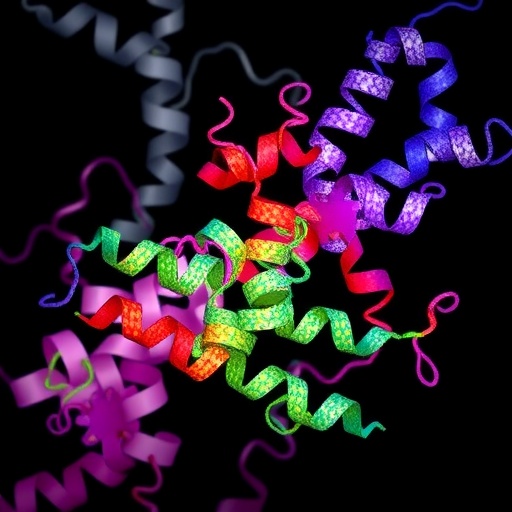
In an illuminating recent study, researchers have spotlighted a groundbreaking discovery regarding TRPM5, a member of the transient receptor potential (TRP) channels family. This channel is crucial for detecting changes in temperature, pain, and even taste. The study, led by Ruan and his colleagues, presents an innovative viewpoint that focuses on a single allosteric site that integrates the processes of activation, modulation, and inhibition within the TRPM5 channel. This pivotal finding not only enhances our understanding of the TRP channels but also proposes novel avenues for therapeutic interventions targeting various physiological and pathological conditions.
TRPM5 is primarily known for its role in taste sensation, particularly in sweet, umami, and bitter taste perception. This channel functions as a calcium-permeable cation channel that is activated by intracellular calcium levels. Traditional models of signal transduction highlight dichotomous processes of channel activation and regulation. However, the authors of this study challenge these paradigms by suggesting a more unified perspective, emphasizing that a single allosteric site is capable of orchestrating diverse functional responses in TRPM5.
The significance of allosteric regulation in biological systems has been long established, particularly concerning G-protein coupled receptors and enzymes. Nevertheless, its implications for ion channels, particularly for TRP channels, have been relatively underexplored. The research sheds light on this allosteric site as a multifunctional hub that governs the intricate dance of activation, modulation, and inhibition, capable of adapting to a variety of cellular environments and needs. This discovery heralds a transformative shift in how scientists might interpret the regulation of ion channel activities, often seen as strictly bifurcated.
Structural analysis reveals that the allosteric site in TRPM5 is uniquely situated to facilitate these multifaceted roles. The research team employed advanced techniques such as cryo-electron microscopy, providing high-resolution insights into the channel’s structural configuration. Through these methodologies, it was determined that this site is not merely a passive regulator, but a dynamic entity that can shift in response to different physiological stimuli. The researchers propose that this dynamic nature allows TRPM5 to function effectively in various cellular contexts, adapting its activity in response to the biochemical milieu.
In investigating the functional implications of this allosteric site, the researchers demonstrated that specific ligands could fine-tune the channel’s activity. In particular, allosteric modulators were shown to enhance or suppress TRPM5 channel activity, depending on the cellular conditions. This opens potential pathways for the development of pharmacological agents that could selectively manipulate TRPM5 activity, which could have wide-ranging applications in the field of taste modification and neurological disorders.
Furthermore, the study illuminated the interplay between TRPM5 and other signaling pathways within the cell. It posits that this allosteric site could serve as a critical junction integrating signals from various pathways, which could explain some of the functional complexities associated with TRPM5. For instance, how taste receptor signaling crosses paths with general cellular signaling processes has been a topic of considerable intrigue among biologists. This intricate relationship underscores the importance of allosteric sites in ensuring that ion channels such as TRPM5 operate optimally within the broader context of cellular function.
The findings evoke strong implications for our understanding of taste perception and its associated disorders. Dysregulation of TRPM5 activity may contribute to altered taste perception, as seen in patients with diabetes or those undergoing chemotherapy. With the potential for pharmaceutical modulation of TRPM5 activity, researchers might be able to design strategies to reverse blunted taste responses or enhance gustatory sensations in clinical settings.
Allosteric modulation could also pave the way for innovative approaches in treating broader functional challenges related to calcium signaling in different cell types. This is indeed powerful, considering calcium plays a fundamental role in numerous cellular processes, including muscle contraction, neurotransmitter release, and gene expression. By targeting allosteric sites in ion channels, like TRPM5, scientists could harness a more refined method for therapeutics, which may minimize side effects and enhance specificity compared to traditional drug design strategies.
Another fascinating aspect of this research lies in the convergence of computational modeling and experimental data, allowing the team to predict behaviors of the channel in a variety of scenarios. By employing state-of-the-art simulations alongside experimental verification, the researchers bolster their assertions regarding the flexibility and adaptability of TRPM5 under physiological conditions. Such integrative methodologies signify a step forward in the field of structural biology, illustrating the power of combining various scientific disciplines to unravel complex biological phenomena.
As the roles of TRPM5 become more elucidated, it prompts a reassessment of other ion channels. The insights gained from this study may encourage researchers to investigate allosteric sites in the broader TRP family and beyond, looking for similar patterns of regulation that merge different functional responses within a single site. The implications for drug discovery in targeting these allosteric sites could be profoundly transformative across multiple biomedical fields.
Looking ahead, this pioneering work opens up numerous avenues for future research. The relationship between the allosteric regulation of TRPM5 and its physiological role in taste and beyond necessitates further exploration. As researchers dive deeper into the mechanisms of TRP channel function, it promises to redefine both our understanding of sensory biology and how we approach clinical challenges related to taste disorders and other calcium-related conditions.
In conclusion, the research conducted by Ruan et al. brings to light a significant advancement in our understanding of TRPM5 through the concept of a single allosteric site unifying activation, modulation, and inhibition. This paradigm shift in thinking about TRP channel regulation not only adds depth to the field of ion channel research but also fosters new directions for therapeutic innovations. The future of TRPM5 research looks promising, with the potential to revolutionize how we understand taste, signal integration, and calcium signaling across various physiological contexts.
Subject of Research: Allosteric regulation of TRPM5.
Article Title: A single allosteric site merges activation, modulation and inhibition in TRPM5.
Article References: Ruan, Z., Lee, J., Li, Y. et al. A single allosteric site merges activation, modulation and inhibition in TRPM5. Nat Chem Biol (2026). https://doi.org/10.1038/s41589-025-02097-7
Image Credits: AI Generated
DOI: https://doi.org/10.1038/s41589-025-02097-7
Keywords: TRPM5, allosteric regulation, ion channels, calcium signaling, taste perception.
Tags: allosteric regulation in ion channelscalcium-permeable cation channelsion channels allosteric modulationphysiological roles of TRPM5research on TRP channel mechanismstaste perception and TRPM5therapeutic interventions for TRP channelstransient receptor potential channelsTRPM5 allosteric site regulationTRPM5 channel activation and inhibitionTRPM5 in sweet and umami tasteunified model of signal transduction



