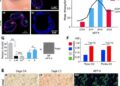
A team of tiny molecules that work together to make cancer cells less aggressive has been discovered by Australian researchers.
The molecules, called microRNAs, could potentially be combined with chemotherapy to more effectively block cancer growth.
The teamwork was discovered by systems biology research, which applies mathematical and computational science to study complex regulatory networks within cells.
The research, published in this month's issue of Cell Systems, was led by Walter and Eliza Hall Institute scientists Dr Melissa Davis and Dr Joseph Cursons, along with collaborators at the University of South Australia.
At a glance
- Our researchers have used systems biology to find a team of microRNA molecules that can reverse a 'switch' in cancer cells, making the cells less aggressive in preclinical models.
- The molecules could potentially be used as part of a combination therapy for cancer, leading to safer and more effective cancer treatments.
- Working as a team allows the dose of each individual player to be reduced, which may be more readily achievable in the body and lead to fewer side effects.
The study focused on a reversible switch, called epithelial-mesenchymal transition (EMT), that allows cells to detach and spread through the body. Dr Davis said cancer cells that have made this switch are often more deadly and difficult to treat.
"Tumours that have undergone EMT are often more aggressive, more likely to metastasise and respond poorly to standard chemotherapy. EMT is linked to poor outcome in many cancers, particularly breast cancer," Dr Davis said. "Our goal is to shift cancer cells back to a less aggressive state where they are more sensitive to treatment."
MicroRNAs are small DNA-like molecules encoded in the genome that can alter the expression of other genes. The research team focused on a microRNA called miR-200c that has been shown to partially reverse EMT – potentially reducing the spread of tumours.
"We found that the main player, miR-200c, is much more powerful at reversing EMT when it cooperates with other microRNAs," Dr Davis said.
Dr Cameron Bracken from the University of South Australia's Centre for Cancer Biology said that microRNAs could potentially be used as a treatment for cancer.
"There is tremendous hope that microRNAs can be used as therapy for cancer sufferers, ultimately leading to safer and more effective treatment strategies," he said.
Dr Cursons said that by combining the molecules in an 'all-star team,' they could reduce the amount of each individual player, making potential therapies safer and more feasible.
"Laboratory experiments are usually performed with far greater amounts of microRNAs than ever seen in the body, triggering unintended consequences. Combining the molecules in a team meant we could use less of each player and avoid these dangerous side effects," he said. "These small changes in microRNA level would also be easier to achieve therapeutically."
Dr Davis believes the microRNAs they discovered will be most useful in combination with other standard treatments.
"This team of microRNAs could help shift cancer cells to a state where they are more susceptible to being killed by standard treatments, advancing the goal of destroying the cancer cells and making it less likely for patients to develop drug resistance," she said.
Dr Davis said their systems biology approach had allowed them to uncover subtle relationships between molecules that had not been appreciated before.
"If we had just looked at the microRNAs one at a time, we would not have detected this cooperation," Dr Davis said. "This shows the value of using a holistic, network-based approach to unravel the complexities of cancer."
###
The research was supported by the National Breast Cancer Foundation, the Australian Research Council, the National Health and Medical Research Council, the Cancer Council, the Royal Adelaide Hospital.
Media Contact
Arunee Wilson
[email protected]
64-475-751-811
@WEHI_research
http://www.wehi.edu.au/
http://dx.doi.org/10.1016/j.cels.2018.05.019