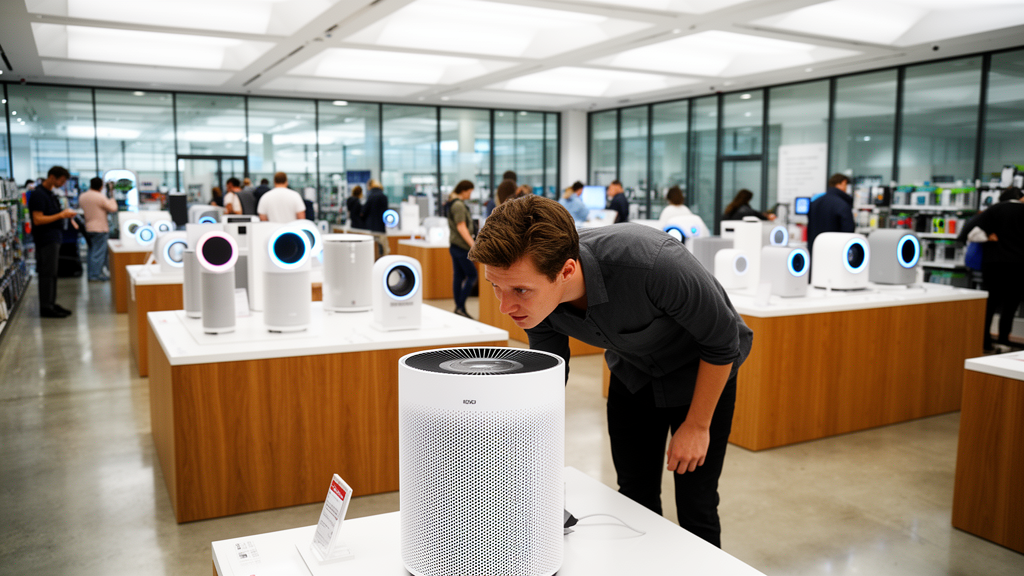
Public interest in indoor air quality interventions rose markedly across Asia between 2018 and 2023, reflecting a combination of evidence-based consumer evaluation and unverified social herd behavior during major health and environmental crises. An exploratory study published in City and Built Environment examined search traffic patterns and consumer queries across Indonesia, Malaysia, Singapore, and Japan using normalized Google Trends search data. The research revealed that sudden spikes in demand for air purifiers were frequently triggered by urgent external events, such as the acute waves of the COVID-19 pandemic and regional air pollution emergencies. However, consumer responses diverged substantially across national borders, highlighting profound geographic differences in public sensitivity to media reporting, technical scrutiny of device mechanisms, and susceptibility to collective purchasing trends.
Indoor residential environments exert a direct influence on human health, especially within poorly ventilated urban structures where elevated levels of indoor pollution create unsafe living conditions. Given that urban populations spend the vast majority of their time indoors, indoor air quality has drawn growing public concern as an essential component of overall occupant well-being. Exposure to fine particulate matter known as PM2.5 has been consistently linked to severe respiratory issues, including bronchial asthma exacerbations that lead to elevated hospital visits and asthma-related deaths. Furthermore, ambient PM2.5 pollution accounted for an estimated 3.2 million premature deaths worldwide in 2010, predominantly stemming from cardiovascular disease. While common mitigation strategies include source emission reduction, ventilation, and mechanical air purification, standard natural ventilation remains inadequate during episodes of severe outdoor atmospheric pollution or in buildings with insufficient architectural design.
In response to indoor air quality hazards and airborne virus transmission, air purifiers have gained widespread adoption in residential and commercial settings. These devices deploy two principal technological systems: capture-type systems that eliminate airborne contaminants via mechanical filtration or adsorption using high-efficiency particulate air (HEPA) filters and activated carbon, and reactive-type systems that eliminate gaseous pollutants through chemical reactions or ionization mechanisms such as photocatalysis, ultraviolet sterilization, and chemical catalysis. Prior investigations cited in the study demonstrated that air purifiers are especially effective at improving indoor air quality in enclosed spaces that possess limited natural ventilation. Empirical models have indicated that air purifiers can reduce premature deaths associated with indoor PM2.5 exposure by 43.47 to 86.46 percent, while computational fluid dynamics research showed reductions of up to 94.27 percent in accumulated viral dose and 53.2 percent in airborne particle count concentrations in confined indoor environments.
Despite documented technical capabilities, the broader surge in air purifier adoption has been accompanied by consumer herd behavior, in which individuals follow the actions of the majority without engaging in independent analysis. To evaluate these collective behavioral dynamics, the research team analyzed normalized Google Trends search volume index data from 2018 through 2023, where values are scaled from 0 to 100 relative to peak search volume for a specified region and timeframe. This approach was selected because normalized search data provides real-time tracking of public interest without the temporal delays or social desirability bias inherent in traditional survey techniques. The researchers tracked the primary search term air purifier alongside related queries and topics, cross-referencing search spikes with major news coverage and environmental milestones across Indonesia, Malaysia, Singapore, and Japan.
The search volume analysis demonstrated stark differences in baseline public interest and stability across the four examined nations. Japan maintained the highest and most consistent daily average search volume of 56, exhibiting a wide interquartile range with relatively few statistical outliers, which signifies stable ongoing interest rather than reactive surges. In contrast, Malaysia recorded an average daily search volume of 33, while Singapore registered a daily average of 34, with both countries displaying notable peaks that reached roughly three times their daily averages. Indonesia exhibited the lowest overall search variability, marked by a narrow interquartile range and a modest daily average search volume of only 18, yet it experienced dramatic, isolated search spikes during prominent crisis periods that deviated sharply from baseline search traffic.
The timing and underlying motivations of peak search periods revealed divergent regional priorities regarding health crises versus atmospheric pollution. In Malaysia and Singapore, search interest peaked simultaneously in September 2019, driven by intense public concern over regional haze and severe atmospheric pollution. Common Malaysian search queries emphasized air quality and clean air delivery rate, a standardized metric that measures the volumetric effectiveness of air purifiers in removing specific pollutants. In Singapore, 2019 searches focused heavily on air cleaners, respirators, PM2.5, and protective masks, before evolving by June 2023 toward comparative queries assessing dehumidifiers versus air purifiers as well as ionization and water filtration systems. In contrast, Japan experienced its primary search peak in May 2020 during the early phase of the COVID-19 pandemic, maintaining an analytical focus on device technologies such as photocatalysis, citric acid, and hypochlorous acid.
Indonesia exhibited a distinctly different trajectory, where public interest surged almost two years later, reaching an extraordinary peak in July 2021 before experiencing subsequent waves of interest in February 2022 and August 2023. An analysis of Indonesian news coverage across leading digital portals, including detik.com, kompas.com, and tempo.com, demonstrated an exceptionally strong correlation between media reporting and public search behavior. During the mid-2021 COVID-19 surge, media reports heavily emphasized airborne viral transmission and government directives, specifically the Instruction of the Minister of Home Affairs Number 15 of 2021 recommending air purifiers with HEPA filters. Concurrently, public figures, celebrities, and even a government ministry promoted unverified wearable eucalyptus necklaces and portable necklace air purifiers, triggering an immediate surge in consumer demand despite an absence of scientific evidence validating their efficacy against viral transmission.
Public discourse and search queries within Indonesia evolved across successive crisis episodes, reflecting shifts in public awareness and risk perception. During the February 2022 Omicron wave, queries concerning necklace purifiers remained prominent, but media reporting increasingly featured public health experts questioning the protective capabilities of wearable air filtration devices, fostering growing consumer skepticism alongside lingering curiosity. By August 2023, public attention shifted completely from pandemic concerns toward an acute air pollution crisis in Jakarta, where fine particulate concentrations reached 18.2 times the World Health Organization air quality standard. During this third observed period, Indonesian search behavior matured into a more rational information-seeking pattern, dominated by queries regarding particulate matter, indoor air quality, HEPA filtration efficacy, product reviews, and technical specifications, mirroring the analytical consumer approaches observed earlier in Japan.
The authors conceptualized these national patterns through an integrated behavioral framework comprising three core determinants: driving factors, sensitivity factors, and herd behavior. Driving factors represent external triggers, where atmospheric pollution served as the primary catalyst in Malaysia and Singapore, COVID-19 acted as the chief driver in Japan, and both crises sequentially mobilized public attention in Indonesia. Sensitivity factors describe how readily populations absorb external social cues and media narratives, with Japan exhibiting low sensitivity, Malaysia and Singapore demonstrating moderate sensitivity supported by public health literacy, and Indonesia showing high sensitivity driven by regional disparities in education and reactive information consumption. Herd behavior operated prominently during acute fear and uncertainty, where panic and limited technical knowledge prompted individuals to rely on collective social heuristics, whereas environmental pollution crises allowed consumers greater time to deliberate and evaluate product specifications.
The findings underscore that while air purifiers represent proven technical tools for mitigating indoor particulate pollution and reducing viral concentrations, unguided public adoption frequently fosters inefficient purchasing decisions and wasteful expenditure. The researchers emphasize that public health agencies and manufacturers must move beyond sensationalized promotion and instead implement responsible marketing that transparently outlines device mechanisms, filtration limits, and environmental room requirements. Policymakers can leverage centralized consumer platforms that present standardized technical specifications and clean air delivery rates to counter misinformation and curtail panic-driven herd behavior. Furthermore, future investigations employing experimental behavioral methodologies across wider geographic regions will be critical to establishing culturally tailored communication strategies that foster informed, sustainable indoor air quality decisions.
Subject of Research: Consumer search trends and behavioral patterns in air purifier adoption during health and environmental crises across Asia
Article Title: The perception of air purifiers on indoor air quality: effective or human herd behavior?
Article References: Utami, I. I., & Baroto, W. A. (2025). The perception of air purifiers on indoor air quality: effective or human herd behavior?. City and Built Environment, 3(1), Article 6. https://doi.org/10.1007/s44213-025-00047-6
Image Credits: AI Generated
DOI: 10.1007/s44213-025-00047-6
Keywords: air purifiers, indoor air quality, herd behavior, Google Trends, COVID-19 pandemic, air pollution, particulate matter, HEPA filters, consumer behavior, Indonesia, Japan, Malaysia, Singapore, clean air delivery rate, media influence, public health communication
News Source: Russell Cooper. (November 12, 2026). Air Purifier Demand Surges During Crises Driven by Technical Evaluation and Herding. Scienmag.