An artificial intelligence tool designed to analyze patients’ spontaneous narratives about injuries that sent them to the emergency room can predict who will later develop post-traumatic stress disorder, according to a new study led by researchers at NYU Langone Health. The study, published in Nature Communications on November 9, 2026, demonstrates that the tool, named PREVIA, correctly identified more than 95.4 percent of at-risk patients in a cohort of 145 emergency department patients.
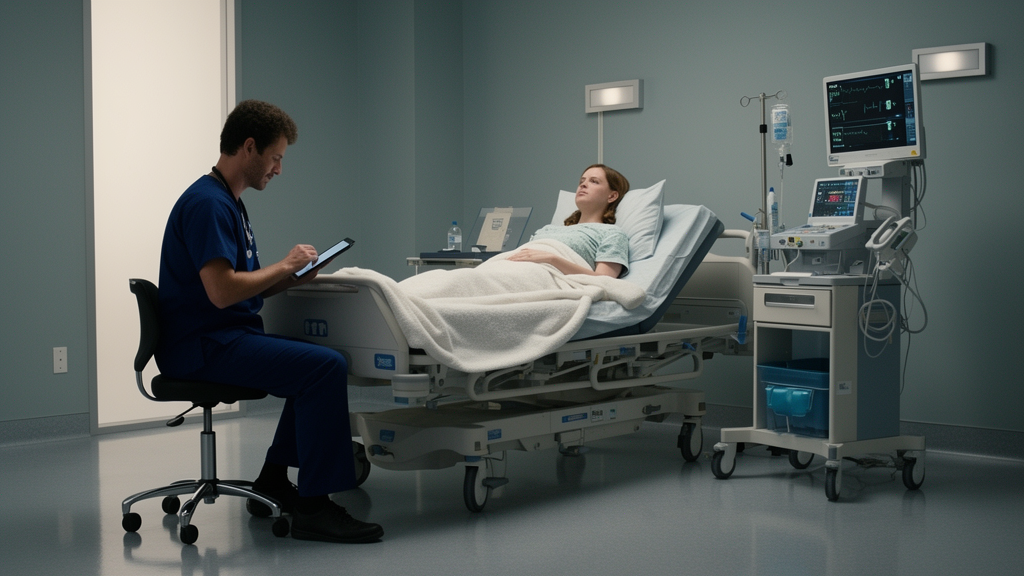
The research addresses a significant gap in mental health screening for trauma survivors. Approximately 43 million patients are admitted to US emergency departments each year with physical injuries, and past studies indicate that more than a quarter of these individuals develop PTSD. Despite the high prevalence, clinicians in emergency settings face severe time constraints, typically having only 15 to 20 minutes per patient, which often rules out the use of standard screening questionnaires. This time pressure forces medical staff to prioritize immediate medical concerns over lengthy mental health assessments, leaving many at-risk patients without early intervention opportunities.
PREVIA was developed to bridge this gap by leveraging the psychological signals present in a patient’s answer to a single, routine care question: “What brought you to the ED?” Senior study author Katharina Schultebraucks, PhD, an associate professor in the departments of psychiatry and population health at NYU Langone, noted that this is the first study to show that such spontaneous answers carry enough psychological signal to forecast PTSD risk one month later. The tool serves as an AI screener that identifies at-risk patients and explains the reasoning behind its predictions, thereby avoiding the addition of intake time in busy emergency rooms.
The study examined the capabilities of generative AI, which predicts options for the next word in a sentence based on how billions of people used that word in context. This sensitivity to language allows the models to analyze a person’s description of their trauma to find patterns linked to their risk of developing PTSD. The patients’ answers were recorded and transcribed for analysis, providing a rich dataset for the AI models to process. The first month after trauma is identified as a key window for finding those at risk, as many patients are no longer in contact with the hospital after this period, making early identification crucial for timely care approaches.
PREVIA is designed as a pipeline of steps that use different AI tools based on their specific strengths. For instance, the Llama model tends to emphasize signs of PTSD risk, while the Mistral model highlights protective and contextual factors that could buffer against it. The tool’s first layer scans the language of a patient’s narrative for symptoms that happen during the initial trauma, such as loss of control or amnesia, as well as early symptoms that appear while the person is in the emergency department, like feeling disconnected from the body.
The second layer of the AI tool weighs risk factors such as pre-existing mental health problems or lower socioeconomic status, alongside protective factors such as coping skills or strong social support. A third AI model synthesizes these assessments into a structured summary, reducing the chance that any single model dominates the results. A final layer combines this summary with demographic information, including age and sex, trauma type, and known PTSD prevalence rates to produce a risk score with a plain-language explanation.
In a head-to-head test, the AI tool flagged 100 percent of 30 cases from the same patient group that went on to develop PTSD, while an emergency department clinician specializing in PTSD correctly identified 89 percent of these cases. Experiments confirmed that this three-layer design consistently outperformed simpler configurations across most performance metrics. Unlike some AI systems that succeed or fail for unknown reasons, PREVIA explains its reasoning and grounds predictions in established PTSD risk factors. The results with the tool were also validated by comparing them to diagnoses made for the same cases using the Clinician-Administered PTSD Scale for DSM-5, the gold standard clinical interview for diagnosing PTSD.
The study highlights the limitations of current screening methods. Current questionnaires, such as the Peritraumatic Dissociative Experiences Questionnaire and the Posttraumatic Adjustment Scale, effectively forecast PTSD development. However, only about 28 percent of emergency departments routinely screen for PTSD at all, and only two-thirds of those use validated tools. This likely reflects overcrowding and limited clinician time, which forces clinicians to prioritize immediate medical concerns. The emergency department is often the only point of contact a trauma survivor has with the healthcare system before symptoms become much harder to treat, making it a critical site for intervention.
Dr. Schultebraucks, who is also co-director of computational psychiatry at NYU Grossman School of Medicine, added that by identifying at-risk patients at that first encounter, PREVIA could open a window for timely care approaches when preventive intervention is most effective. The tool was built on open-source models with no training or fine-tuning required, which means other hospitals can test it independently without access to proprietary software or the study’s patient data.
The study was funded by the National Institute for Mental Health grant R01 MH129856, with Dr. Katharina Schultebraucks as the principal investigator. Along with Dr. Schultebraucks, authors of the study from NYU Langone included Victoria Mueller, Jyoti Yadav, Annie Farnsworth, Charlotte Hilberdink, Sapir Gershov, and Arieh Shalev in the Department of Psychiatry, Eric Oermann in the Department of Neurosurgery, and Stephen Wall in the Ronald O. Perelman Department of Emergency Medicine.
Subject of Research: AI-based prediction of PTSD risk from emergency room trauma narratives
Article Title: AI predicts PTSD risk based on stories about what brought patients to the emergency room
Article References: AI predicts PTSD risk based on stories about what brought patients to the emergency room. Original publication (Bibliographic details unavailable.)
Image Credits: AI Generated
DOI: Not provided
Keywords: Artificial Intelligence, PTSD, Emergency Medicine, Mental Health, Natural Language Processing, Clinical Prediction, Trauma Care, NYU Langone, Nature Communications, Risk Assessment, predicts, risk
News Source: Denise Maddox. (November 14, 2026). AI Tool Predicts PTSD Risk From Emergency Room Narratives. Scienmag.