In an age where technology continues to transform healthcare, the integration of artificial intelligence (AI) into medical diagnostics stands out as a particularly revolutionary development. The latest research, led by a team of scientists including Altmann-Schneider, Geiger, and Kellenberger, examines the efficacy of multiple AI software applications aimed at automating fracture detection in pediatric patients. This research, published in the esteemed journal Pediatr Radiol, marks a significant advance in the intersection of technology and medicine, particularly in the realm of pediatrics, where timely diagnosis can significantly impact outcomes.
The ability to accurately identify fractures in children is critical, as they often experience injuries due to various factors, including sports activities, play-related accidents, and even simple misadventures. However, pediatric fractures can be quite challenging to detect. Pediatric anatomy, which is not identical to that of adults, can complicate the diagnosis. Traditional imaging methods, such as X-rays, may not always provide a straightforward interpretation, leading to the potential for missed diagnoses. This gap in diagnostic precision underscores the necessity for innovative solutions that can enhance the radiological assessment of skeletal injuries in young patients.
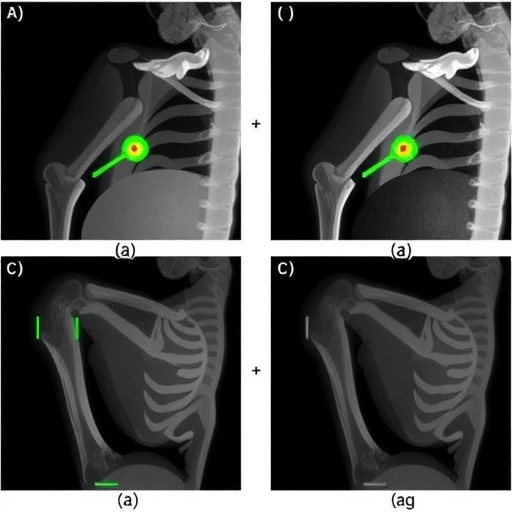
Recent advancements in AI technology have led to the development of sophisticated software capable of analyzing imaging data with remarkable speed and accuracy. The study referenced sheds light on a comparison of different AI applications that have been designed for fracture detection in pediatric cases. The researchers meticulously evaluated the performance of these multivendor AI systems, scrutinizing their ability to correctly identify fractures while minimizing both false positives and false negatives.
Understanding the underlying technology is essential to grasp the significance of this study. These AI systems utilize deep learning algorithms, which are modeled after the networks of neurons in the human brain. By training these systems on vast datasets of annotated medical images, the AI algorithms learn to recognize intricate patterns and nuances that are indicative of fractures. This capability not only enhances the accuracy of fracture detection but also alleviates some of the burdens placed on radiologists, who are often inundated with images to review.
One of the key benefits highlighted in the research is the consistency of AI diagnoses. Unlike human practitioners, who may exhibit variability in their interpretations based on experience, fatigue, or external pressures, AI systems offer a level of objectivity that can be incredibly valuable in clinical settings. This consistency can be particularly important in pediatric radiology, where a misdiagnosis could lead to significant complications for a child, impacting their health and quality of life.
In conducting the study, the researchers employed a rigorous methodology to ensure that their findings were both valid and reliable. They assessed a broad spectrum of AI software from different vendors, creating a comparative framework that would allow for meaningful insights to emerge regarding their strengths and weaknesses in fracture detection. This approach not only contributes to the academic conversation surrounding AI in medicine but also serves as a guide for healthcare providers considering the integration of AI tools into their diagnostic workflow.
Moreover, the implications of this research extend far beyond the realm of academia. As hospitals and clinics increasingly adopt AI solutions, understanding their performance and potential limitations will be crucial for clinicians. The findings of the study serve as an invaluable resource for medical professionals, providing them with evidence-based information about which AI tools may enhance their diagnostic capabilities and improve patient care.
In addition to enhancing diagnostic accuracy, the use of AI in pediatric radiology also holds promise for streamlining workflows. By automating the process of fracture detection, radiologists can focus their expertise on more complex cases that require nuanced clinical judgment, thereby optimizing resource allocation within healthcare facilities. This could ultimately lead to faster treatment times for children with fractures, ensuring that they receive the care they need without unnecessary delays.
However, the incorporation of AI into clinical practice does come with its own set of challenges. There are ongoing discussions about the ethical implications of relying on AI for clinical decision-making, as well as concerns regarding patient data privacy and software reliability. The study seeks to address some of these concerns by highlighting the importance of transparency and rigorous testing in the deployment of AI systems. It is crucial that healthcare providers feel confident in the technologies they use, understanding their limitations as well as their advantages.
The broader adoption of AI in pediatric radiology represents a critical step towards modernizing healthcare systems and improving outcomes for young patients. This research underscores the urgency of developing a framework for the responsible implementation of AI technologies that balances innovation with safety and ethical considerations. As pediatricians, radiologists, and researchers continue collaborating, the integration of AI in fracture detection is poised to enhance the overall efficacy of pediatric care.
In conclusion, the study conducted by Altmann-Schneider and colleagues paves the way for a future where AI plays an integral role in pediatric diagnostics. As the medical community continues to explore the potential of AI, further discussions must take place around regulatory oversight, continual evaluation of AI’s impact on patient outcomes, and the need for ongoing education for clinicians on the use of these cutting-edge tools. This research not only stands at the forefront of technological advancement in medicine but also represents a commitment to improving patient care, particularly for the most vulnerable populations—our children. The richness of the findings will surely fuel further investigation and dialogue, leading to better, quicker, and more accurate diagnoses for pediatric patients worldwide.
Subject of Research: Automated Fracture Detection in Pediatric Patients Using AI Software
Article Title: Multivendor comparison study of artificial intelligence software for automated fracture detection in paediatric patients.
Article References:
Altmann-Schneider, I., Geiger, L.S., Kellenberger, C.J. et al. Multivendor comparison study of artificial intelligence software for automated fracture detection in paediatric patients. Pediatr Radiol (2025). https://doi.org/10.1007/s00247-025-06461-6
Image Credits: AI Generated
DOI: 10.1007/s00247-025-06461-6
Keywords: Artificial Intelligence, Pediatric Fractures, Radiology, Diagnostic Automation, Medical Imaging, Deep Learning, Healthcare Technology, AI Software Evaluation.
Tags: AI in pediatric fracture diagnosisartificial intelligence in healthcareautomated fracture detection softwarechallenges in pediatric fracture identificationcomparison of AI fracture detection systemsefficacy of AI in medical imagingimaging data analysis in medicineimpact of timely fracture diagnosisinnovative solutions for bone injuriespediatric radiology advancementstechnology in medical diagnosticstraditional imaging methods for children