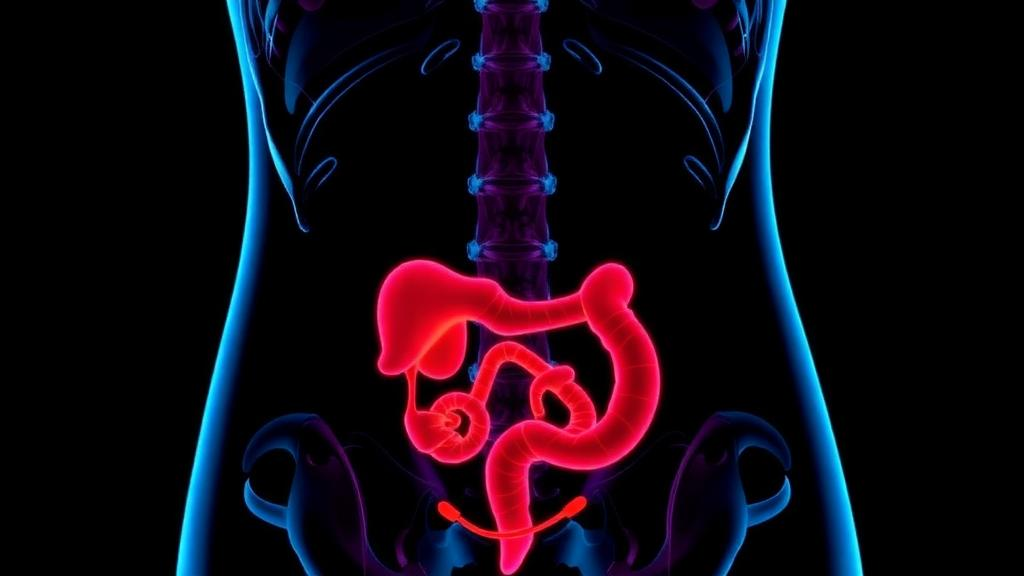
For women undergoing radiotherapy for cervical cancer, one of the most feared complications is damage to the lower gastrointestinal tract. Radiation proctitis and related bowel toxicity can cause chronic pain, bleeding, and urgency that persist long after treatment ends, eroding quality of life in patients who have already survived a cancer diagnosis. Clinicians have long wished for a way to know, before the first radiation fraction is delivered, which patients are most likely to develop these injuries. A wave of artificial intelligence and statistical models promises exactly that—and a new systematic review now takes stock of how close that promise is to reality.
The review, published in BMC Cancer by researchers at Shanxi Provincial People’s Hospital in Taiyuan, China, examined risk prediction models for lower gastrointestinal radiation toxicity in cervical cancer radiotherapy. The team searched eight Chinese and international databases through June 29, 2026, and identified nineteen reports describing twenty-nine distinct final prediction models. The summed reported sample size reached 3,416 participants, although the authors caution that this figure is not a count of unique patients, because participants from the same cohort appeared in two separate reports. Reported toxicity incidence ranged widely, from 19.8 percent to 61.35 percent across the included studies.
Technically, the field has branched into three modeling families. Classical regression models remain common, but the review documented a growing reliance on machine learning approaches such as support vector machines, random forests, and decision trees, as well as deep learning architectures including multilayer perceptrons. The predictors feeding these models spanned five categories: clinical variables, dosimetric parameters derived from dose-volume histograms, laboratory values, imaging features, and other omics data. Radiomics—the quantitative extraction of texture and shape features from CT and other scans—featured prominently, with one multicentre study building a dual-radiomics model that combined features from different imaging sources.
The headline performance numbers look impressive at first glance. Reported area under the curve, or AUC, values and C-index estimates ranged from 0.588 to 0.975. An AUC of 0.5 indicates a model no better than chance, while values approaching 1.0 suggest near-perfect discrimination between patients who develop toxicity and those who do not. But the review’s authors stress that these figures came from heterogeneous endpoints and evaluation settings—some models predicted acute toxicity, others late toxicity, and still others broader gastrointestinal outcomes—and are therefore not directly comparable. A 0.975 AUC on one narrowly defined endpoint says little about how a different model will perform on a different patient population.
That comparability problem points to the review’s central finding: validation. Most performance estimates in the nineteen reports came from development cohorts or internal validation, techniques that test a model on data it has effectively already seen. Only one multicentre study reported independent external validation, the gold standard that tests whether a model generalizes to entirely new patients at new institutions. In that study, the dual-radiomics model achieved an external AUC of 0.755, a deep-learning model reached 0.773, and an integrated nomogram—a user-friendly scoring chart combining multiple predictors—performed best at 0.803. Those are respectable numbers, but they fall well short of the dazzling figures reported in development settings, a pattern familiar to anyone who has watched machine learning models stumble when moved from the lab to the ward.
Discrimination is only half the story, however. A model that ranks patients correctly can still misjudge absolute risk, which is where calibration comes in. Calibration curves, which plot predicted probabilities against observed outcomes, and decision-curve analyses, which estimate the clinical net benefit of acting on a model’s predictions, were available in several reports. Yet the review found that extraction of calibration, implementation, and reproducibility information remained incomplete across the literature. In other words, even when a model discriminates well, the evidence base often cannot answer whether its stated risk percentages are trustworthy or whether acting on them would actually help patients.
The methodological assessment used PROBAST + AI—the Prediction model Risk Of Bias ASsessment Tool adapted for artificial intelligence studies—and data extraction informed by the CHARMS framework, which is designed specifically for systematic reviews of prediction modeling studies. The recorded assessments identified substantial concerns in the analysis domain, which covers how predictors, outcomes, and sample sizes are handled during model construction. Small cohorts with too few toxicity events relative to the number of predictor variables—a problem quantified as events per variable—can inflate apparent performance and produce models that collapse when confronted with new data. The review also noted that it was not prospectively registered, and that heterogeneity across studies precluded any meta-analysis of model performance.
The authors’ conclusion is blunt: external validation remains limited, and the available evidence does not establish readiness for routine clinical implementation. This matters because cervical cancer remains a major global health burden, and radiotherapy—often delivered as concurrent chemoradiotherapy—is a mainstay of treatment. Normal tissue complication probability models, which attempt to translate dose distributions into toxicity risk, have been part of radiation oncology for decades, but the review shows that the newer generation of AI-driven tools has not yet cleared the bar of transparent specification, appropriate validation, and calibration assessment that regulators and clinicians require before model-guided care becomes standard.
The path forward, according to the review, involves several concrete demands. Future studies should provide transparent model specifications so that others can reproduce the algorithms, perform appropriate validation in external cohorts, assess calibration rigorously, and evaluate—clinically meaningfully—whether care guided by these models actually improves outcomes compared with usual practice. Reporting standards such as TRIPOD, the Transparent Reporting of a multivariable prediction model for Individual Prognosis Or Diagnosis, exist precisely to enforce this transparency, and the review’s findings suggest they are not being applied consistently.
For patients and clinicians, the message is one of tempered optimism. The science of predicting who will suffer radiation-induced bowel injury is advancing quickly, with radiomics, deep learning, and integrated nomograms offering genuinely novel ways to combine imaging, dosimetry, and clinical data. The best externally validated model in the review achieved an AUC above 0.80, which could meaningfully support decisions about radiation planning and follow-up intensity if confirmed in broader populations. But until more models face the test of independent external validation and honest calibration, the review’s verdict stands: these tools are promising research instruments, not yet ready-made clinical guardians. The gap between a striking AUC in a development cohort and a trustworthy risk score at the bedside is where the next decade of this research will be won or lost.
Subject of Research: cancer
Article Title: Risk prediction models for lower gastrointestinal radiation toxicity in cervical cancer radiotherapy: a systematic review and methodological assessment
Article References: Xing, C., Zhang, Y., & Yan, J. (2026). Risk prediction models for lower gastrointestinal radiation toxicity in cervical cancer radiotherapy: a systematic review and methodological assessment. BMC Cancer. https://doi.org/10.1186/s12885-026-17133-5
Image Credits: AI Generated
DOI: 10.1186/s12885-026-17133-5
Keywords: Risk, prediction, models, lower, gastrointestinal, radiation, toxicity, cervical, cancer, radiotherapy, systematic, review
News Source: Nathaniel Bowman. (October 19, 2026). AI Models Predict Radiation Gut Damage in Cervical Cancer—but Are They Ready for the Clinic? Scienmag.