• HOME
  • NEWS
  • EXPLORE
    • CAREER
      • Companies
      • Jobs
    • EVENTS
    • iGEM
      • News
      • Team
    • PHOTOS
    • VIDEO
    • WIKI
  • BLOG
  • COMMUNITY
    • FACEBOOK
    • INSTAGRAM
    • TWITTER
Friday, November 6, 2026
BIOENGINEER.ORG
No Result
View All Result
  • Login
  • HOME
  • NEWS
  • EXPLORE
    • CAREER
      • Companies
      • Jobs
        • Lecturer
        • PhD Studentship
        • Postdoc
        • Research Assistant
    • EVENTS
    • iGEM
      • News
      • Team
    • PHOTOS
    • VIDEO
    • WIKI
  • BLOG
  • COMMUNITY
    • FACEBOOK
    • INSTAGRAM
    • TWITTER
No Result
View All Result
Bioengineer.org
No Result
View All Result
Home NEWS Science News Health

AI Fills the Gaps: Sharper 3D Brain Reconstructions from Dissection Photographs

by
November 5, 2026
in Health
Reading Time: 2 mins read
0
AI Fills the Gaps: Sharper 3D Brain Reconstructions from Dissection Photographs

AI Fills the Gaps: Sharper 3D Brain Reconstructions from Dissection Photographs

Share on FacebookShare on TwitterShare on LinkedinShare on RedditShare on Telegram

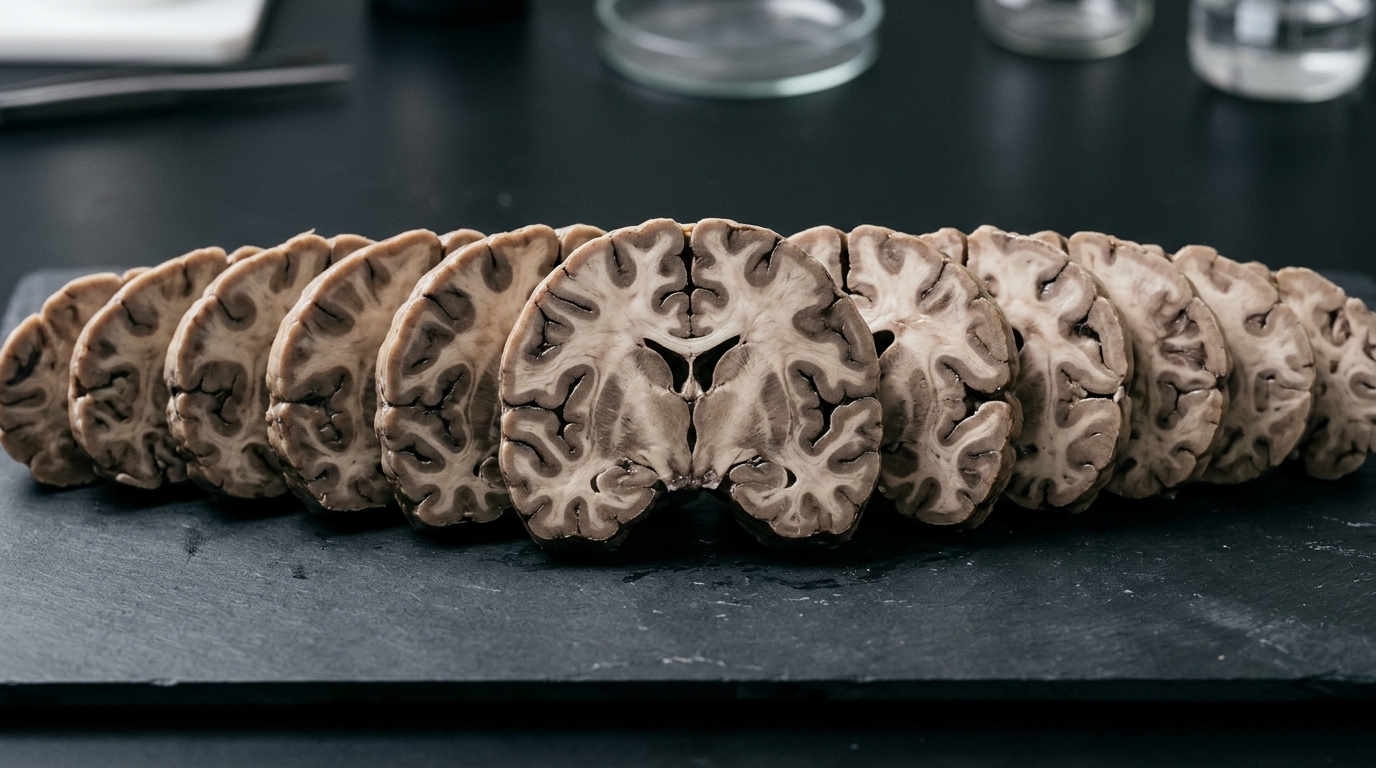
Prior work has shown the feasibility of reconstructing 3D brain volumes from 2D dissection photographs, but these outputs often exhibit coarse, overly smooth reconstructions of structures, especially under high anisotropy. A new study published in Acta Neuropathologica Communications introduces a computationally efficient super-resolution step that imputes slices to generate anatomically consistent isotropic volumes from anisotropic 3D reconstructions of dissection photographs. The approach, developed by researchers including Marina Crespo-Aguirre, Jonathan Williams-Ramirez, Dina Zemlyanker, and senior author Juan Eugenio Iglesias, addresses a key limitation in prior work that reconstructed 3D brain volumes from 2D dissection photographs but yielded coarse, overly smooth renderings of brain structures, especially under high anisotropy—that is, when reconstructing from thick slabs.

The new method tackles this by training on domain-randomized synthetic data, a strategy the authors say ensures the technique generalizes across dissection protocols and remains robust to large slab thicknesses and hallucination effects.

The researchers report that the imputed volumes yield improved automated segmentations, achieving higher Dice scores—a standard metric for measuring overlap between automated and reference segmentations—particularly in cortical and white matter regions.

Beyond segmentation, the team validated the approach on two downstream tasks: surface reconstruction and atlas registration. The imputed volumes produced more accurate cortical surfaces, meaning the outer boundary of the brain could be modelled with greater geometric fidelity. Alignment with the target template also improved, indicating that photograph-based reconstructions could be more reliably mapped onto standardized brain atlases.

The broader significance lies in what the authors describe as strengthening the bridge between neuropathology and neuroimaging. Neuropathological analyses benefit from spatially precise volumetric reconstructions that enhance anatomical delineation and improve morphometric accuracy.

The method is computationally efficient, which the authors highlight as an advantage for practical adoption.

The method is publicly available at https://surfer.nmr.mgh.harvard.edu/fswiki/mri_3d_photo_recon, allowing other research groups to adopt and evaluate the technique. The article was published on 12 October 2026 and is open access.

Subject of Research: AI-based slice imputation to improve 3D brain reconstruction fidelity from neuropathology dissection photographs

Article Title: Improving neuropathological reconstruction fidelity via AI slice imputation

Article References: Crespo-Aguirre, M., Williams-Ramirez, J., Zemlyanker, D., Hu, X., Deden-Binder, L. J., Herisse, R., Montine, M., Connors, T. R., Mount, C., MacDonald, C. L., Keene, C. D., Latimer, C. S., Oakley, D. H., Hyman, B. T., Lawry-Aguila, A., & Iglesias, J. E. (2026). Improving neuropathological reconstruction fidelity via AI slice imputation. Acta Neuropathologica Communications. https://doi.org/10.1186/s40478-026-02451-3

Image Credits: AI Generated

DOI: 10.1186/s40478-026-02451-3

Keywords: neuropathology, 3D reconstruction, dissection photographs, super-resolution, slice imputation, anisotropy, automated segmentation, Dice score, cortical surfaces, atlas registration, domain randomization, neuroimaging

News Source: Cassandra Pierce. (November 5, 2026). AI Fills the Gaps: Sharper 3D Brain Reconstructions from Dissection Photographs. Scienmag.
Tags: 3D reconstructionanisotropyatlas registrationautomated segmentationcortical surfacesDice scoredissection photographsdomain randomizationneuroimagingneuropathologyslice imputationsuper-resolution
Share12Tweet7Share2ShareShareShare1

Related Posts

Echo metrics flag risk even in mild pulmonary hypertension, UK study finds

Echo metrics flag risk even in mild pulmonary hypertension, UK study finds

November 6, 2026
How Multilayered RNA Splicing Networks Drive Pancreatic Cancer Plasticity and Resistance

How Multilayered RNA Splicing Networks Drive Pancreatic Cancer Plasticity and Resistance

November 6, 2026

Review Explores Metabolic Reprogramming of Regulatory T Cells in Colorectal Cancer

November 6, 2026

Advillin protein stabilizes YAP to drive rhabdomyosarcoma growth

November 6, 2026

POPULAR NEWS

  • Quantum SVM matches classical kernels on imbalanced attrition data, study finds

    Quantum SVM matches classical kernels on imbalanced attrition data, study finds

    29 shares
    Share 12 Tweet 7
  • Composite Metabolic Index Evaluated for Predicting Diabetes and Arthritis Comorbidity

    29 shares
    Share 12 Tweet 7
  • Novel Lachnospirales Gut Symbiont Discovered in Mid-Atlantic Ridge Hydrothermal Vent Shrimp

    29 shares
    Share 12 Tweet 7
  • Giloy Extract Attenuates D-Galactose-Induced Aging in Mice via AMPK-SIRT1 Pathway

    29 shares
    Share 12 Tweet 7

About

We bring you the latest biotechnology news from best research centers and universities around the world. Check our website.

Follow us

Recent News

Birding science takes flight across Africa as citizen data reshapes conservation

Echo metrics flag risk even in mild pulmonary hypertension, UK study finds

Fungi Turn Chicken Feather Waste Into Fertilizer That Boosts Vegetable Growth

Subscribe to Blog via Email

Enter your email address to subscribe to this blog and receive notifications of new posts by email.

Join 86 other subscribers
  • Contact Us

Bioengineer.org © Copyright 2023 All Rights Reserved.

Welcome Back!

Login to your account below

Forgotten Password?

Retrieve your password

Please enter your username or email address to reset your password.

Log In
No Result
View All Result
  • Homepages
    • Home Page 1
    • Home Page 2
  • News
  • National
  • Business
  • Health
  • Lifestyle
  • Science

Bioengineer.org © Copyright 2023 All Rights Reserved.