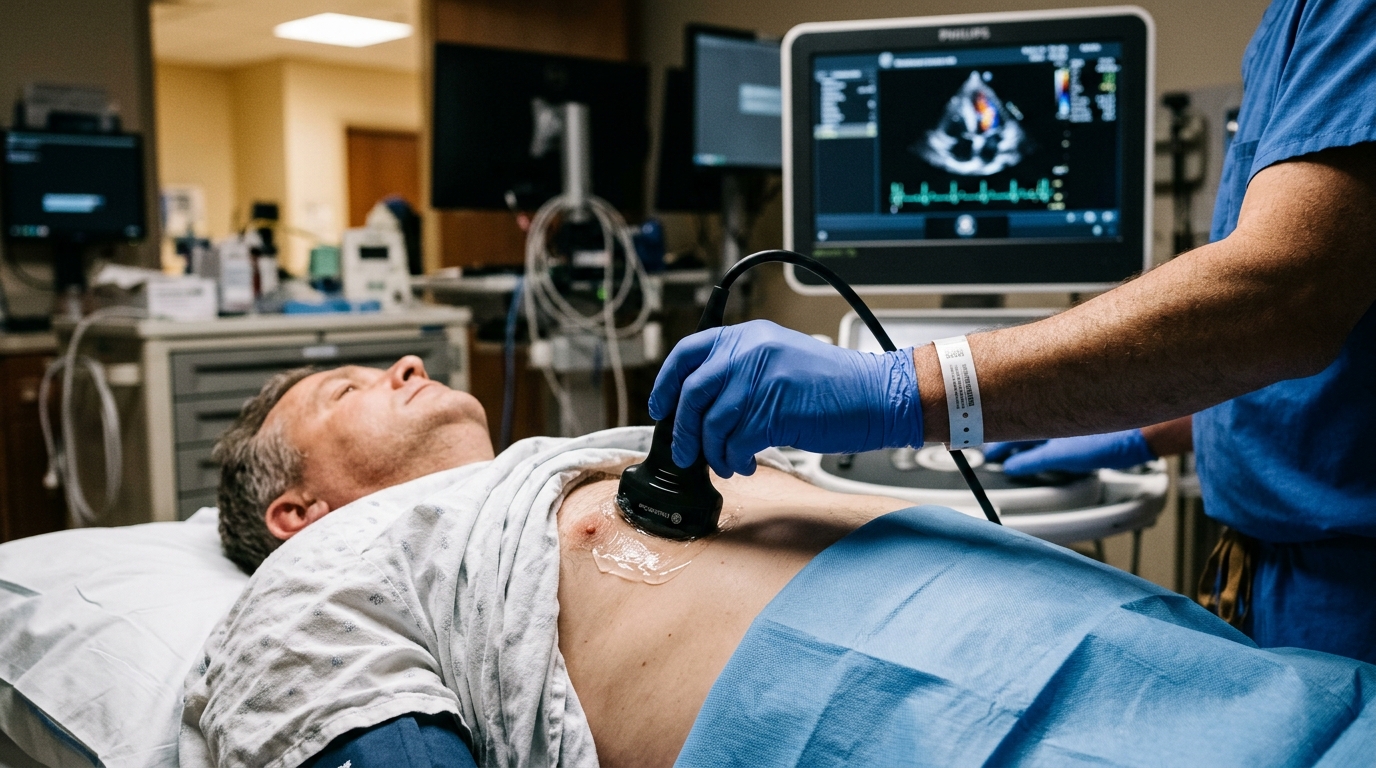
An automated artificial intelligence framework measuring left ventricular global longitudinal strain can rapidly identify subclinical myocardial dysfunction and offer meaningful prognostic insight for individuals with type 2 diabetes mellitus. While conventional left ventricular global longitudinal strain analysis can identify these subtle functional alterations, its clinical adoption has been constrained by operator dependence and substantial post-processing demands.
To overcome these computational and practical hurdles, investigators established and evaluated an anatomy-guided, label-efficient artificial intelligence framework designed to extract three-view left ventricular global longitudinal strain from standard apical four-chamber, two-chamber, and long-axis cine loops. The deep-learning architecture automated the processing workflow, reducing the mean analysis duration to under ten seconds per case while maintaining close alignment with reference strain measurements derived from expert TomTec evaluations.
The multi-stage observational research encompassed three distinct participant groups: a broad-spectrum model-development cohort consisting of 2,547 participants, a retrospective clinical cohort comprising 877 patients with type 2 diabetes, and a prospective external validation cohort of 200 patients with type 2 diabetes. All patients enrolled across the two diabetic cohorts presented with preserved left ventricular ejection fraction and had no diagnosis of overt heart failure. In the retrospective cohort, the mean age was 61.8 ± 9.7 years, 58.7 percent of the participants were men, and 64.3 percent had hypertension. Similarly, the prospective validation cohort had a mean age of 60.9 ± 8.8 years, 59.0 percent male representation, and a 63.5 percent prevalence of hypertension.
The study characterized an imaging-defined phenotype of subclinical myocardial dysfunction as the combination of preserved left ventricular ejection fraction, the absence of overt heart failure or other major causes of left ventricular dysfunction, and an impaired TomTec-derived strain value greater than minus 18 percent. When evaluated against manual reference tracings, the automated framework achieved intraclass correlation coefficients of 0.986 in the development cohort, 0.984 in the retrospective clinical cohort, and 0.981 in the prospective external cohort. For detecting the imaging-defined phenotype, the artificial intelligence strain metric alone yielded an area under the receiver operating characteristic curve of 0.986 in both diabetic cohorts, and incorporating additional clinical or metabolic-inflammatory markers provided minimal incremental discrimination.
Prognostic performance was evaluated against five-year major adverse cardiovascular events in the retrospective cohort, encompassing cardiovascular death, nonfatal myocardial infarction, nonfatal stroke, heart-failure hospitalization, or revascularization. Over the five-year observation period, 94 of 856 quality-control-valid diabetic patients, representing 11.0 percent, experienced a major adverse cardiovascular event. Following multivariable adjustment, an abnormal artificial intelligence strain measurement greater than minus 18 percent remained independently associated with adverse outcomes, demonstrating a hazard ratio of 2.00 with a 95 percent confidence interval ranging from 1.27 to 3.16.
Adding the automated strain measurements to a parsimonious clinical prognostic model increased the apparent five-year area under the curve from 0.628 to 0.729, reflecting an absolute increase of 0.101. Internal validation using 1,000 bootstrap resamples with optimism correction confirmed this incremental benefit, shifting the corrected area under the curve from 0.586 to 0.699. Direct statistical comparison demonstrated that the automated system yielded prognostic discrimination comparable to manual TomTec evaluations, recording areas under the curve of 0.729 versus 0.732, with an absolute difference of minus 0.002.
The investigators concluded that the principal benefit of the automated three-view framework is its capacity for rapid, reproducible, and scalable strain quantification rather than superior prognostic accuracy over expert manual measurement. Because prognostic evaluations were conducted within a single retrospective dataset, the authors emphasized that these outcome findings require further validation within independent prospective longitudinal cohorts.
Subject of Research: Automated artificial intelligence assessment of left ventricular strain in type 2 diabetes
Article Title: AI-derived left ventricular global longitudinal strain enables automated assessment of subclinical myocardial dysfunction and provides incremental prognostic information in type 2 diabetes
Article References: Yang, O., Teng, Y., Zhao, Q., Xian, H., Zhang, R., & Li, K. (2026). AI-derived left ventricular global longitudinal strain enables automated assessment of subclinical myocardial dysfunction and provides incremental prognostic information in type 2 diabetes. Cardiovascular Diabetology. https://doi.org/10.1186/s12933-026-03395-7
Image Credits: AI Generated
DOI: 10.1186/s12933-026-03395-7
Keywords: type 2 diabetes, artificial intelligence, echocardiography, global longitudinal strain, myocardial dysfunction, cardiovascular risk, cardiac imaging, prognostic modeling, AI-derived, left, ventricular, global
News Source: Ophelia Keating. (November 9, 2026). AI Cardiac Strain Tool Rapidly Detects Early Heart Dysfunction in Diabetes. Scienmag.